It’s Not Where We Draw the Lines, It’s How We Draw Them
Lines divide, cause schisms, rifts, gulfs, splits; circles create community. Lines emphasize mine and yours; circles encourage ours. Lines are discordant; circles are song. Draw more lines? What’s the point?
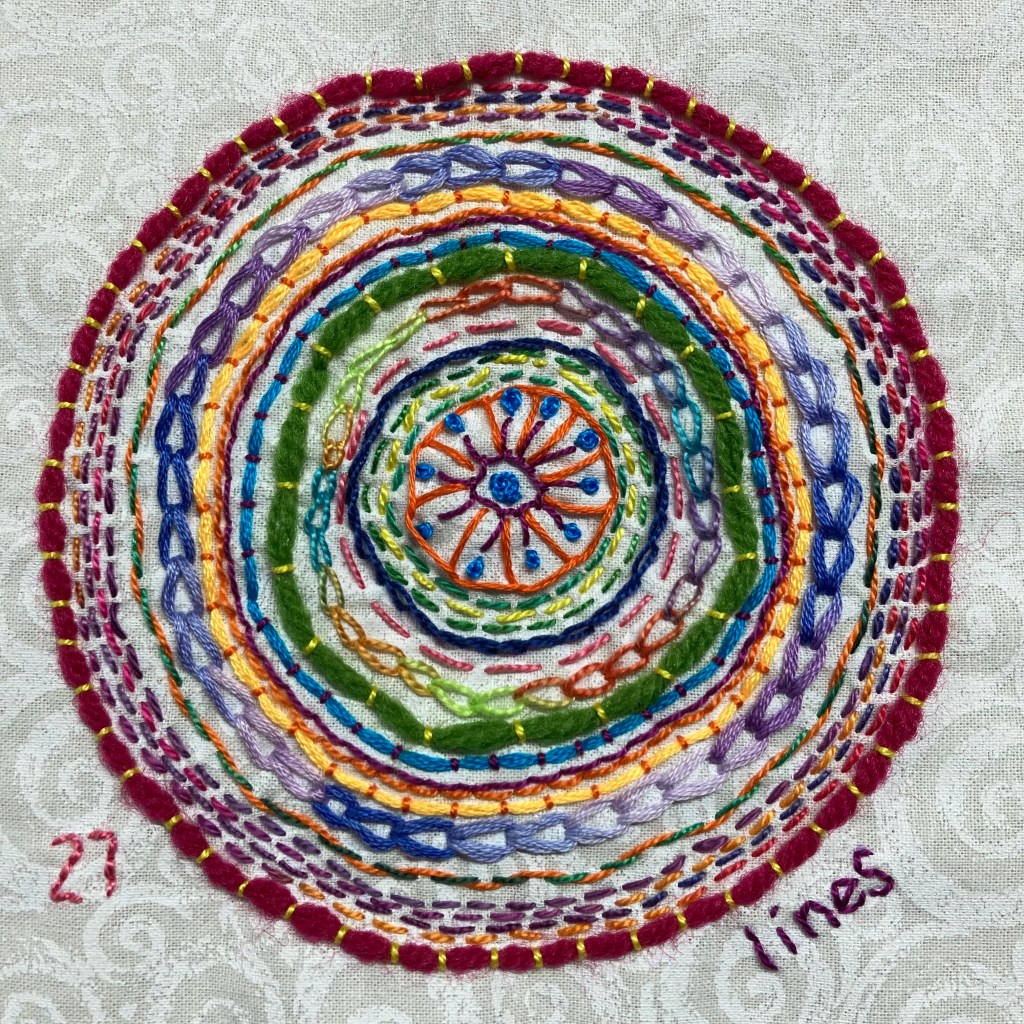
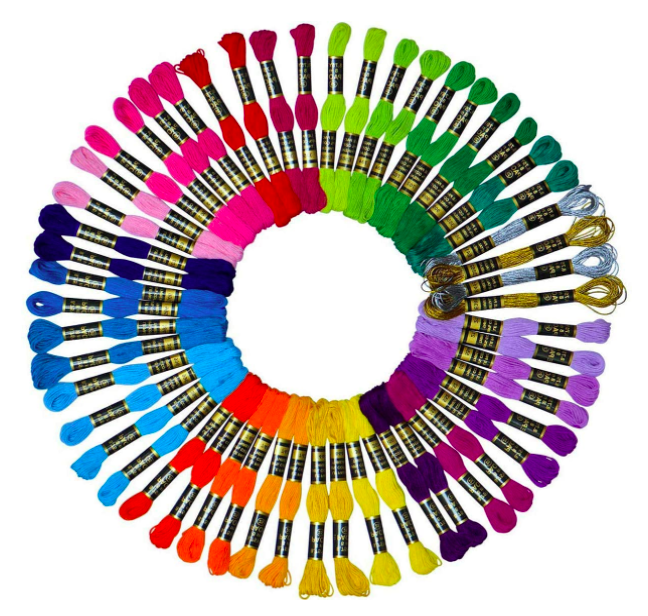
The entire time I was stitching this mandala, I was thinking about how lines divide, and where we draw the line. The line between love and hate, tolerance and intolerance, rights and responsibilities, morality and immorality, church and state, now and then, history and future, optimism and pessimism and apathy, courage and cowardice and apathy, action and inaction…and apathy.
All we can each do is our very own best. Every small thing we do counts. Less bark, more wag; less hiss more purr; fewer lines more circles.
Generous Jan has this week’s Poetry Friday roundup at bookseedstudio.
And an aside. If you follow my mandalas on FB or IG, you have seen Views From the Garden, parts one (milkweed) and two (coneflowers). I intended for this week to feature zinnias, but they were shy and have only just begun blooming. They’ll get their five minutes of fame this coming week!
Heidi gave the Inklings our challenge this month: “There are so many ways in which we’ve all (but especially as women, as educators) had to be persistent, despite our weariness. Write a poem (for kids or adults) about PERSISTENCE. If you write for kids, maybe try a definito!” Little did she know her words would hold So. Much. More. Truth. in these past couple of weeks.
Here are the rules for writing a definito: “the definito is a free verse poem of 8-12 lines (aimed at readers 8-12 years old) that highlights wordplay as it demonstrates the meaning of a less common word, which always ends the poem.“
And here’s how the rest of the crew met Heidi’s challenge:
The Poetry Sisters’ challenge this month was to write Welsh Byr a Thoddaid Poems. There are a ton of rules, but when you get right down to it, the form consists of lots of syllable-counting and attention to rhymes.
My first cat, Jennyanydots, achieved the status of Truly Old Cat. She passed at the age of 21 and was a tiny thing (maybe 6 pounds in the end) with a mighty voice for wailing when she couldn’t find her “tribe.”
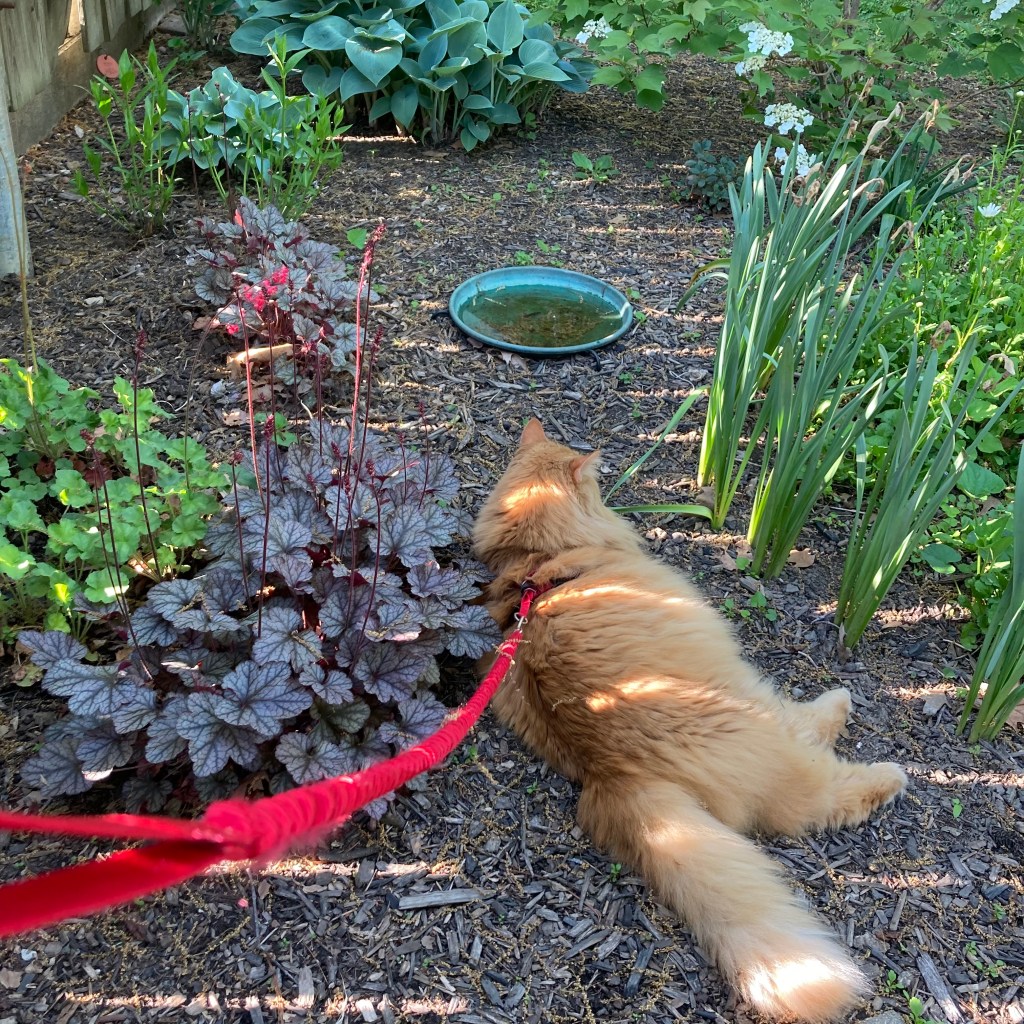
Hemingway is a big guy (14 pounds) and not old yet — only 7-9 (he was a rescue) — so why is he starting the yowling-for-no-reason? Maybe just to give me a poem topic!
Next month we are writing acrostic phrase poems. Choose any line from the poem “Still I Rise” by Maya Angelou and use each word in the phrase to begin a new line of your poem.
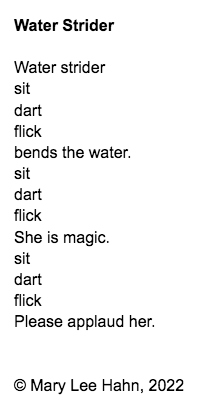
Earlier this week, I stood mesmerized by the water striders in a pool of still water at the edge of our little local wetland. Time stopped as I watched them go about their business in the six square feet of liquid neighborhood they call home. Oh, to be so small that my feet only dent the surface of water!
Michelle has this week’s Poetry Friday roundup at her blog, Michelle Kogan.
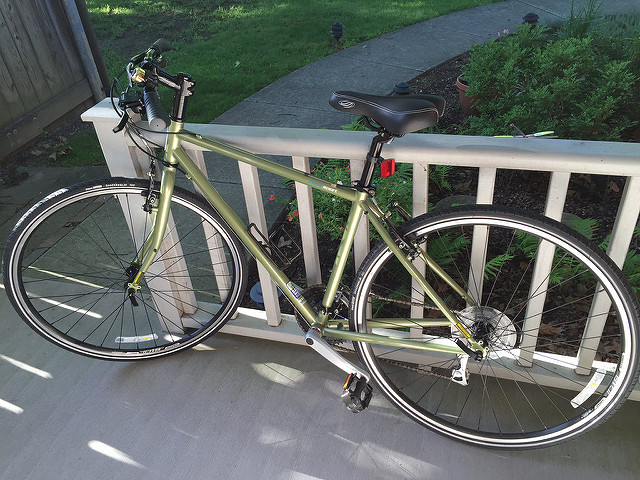
A few years ago on the original A Year of Reading, I did a series of “Bike Stories.” Now that the first ride of the season has been — Ahhh CHOO! — survived, it’s time to get out more frequently and see what lessons and stories can be found this year!
It’s that time again. Six months have passed since last we queued up to host the Poetry Friday roundups.
What is the Poetry Friday roundup? A gathering of links to posts featuring original or shared poems, or reviews of poetry books. A carnival of poetry posts. Here is an explanation that Rene LaTulippe shared on her blog, No Water River, and here is an article Susan Thomsen wrote for the Poetry Foundation.
Who can do the Poetry Friday roundup? Anyone who is willing to gather the links in some way, shape, or form (Mr. Linky, “old school” in the comments, or ???) on the Friday of your choice. If you are new to the Poetry Friday community, jump right in, but perhaps choose a date later on so that we can spend some time getting to know each other.
How do you do a Poetry Friday roundup? If you’re not sure, stick around for a couple of weeks and watch…and learn! One thing we’re finding out is that folks who schedule their posts, or who live in a different time zone than you, appreciate it when the roundup post goes live sometime on Thursday.
How do I get the code for the PF Roundup Schedule for the sidebar of my blog? You can grab the list from the sidebar here at A(nother) Year of Reading, or I’d be happy to send it to you if you leave me your email address.
Why would I do a Poetry Friday Roundup? Community, community, community. It’s like hosting a poetry party on your blog!
Put your request in the comments and I’ll update the calendar frequently. Feel free to share this post on Twitter (I left and I’m not missing it…much).
Molly’s challenge to the Inklings this month was “to write a poem about some sort of domestic task.” My loss of control in the garden is embarrassingly similar to my approach to housekeeping — tidy up just enough to get by until time and energy (and usually company coming) converge to inspire a deeper cleaning.
“The show” is in full force right now in my garden. I never cease to be amazed at the transition from the exciting first tentative emergence of spring green and bloom to summer’s (seemingly sudden) surge of exuberant (over)growth.
Here’s how the rest of the Inklings interpreted this challenge:
The Poetry Sisters’ challenge for this month was to write a poem with the theme of string, thread, rope, or chain. My brainstorming took me on a trip down memory lane, beginning with a visual memory of our precisely clothes-pinned swim suits and beach towels in a perfect suit-towel-suit-towel pattern on the clothesline.
Then came crafting memories. So many of the crafts I learned from and with my mother used thread or string: macrame, cross stitch, needlepoint, embroidery, sewing.
My mother’s mother was a home ec teacher and somewhat of a tyrant when it came to precision. Mom had to baste every seam before stitching it, and if her basting stitches were not perfectly even, she had to rip them out and start over. At the time, I never fully appreciated how much Mom had to dial back when she taught me “thread arts.”
I was definitely indoctrinated in “follow the pattern,” which left me with a healthy appreciation for rituals, routines, mentor texts, patterns, instructions, and recipes, but I also have developed a deep joy found in trial-and-error, guess-and-check, innovation, and experimentation.
Carmela has this week’s Poetry Friday Roundup at Teaching Authors.
Edited to add…
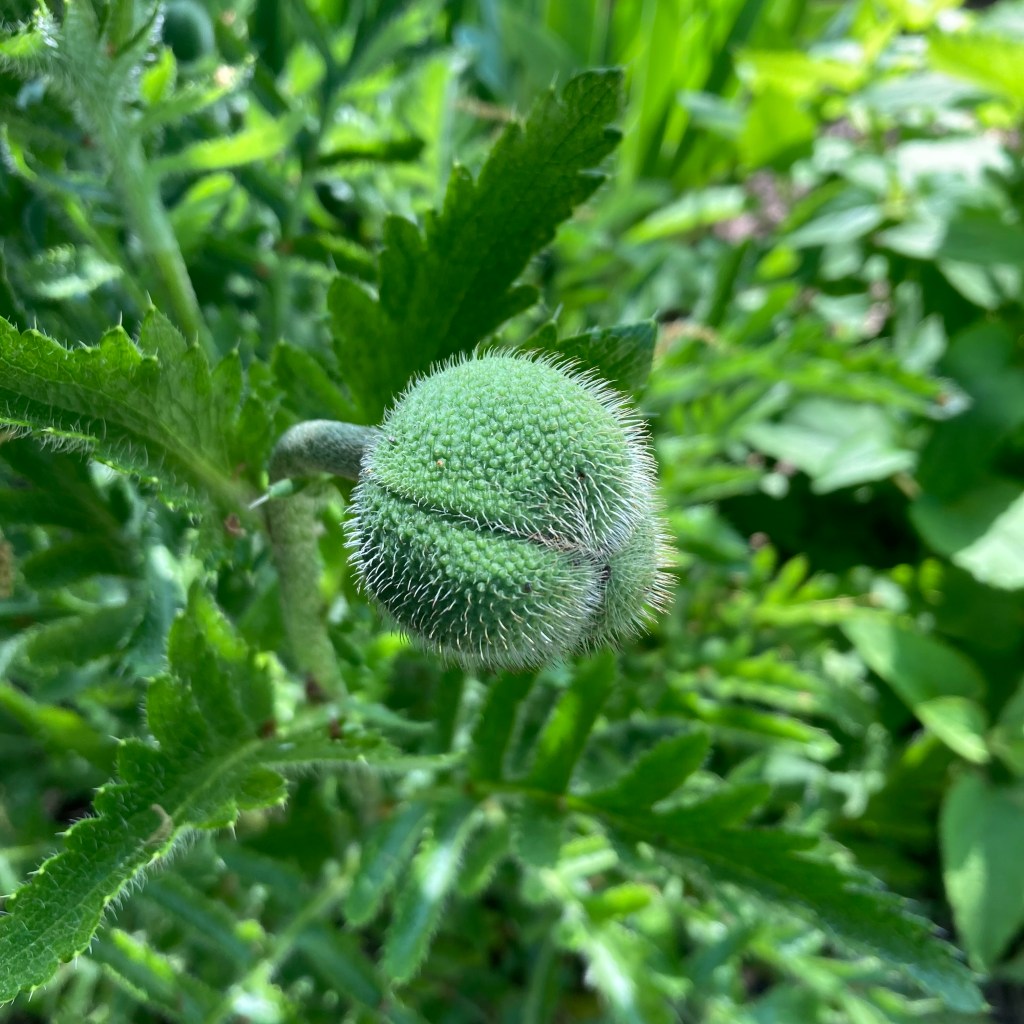
Yesterday morning was cloudy and drizzly. As I cleaned oak flowers out of the garden beds, I turned a corner, saw this, and literally said out loud, “Well, hello there!” At the base of the plant were the three prickly bud covers that had been shrugged off or thrown off when the poppy…popped. Let us remember that when our hearts are clenched tightly against the world, there will come a time when we’re ready to throw off our shell and blaze again with glory, in spite of everything.
Awhile back, Margaret shared extra sheets of build-your-own-metaphor-dice that Taylor Mali had sent for her students. I rolled “courage will be a sparkling needle” and it felt like the Universe was speaking directly to me. Earlier in the day I had posted my embroidered mandala for this week (19 of 52 weeks of embroidery mandalas).









 A(nother) Year of Reading