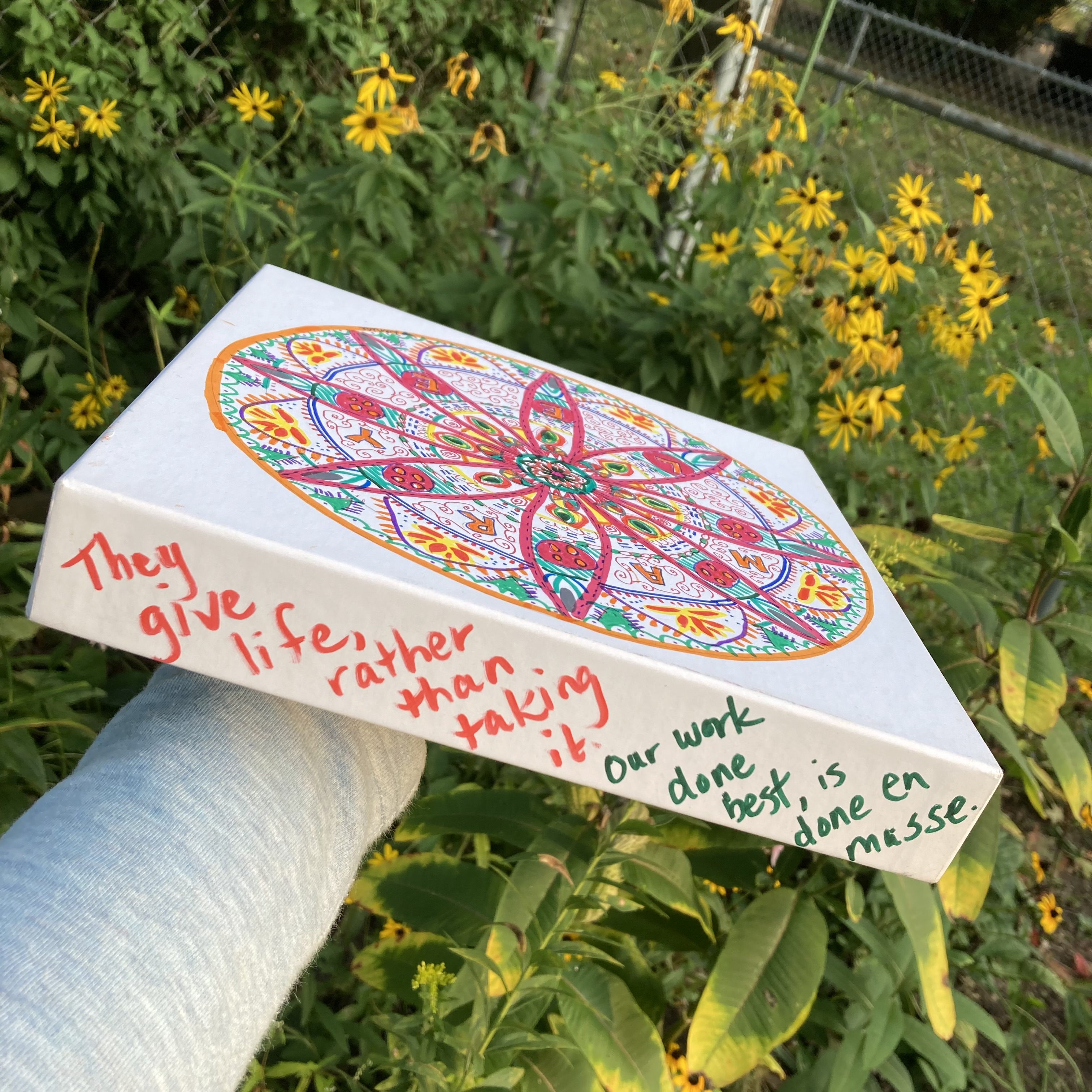
Last week, I shared a cento that I wrote using titles from Ada Limón’s poems in THE HURTING KIND. This week, I’d like to share an amazing gift I received as a summer poem swap. Truth be told, they were ALL amazing gifts, but this one was seriously over the top amazing! Check this out:
Poem titles for lines 1-9 1. The Thing Is 2. The Truth 3. What If 4. A Small Patch 5. A Small Patch 6. What I Know About Farming 7. Dandelions 8. Daily Alchemy 9. Dear Generation C
Wow, right? Just…wow.
And there were more gifts besides the poem box! Handmade dishcloths and scrubbers and a for-real slice of life and learning.
Gratitudes to Denise for this ever-so-thoughtfully crafted mandala-cento box and to Tabatha for organizing the swaps!
Not sure why it’s hard to get to Denise’s blog via InLinkz (is it just me?), but you can follow this link to see the haiku bookmark I made for her.
Head over to Kat Apel’s blog to “Katch up” on all she’s been up to these past few months and to see what all the other Poetry Friday Peeps have to offer this week!
There was much to love about building a classroom community filled with mostly same-aged students and designing plans for daylong learning across all subject areas. Now, there is much to love about sitting side-by-side with one or two students at a time from across the grade levels and getting to know each as readers, writers, and fascinating human beings. Here are some random snippets from the first few weeks on the job:
3rd grader: “You know why I like science? It never ends.”
4th grader: “I like the Harry Potter books, but I kind of have a problem with J.K. Rowling’s stand on trans people. My cousin is trans.”
3rd grader: “The other reading teacher gave us lollipops if we were good.” Me: “I’m not sure if I’m a lollipop kind of teacher.” “That’s okay. You’re nice anyway.”
5th grader: “I always use ‘adieu’ as my first word in Wordle, but I don’t know what it means.” (a small French lesson ensued)
3rd grader: Making random words with Scrabble tiles: add…wood…one…to…make…a…bat… “No, that should be ‘add one wood to make a bat.’ This is like an equation! What do you call the person who makes a bat? This makes more sense: ‘add one wood carver to make a bat.’ “
2nd grader: “How do you spell ‘George?’ “ Me: “Your name’s not George; why do you want to spell that?” “George was the husband of Beatrice, a WWII engineer who could fix anything.” (Likely this book, and no surprise: he likes to read informational text.)
4th grader: “I learned a new word today: toey. T-O-E-Y. When I play Words With Friends, I always check to see what I could have played for more points. Toey would have been worth 48 points.” Me: “What do you think toey means? If something is juicy, it’s full of juice. Do you think toey means full of toes? (laughter) Let’s look it up.” (Amazement when I open the Merriam Webster app from the first screen on my phone. But it wasn’t there! So I opened a web browser and demonstrated the “define ___” search and we found it. Toey means nervous, anxious, worried.) Me: “I hope the rest of your day isn’t toey!”
Texts for this Text Set have been posted daily on Instagram. Follow @TextSets there to get daily updates!
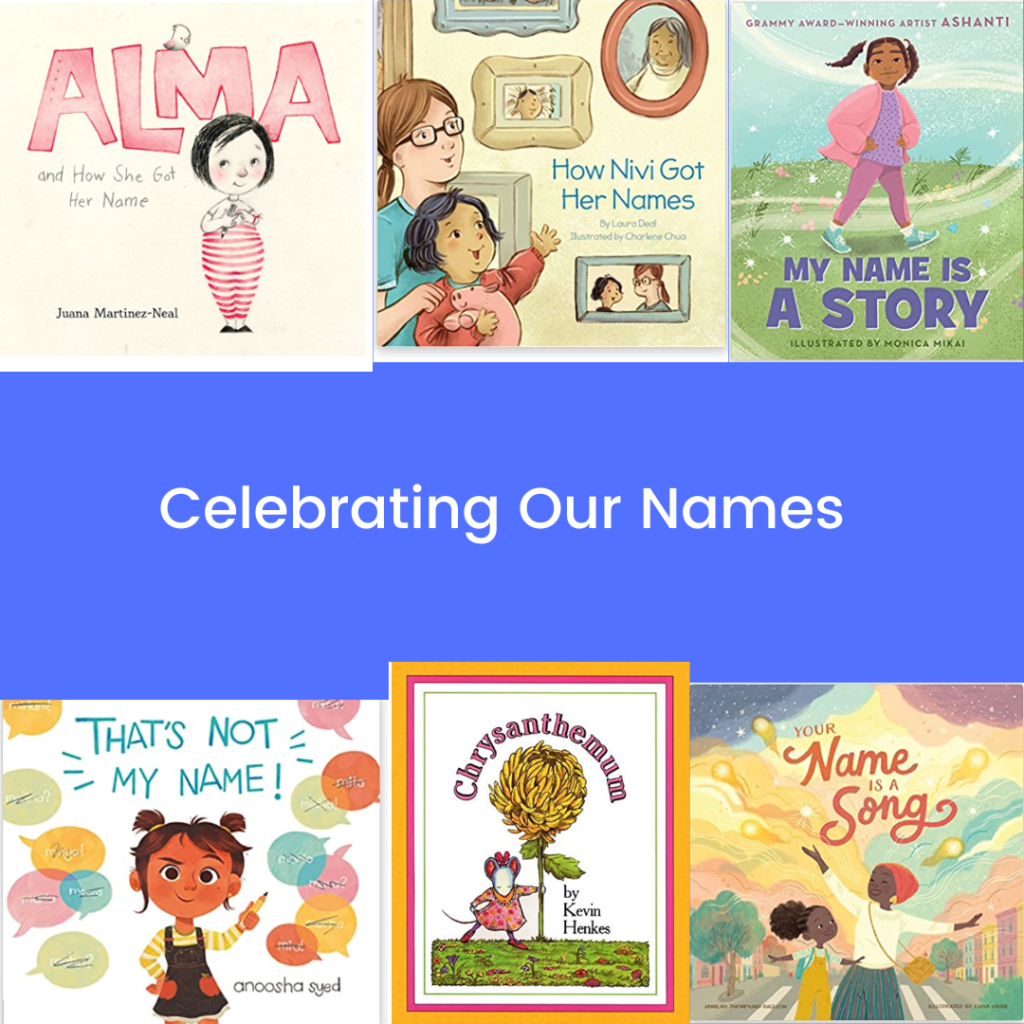
Text Sets is back and excited about a new school year! I know celebrating names is something teachers do early in the school year so this week, we’ll share some books that invite these conversations. I think it’s important that we don’t only share these books at the beginning of the school year. Many books about names are better shared once community is established. And of course, the books can also be revisited as part of a writing unit or for a reading mini lesson.
This week’s Text Set starts with a classic–Chrysanthemum. I’m starting with this one intentionally because I think if we are intentional about book choice, we layer texts and have several books that can explore a concept over time. We choose the books that we share because they naturally invite the conversations we hope have. As we work to expand and diversify the books we use, there will always be favorites that still work. The key is not using ONLY one book but to create a text set around a big idea so children have many stories to explore. When I taught K/1, Kevin Henkes was a favorite author and this book helped new readers pay attention to print and text and numbers of letters in names, etc. This book is still one of the best I know to help kids think about names from a print standpoint–to get them paying close attention to print. It is also great because of the theme and because it is often the first introduction young readers have to Kevin Henkes, an author we want them to know! Even though there are lots of new, wonderful books about names that I would also use, I wouldn’t get rid of this one!
That’s Not My Name is my new favorite book in this Text Set. The book was published this summer and does a great job of inviting conversations about the importance of pronouncing everyone’s name correctly. It is done so well for children (and adults) of all ages and the illustrations add a joyfulness to the idea of names that I love. If you are adding one new book to your collections of name books, I’d add this one for sure!
Alma and How She Got Her Name and How Nivi Got Her Names pair together well because they both tell the traditions of how names are chosen in families. In Alma and How She Got Her Name, Alma learns about all of the people she was named after. (Juana Martinez-Neal is another author/illustrator to highlight as she also has picture books, chapter books and more.)In How Nivi Got Her Names, Nivi also learns about the people she was named after as well as the traditions of Inuit naming traditions and their meanings. (And I had no idea how may books illustrated by Charlene Chua I have in my collection–another great illustrator to highlight!) Both of these books open conversations about the various wonderful ways that children’s names are chosen.
Your Name is a Song is another fabulous story that reminds us the importance of every name. Similar to That is Not My Name, the main character is dealing with the frustration of people at school mispronouncing her name. The response is a bit different but with the same important message and empowers her to go back to school with a new understanding. There is a history and music piece embedded in the theme and the author note and pronunciations of the names are an important piece to discussing the importance of celebrating every name. Jamilah Thompkins-Bigelow has 3 picture books published and one on the way! I am pretty sure I’ll preorder everything she writes from here on out!
My Name is a Story is another brand new picture book. This one has so much possibility when I think about conversations that might happen. After having negative experiences around her name on the first day of school, her mother helps her understand the beauty in her name and in all that she is. Ashanti does a bit with acrostic poetry in a way that expands the idea beyond just a simple word–which would be great fun to talk about with young readers.
This week’s books were linked at Bookelicious and/or Cover to Cover Children’s Bookstore. If you are looking for a fabulous local children’s bookstore to support, Cover to Cover is an amazing one. We are lucky to have them in Central Ohio! If you don’t have an independent children’s bookstore in your town, check out Bookelicious. They are an online independent bookstore for children with an incredible curated collection.
Four of us Poetry Friday Peeps read and discussed THE HURTING KIND one section at a time in August. It was the best #sealeychallenge activity ever. We got more out of this book with a slow read and deep conversations than we ever would have by plowing through it in a day and checking it off our to-do list.
If you haven’t read THE HURTING KIND, I highly recommend it. Here is the book trailer with Ada Limón reading the final poem in the book.
Here is a cento I made with almost all of the poem titles in the second section, Summer. The words in italics are the only words I added.
The striking line, “You can’t sum it up. A life.” comes from the poem “The Hurting Kind” from the book THE HURTING KIND by Ada Limón.
The poem itself, in response to Margaret Simon’s gorgeous photo, is a “This Photo Wants to Be a Poem…” poem, which was Margaret’s challenge this month for the Inklings.
Here’s how the rest of the crew met Margaret’s challenge:
The Poetry Sisters wrote bop poems this month. They have three stanzas (6 lines, 8 lines, 6 lines) and a repeating refrain. Additionally, the three stanzas should 1. introduce a problem, 2. elaborate on it, and 3. solve it. Our shared refrain was “Let’s kick that can down the road.”
My first challenge was to thing of something I’d “kick down the road” without trying to fix it. Something I can absolutely do without. Well, that’s easy…dusting!
Here’s what the rest of the Poetry Sisters came up with this month:
Next month, we’ll be writing Heidi’s Definito Poems: the definito is a free verse poem of 8-12 lines (aimed at readers 8-12 years old) that highlights wordplay as it demonstrates the meaning of a less common word, which always ends the poem. Join us if you’d like!
Next week I begin a new part time job that seems like it will be a better fit for my skillset than washing dishes at Sur la Table: I’m the Reading Specialist for the Clintonville Resource Center’s Kids Clubs, their after school program. There are three sites, and I’ll spend about two hours a week at each site working to help K-5 children become better readers (and writers).
I know exactly what to do, and yet I have no idea what I’m doing.
I have no classroom to prepare, no classroom library from which to easily pull books, no real context for the work we will do or real influence outside of the bits of time we will spend together.
If it was true as a classroom teacher, it is even more true now: I have to make every minute count. Guess what I’m planning to use as short texts that are brimming with all kinds of instructional moves for students of all ages? POETRY, of course! And because poetry is often neglected in the regular classroom, that is where I hope to find my opportunity for context and influence.
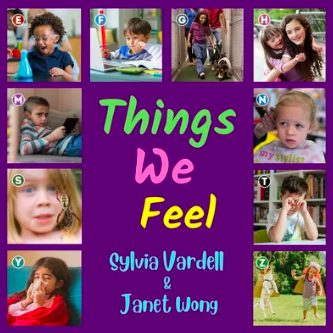
Just like in the classroom, we will begin by getting to know each other. We’ll start by sharing our favorites — favorite foods, favorite things to do, favorite (and maybe not so favorite) ways to feel.
We’ll talk and read and draw and write. I’ll listen, ask, and notice. All very good places to begin, even when you think you have no idea what you’re doing.
August is a juicy piece of fruit with the seed of Fall at its center. In spite of all the lush growth of Summer, the brown of Autumn is at the heart of August. August marks the shift from the production of leaves, to the production of seeds. Life must go on, come Spring, and August see(d)s to that.
We had a nice turnout for the July meet-up of Ohio Women on the Fly. Spirits were high as we walked from the parking lot at Antrim Lake to the Olentangy River, which runs near the south and east sides of the lake. The clouds were building, but we weren’t worried — rain was not in the forecast.
Silly us.
We got soaked. Drenched. We were soggy, and by the time we got back to cars when it was starting to get dark, muddy up to our knees.
It was great fun. It was an adventure. When was the last time you had an adventure (the kind involving lots of water and mud)? I highly recommend it.
Every time I go fly fishing, the experience is new. No two times on a river are the same. That’s why fly fishing is a sport I love.
Catherine gave the Inklings this month’s challenge to write a poem about sports. Here’s what the rest of the crew came up with, and Molly has this week’s Poetry Friday roundup to boot.
This month’s Poetry Sisters challenge didn’t seem tricky when the idea was hatched. Phrase Acrostics are pretty much reverse Golden Shovels, with the striking line on the left rather than the right. But then er…uh..someone suggested using phrases from the iconic poem by Maya Angelou, “Still I Rise.” That’s when the challenge got tricky more complicated and interesting. How could we borrow phrases from this poem while still honoring the poet and the spirit of the poem without being appropriationist? Reading and rereading the poem with the intention to uphold Angelou’s purpose led me to these two drafts, which weave lines and meanings like a braided rug on a warm wood floor. Both of the titles, as well as the striking lines, come from Angelou’s poem.