Slice of Life: Ready

Thank you to Two Writing Teachers for creating an amazing community of writers and a safe, welcoming space to write and share.

I went downstairs to my studio intending to play around with some applique. My eyes fell on Great Grandmother’s quilt, folded on the back of the couch, waiting. I’ve been working intermittently (for a year!) on repairing one ring of hexagons in one flower of the “Grandmother’s Flower Garden” pattern. The fabric in that one ring had completely disintegrated.

“You’re not allowed to play until you finish repairing that quilt,” I told myself. “After all, the work of the repair is a kind of applique, or at least uses some of the same skills.” So I picked up my needle, ready to get to it.

The pieces I had previously replaced provide a snapshot of my learning. In other words, my stitching was progressing from embarrassingly awkward to somewhat tidy. Little did I know that when I picked up my needle I would find that my skills had taken a quantum leap forward.

Since the last time I worked on the quilt repair, I had taken Jo Avery’s online class in fabric book making. If you follow her on IG, you know she has a very distinctive style of applique, primarily stitching impressionistic birds and flowers. So I learned needle-turn applique from a master. Not only did I learn and practice the technique, but I began using the proper tools — a thin milliners needle and tiny smooth-headed applique pins.

When I picked up the needle to get started again, the first thing I realized was that I had been using an all-purpose embroidery needle, which was downright clunky compared to a milliners needle. And my long, flat-headed sewing pins were pulling puckers in the tiny hexagons that made it impossible to sew one to the next.

Fitting new hexagons into an already-completed and decades-old quilt is still tricky, fiddly work. But armed with better skills and the right tools, I feel ready to take this repair to the finish line. And I feel sure that the last hexagons in the circle will make the spirit of Great Grandmother proud of her descendant’s learning journey.

The Poetry Friday Roundup Is Here!

Shh…the Inklings are getting ready to whisper secrets to you. Our challenge this month came from Catherine, who borrowed a prompt from a list Molly shared with us. Unlike the Go-Gos, our lips are NOT sealed — we’ve written poems about secrets.

To help us write about secrets, we had this poem, “Family Secret” by Nancy Kuhl to use as a mentor text.

When in Doubt” by Sandra Cisneros showed up mid-month in the Poetry Unbound podcast, and it seemed to be in conversation with my poem, which was written to answer the stem which became the title.

Here’s how the rest of the Inklings met Catherine’s challenge:

Catherine @Reading to the Core
Heidi @my juicy little universe
Linda @A Word Edgewise
Molly @Nix the Comfort Zone
Margaret @Reflections on the Teche

Mr. Linky is ready for you to share your secrets/poems!

Slice of Life: Voice

Thank you to Two Writing Teachers for creating an amazing community of writers and a safe, welcoming space to write and share.

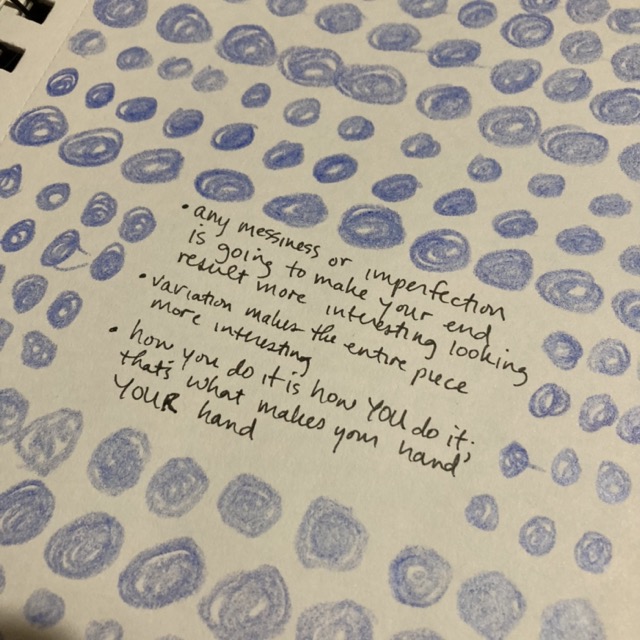
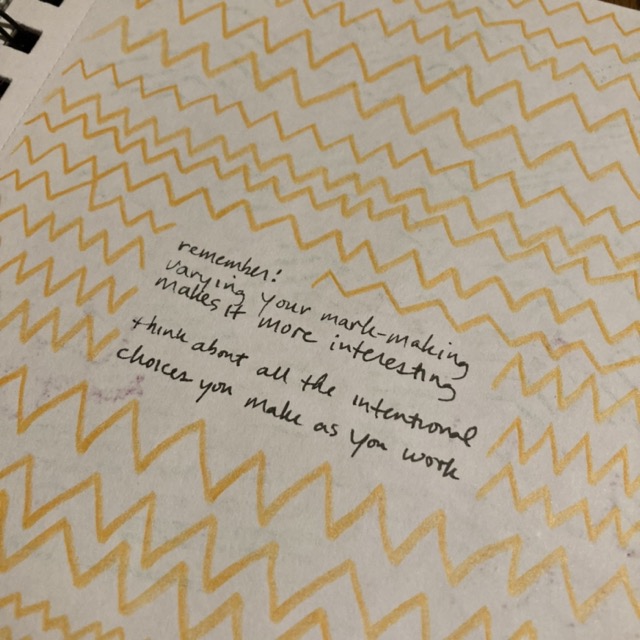
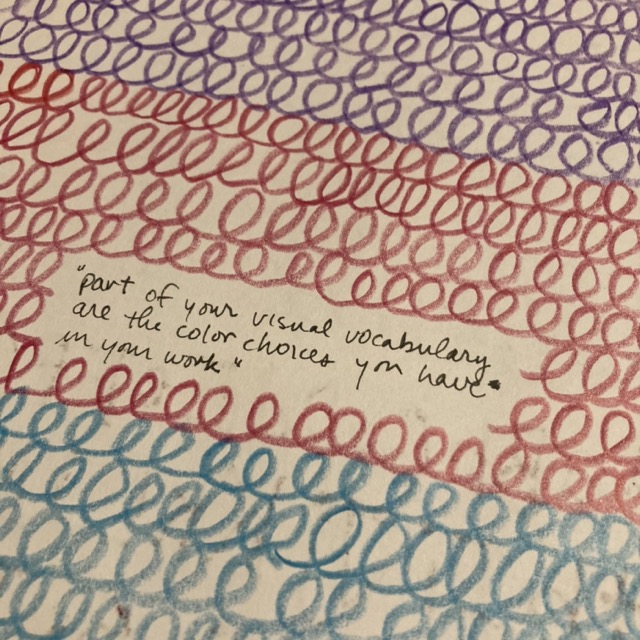
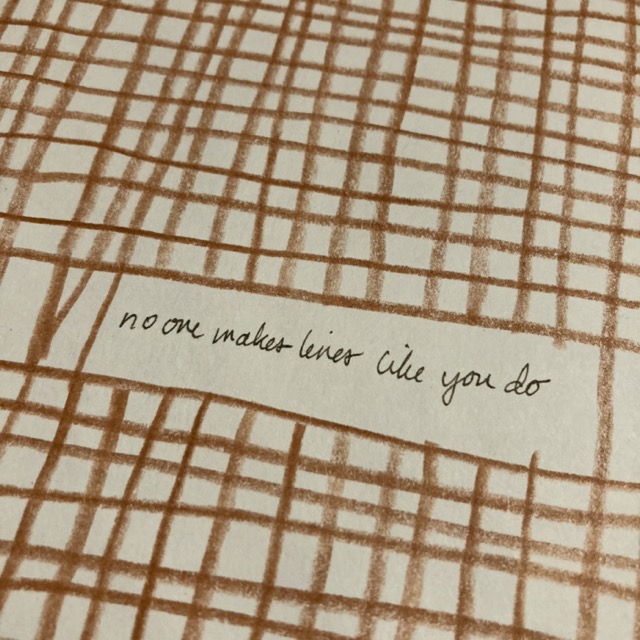
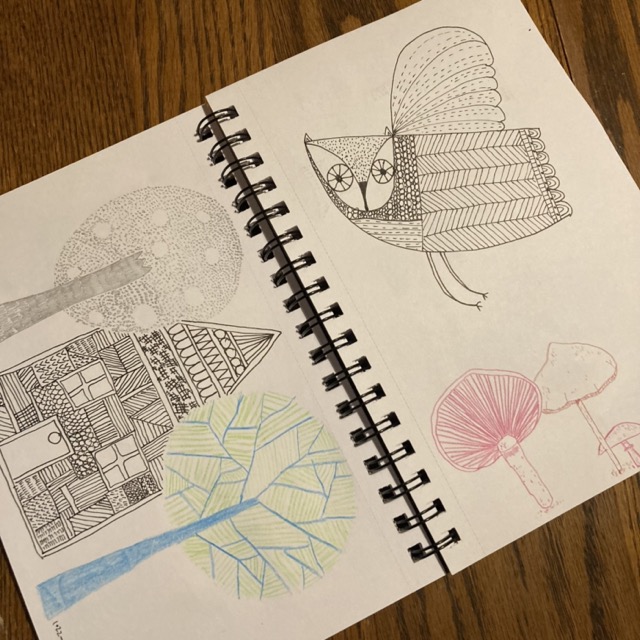
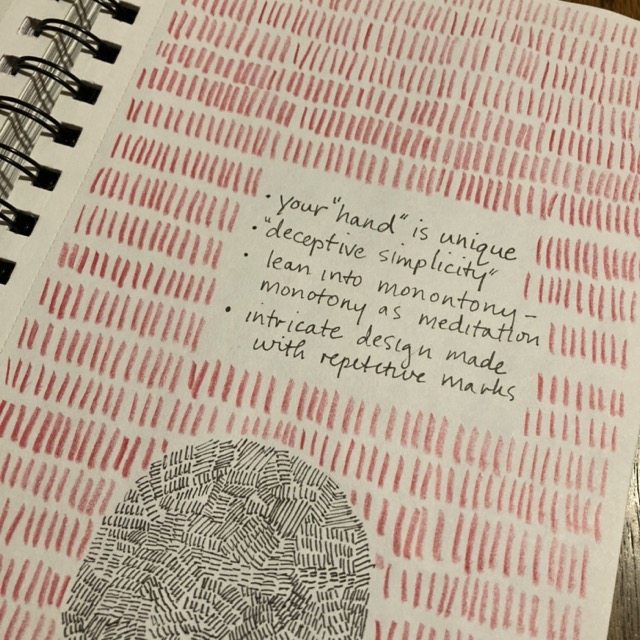
I just finished Lisa Congdon’s 30-day challenge “Developing Your Visual Vocabulary: A Daily Practice in Mark Making” on CreativeBug.

She dropped a lot of big wisdom throughout the course.

This wisdom can inform mark making with colored pencils, watercolor, thread, or words on a page: the importance of practice, the acceptance (or even cultivation) of wonkiness (she used the word “wonky” a LOT and it made me love her even more every time), and the development of your own particular VOICE.

Throughout the course, I’ve often copied her lesson and then “riffed” on it by trying it with watercolor instead of colored pencil, or by combining lessons when I didn’t have the energy for a whole-page design.

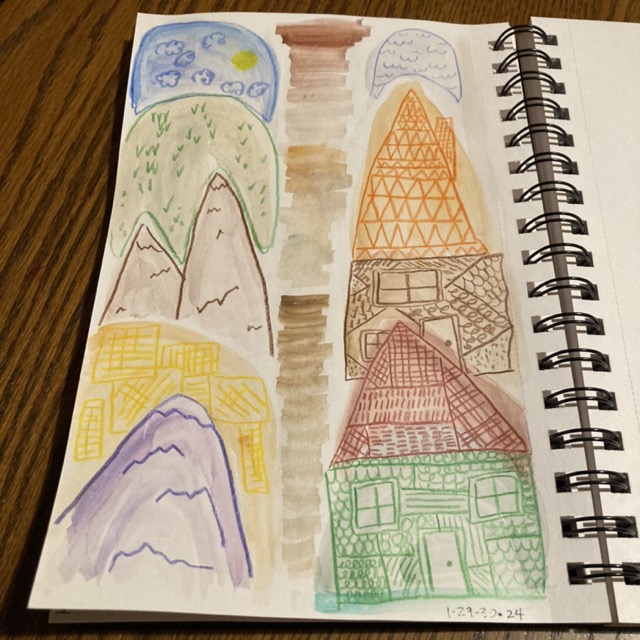
Last night, I pulled out my watercolors and doodled. It was blobs of color with a stack of brush marks down the center. It was a journal entry of random “thoughts” made with marks rather than words. I knew I could do more with it, but I set it aside, as I often do with the entries in my writer’s notebook.

This morning, in Lisa’s final lesson, she invited us to “go big” on the biggest piece of paper we had using all the marks she had taught us. She modeled how she would set up her paper for an arial-view landscape, and then in time lapse, we watched her fill the whole page, first with watercolor in each section, and then with marks.

I opened my sketchbook to my blobs of watercolor from last night, and suddenly I could see a village in a valley across the road from mountains with wheat fields and high pastures tucked in between. Without looking back at any of the previous lessons, I chose my colors and made my marks.

There are such beautiful echoes between what happens in my writer’s notebook, my sketchbook, and the scraps of cloth where I test different threads and stitches — my “scrappy stitch book.” I’m glad I’ve taken the opportunity to slow down and listen to my own voice.

Poetry Friday: Ekphrastic

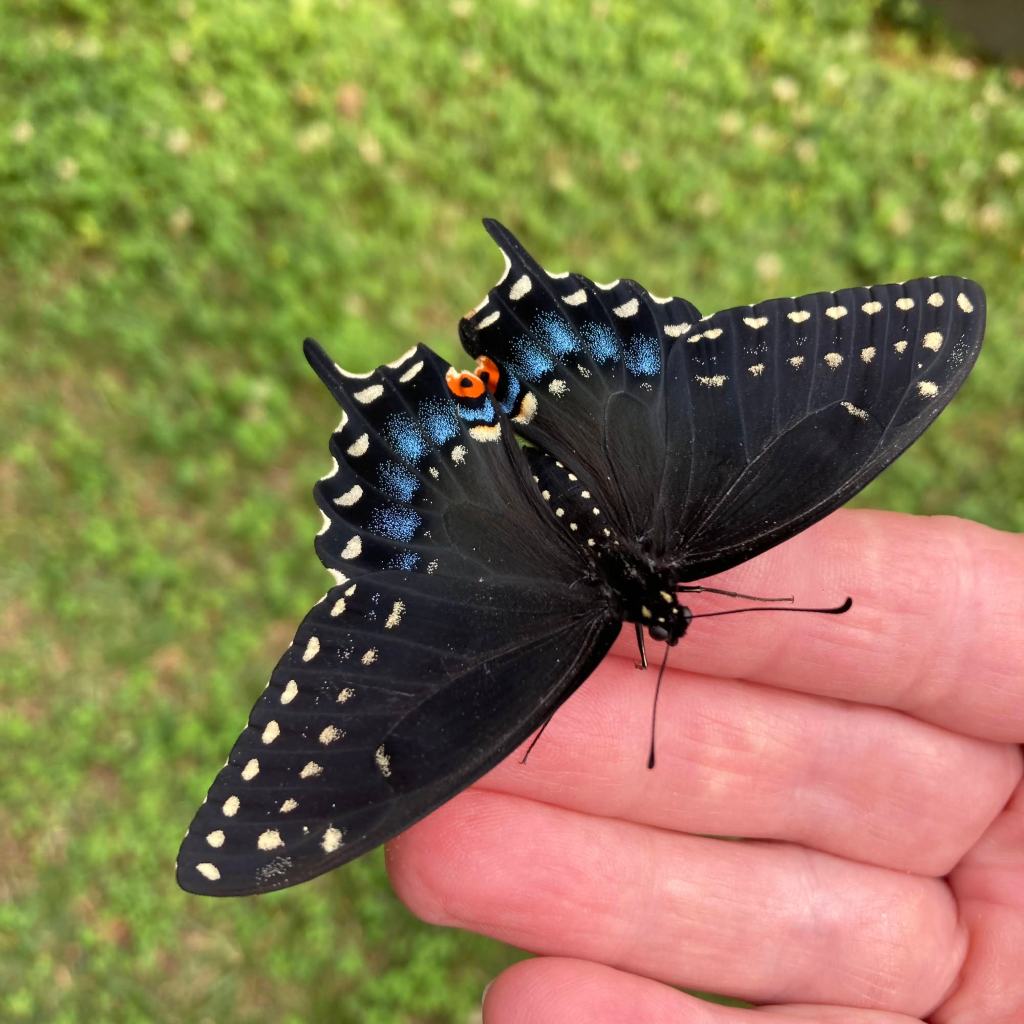
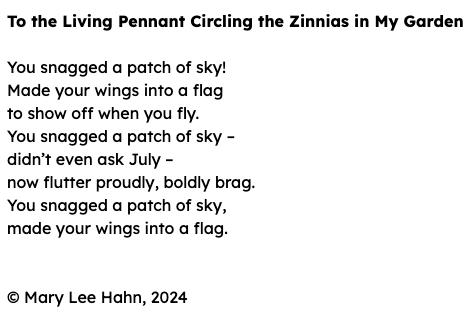
The photo above is a black swallowtail that was born in the fennel in our garden last summer, raised in the safety of our house, and released back into the garden when she (yes, that’s a female) emerged from her cocoon. Compare a real black swallowtail to the piñata version by Roberto Benavidez. Remarkable, isn’t it? Using “paper as the equivalent of paint” in a “fringe that flows,” Benavidez is able to capture the reality of a butterfly, the fantasy of mythical creatures, and nearly photographic landscapes.

If you want to know more about piñatas as well as about Roberto Benavidez and his art, you can watch this Craft In America episode on play. Piñatas are found at 12:16, and Roberto Benavidez is at 18:27.

Here’s how the other Poetry Sisters met this month’s challenge:

Liz @ Liz Garton Scanlon
Tricia @ The Miss Rumphius Effect
Tanita @ {fiction, instead of lies}
Laura @ Laura Purdie Salas
Sara @ Read Write Believe
Kelly @ Kelly Ramsdell

Susan has this week’s Poetry Friday Roundup at Chicken Spaghetti.

Slice of Life: Book Awards

Thank you to Two Writing Teachers for creating an amazing community of writers and a safe, welcoming space to write and share.

Yesterday was one of the happiest days of the year: ALA Youth Media Award Day!

Back in 2006 when Franki and I started the original A Year of Reading blog, our main purpose was to have a public chat about books all year and then see who could pick the Newbery and Caldecott in January.

We have rarely been right, but along the way, we found ways to give each other grace. The winner was in your Amazon cart? That counts. On the stack beside your bed? Counts. On reserve from the library but hasn’t arrived yet? Definitely counts. And my new one this year — read halfway through but didn’t love it and abandoned it? Still counts.

For a retired person, I’m pretty proud of how many winners in different award categories I read: American Indian Youth Literature Awards (CONTENDERS and MASCOT), Coretta Scott King (BIG, THERE WAS A PARTY FOR LANGSTON, AN AMERICAN STORY), YALSA Award for Excellence in Nonfiction for Young Adults (NEARER MY FREEDOM), Pura Belpré (REMEMBERING, 1/2 of MEXIKID), Robert F. Sibert Informational Book Award (THE BOOK OF TURTLES, JUMPER [on hold at the library]), Caldecott (IN EVERY LIFE, THERE WAS A PARTY FOR LANGSTON, BIG), Newbery (1/2 of MEXIKID).

I’ve got the Newbery winner, THE EYES & THE IMPOSSIBLE by Dave Eggers on reserve at the library but rather than going back to fill in any other holes, I’m going to concentrate on reading all the best that 2024 has to offer.

Did you read some winners in 2023? What 2024s are already on your TBR stack?

Poetry Friday: Ironing

image via Unsplash

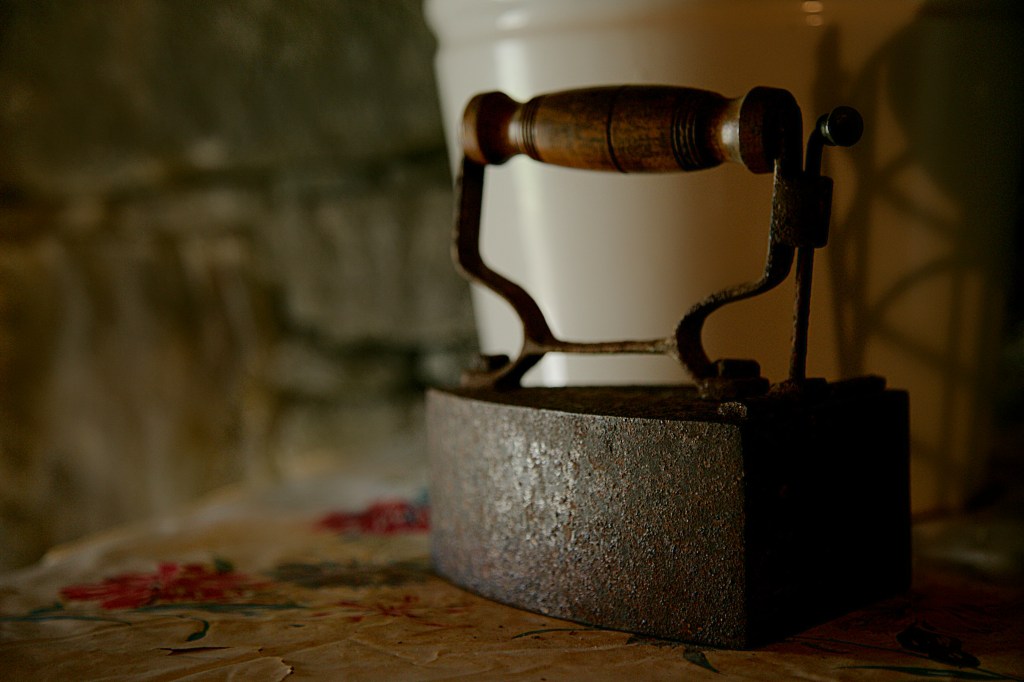
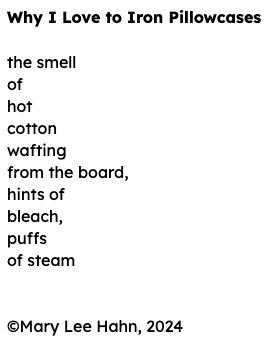
Just a little something about me that you never knew! This is one of those poems that wrote itself while I was in the midst of the task. Besides the sensory joys of ironing pillowcases, I also love the feeling that in some small way I can bring order to chaos, which is why I also love raking leaves and shoveling snow.

Robyn has this week’s Poetry Friday roundup at Life on the Deckle Edge.

Slice of Life: What a Day!

Thank you to Two Writing Teachers for creating an amazing community of writers and a safe, welcoming space to write and share.

It was a full day — the usual reading, writing, and art-making, plus baking gingerbread blondies. If I could have stopped there, I would have been happy-tired.

Then came two hours of animated read aloud plus snowflake cutting, followed by the cleaning up of the glorious mess of snippings, all of which pushed happy-tired into satisfied-exhaustion.

There was still dinner to make, though, which luckily was an easy standard casserole from my childhood made from a recipe with a note at the top that never fails to give me a shiver of connection to all my dinner-making ancestors: “November 1949 Women’s Day Kitchen.” When I got to the final step, the assembly of the layers, I discovered that we had no Bisquick.1 Sigh. At least it wasn’t raining torrentially anymore, and I was pretty sure that the nearby UDF would have Bisquick. Which they did.

When I took the bag out of the box, I noticed some powder in the bottom of the box. “That’s odd,” I thought, then grabbed the one-cup measure out of the open drawer in front of me and started filling it. As I filled the measuring cup, I realized that I was simultaneously sifting powder into the open drawer. But how? What was going on? That’s when I (holding the bag over the counter now) investigated the bottom of the bag to find that though it had been crumpled enough to pass at first for closed, it had completely missed the sealing process at the Bisquick factory. It was wide open and now there was a pile of powder on the counter along with the liberal dusting in the silverware drawer and, I discovered as I stepped away from the chaos, on the floor as well.

At this point, AJ came to the rescue. Giggling and making light of the mess, he de-fused my impending meltdown by bagging up the remaining Bisquick, fetching the shop vac to clean the counter, drawer, and floor while I finished assembling the casserole. I popped it in the oven, did all the dishes, and had exactly three minutes to collapse on the couch before dinner. Now I was full-on, head-to-toe, blurry-vision exhausted.

What a day!

1Bisquick was invented in 1930, in case you were wondering.

HAMBURGER COBBLER

1 sm. onion, chopped
1 clove garlic, minced
1 lb. hamburger
1 tsp. salt
1/4 tsp. pepper
1/4 tsp. marjoram
1/4 lb. sliced cheese (white smoked cheddar takes this recipe to a whole new level!)
1 can drained tomatoes
2 T Worcestershire sauce
3 T ketchup
Bisquick

In a small bowl, mix together the tomatoes, Worcestershire sauce, and ketchup. Saute onion and garlic, then add hamburger and seasonings and brown the hamburger. Make one recipe-worth of Bisquick dough (as per directions on the box). Spread hamburger mixture in a 9×9″ baking dish, put cheese on top, then the tomato mixture. Add blops of Bisquick on top. Bake at 450º for 25 minutes.

Slice of Life: Poetry Unbound

Thank you to Two Writing Teachers for creating an amazing community of writers and a safe, welcoming space to write and share.

Pádraig Ó Tuama is three poems into the new season of the podcast Poetry Unbound. Yesterday’s poem gave me lots to think about.

The Land Acknowledgement we do at the beginning of the Casting for Recovery retreat reminds us all that the place where we will make new friends and learn new skills was originally where the Kaskaskia people and the ancient Hopewell Culture lived. At this year’s upcoming retreat, we’ll do that AND acknowledge the land itself as Conor Kerr does in “Winter Songs.”

Two words that Pádraig unravels in his conversation about the poem are DISMANTLE and REMEMBER. We usually think of dismantle as meaning to take apart. But he points out that

The verb “dismantle” comes from the noun mantle, which in some uses of it, is the placing of a ceremonial cloak to confer authority to someone. And so to dis-mantle structures…this is not necessarily about destroying, it is about placing authority where it should be placed because the structures that are being critiqued in the poem have divided.

When we remember, we are usually looking back and thinking about something again. But if we consider what it means to be dis-membered, or torn apart, then if something is re-membered, it is put back together again. I love that shade of meaning.

So there you have it: a podcast to check out if you don’t already know it, one that will not only add more poetry to your life but also provide all kinds of food for thought. Happy Listening!

Poetry Friday: Yuletide

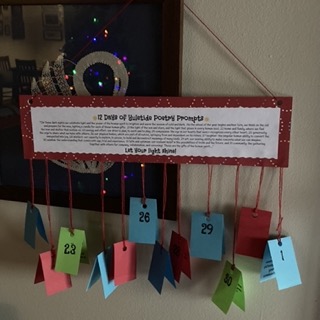
Heidi’s December challenge for the Inklings came to us in the form of this mobile (which is hanging beside our mail table and yes that’s the Christmas tree reflecting in the lace swan’s glass). The card from which hang the “12 Days of Yuletide Poetry Prompts” details the precepts for the season and each of its days.

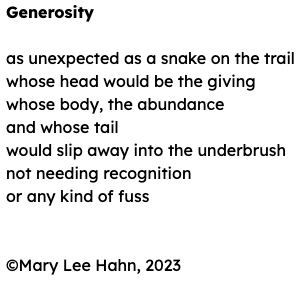
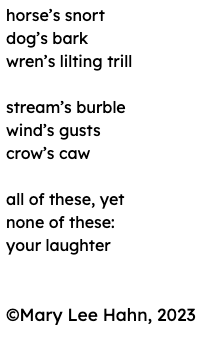
I wrote to all twelve of the prompts. Here are a couple that I especially liked. First, the introduction to Yuletide:

“On these dark nights we celebrate light and the power of the human spirit to brighten and warm the season of cold and dark. As the wheel of the year begins another turn, we think on the old and prepare for the new, lighting a candle for each of these human gifts:

25 generosity: the urge to share what we have with others (prompt: ask what generosity really means)

27 laughter: the singular human ability to convert the unexpected into joy (prompt: capture the sound of laughter)

Thank you, Heidi, for generously (and creatively!) sharing your family’s Yuletide traditions with us, and for twelve days of thoughtful writing prompts. I can’t wait to see what the other Inklings did with your challenge, because for once, we haven’t had the chance to share any early drafts. We haven’t an INKLING what the others have written!

Heidi @my juicy little universe
Molly @Nix the Comfort Zone
Catherine @Reading to the Core
Margaret @Reflections on the Teche
Linda @A Word Edgewise

Marcie has this week’s Poetry Friday Roundup at Marcie Flinchum Adkins.