Jennyanydots (6 lbs) in her 21st and final year in 2008, and Hemingway (14 lbs) currently in his prime.
Margaret gave the Inklings quite a challenge this month! We wrote ghazals, (Hindi: ग़ज़ल, Arabic: غَزَل, Bengali: গজল, Urdu: غزَل, Persian: غزل, Azerbaijani: qəzəl, Turkish: gazel, Uzbek: gʻazal, Gujarati: ગઝલ) an ancient Arabic poetry form with five delightfully complicated rules.
I found Ravishing DisUnities by Agha Shahid Ali VERY helpful. This collection of ghazals by 100+ poets (including Diane Ackerman, W.S. Merwin, and Maxine Kumin, just to name a few of the poets whose names I recognized) helped me to suss out the form, AND provided all kinds of variations on the form.
(An aside, related to Bridget’s post about DuoLingo. I’m learning Spanish and Arabic and reviewing my rusty German with DuoLingo. Current status: 90 day streak. When I pasted in “ghazal” in all those different languages (thank you, Wikipedia), I was startled to realize that I can ALMOST read the Arabic! I haven’t learned the “gh” character yet, but I know the little accent mark above it means short a, I know z (with another short a), and I just learned l. WOW!)
Texts for this Text Set have been posted daily on Instagram. Follow @TextSets there to get daily updates!
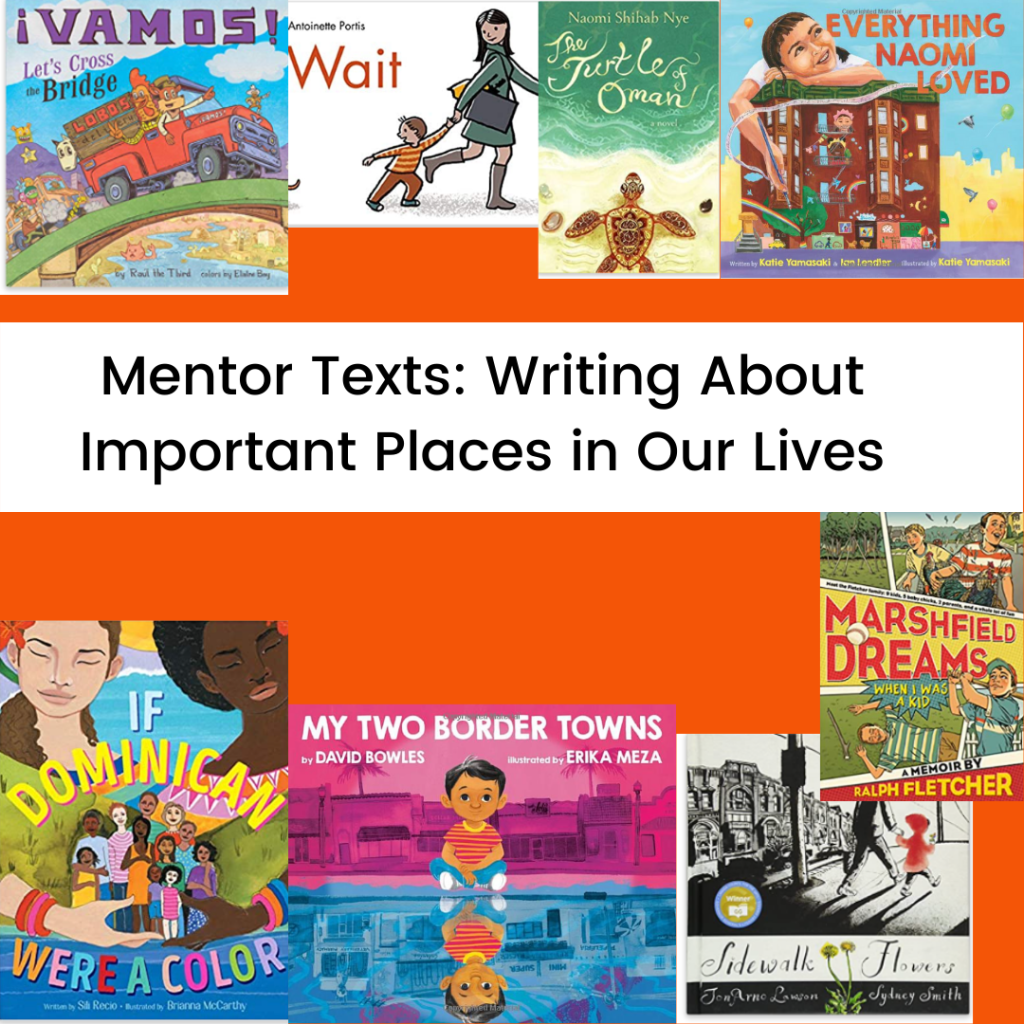
This week’s Text Set focuses on writing mentors. Often for writers, it is helpful to see the various ways different writers approach similar topics. Studying the possibilities is important in all genres and formats of writing. This week, we’ll focus mostly on narrative texts that would work well in a narrative unit of study.
(You’ll notice a few sets of these books were shared last spring with a reading focus. I am a big believer in using anchor mentor texts across the year for a variety of reasons. So even though some sets are the same or similar, the focus of this set is study as a writer, especially as part of a narrative unit of study.)
Family Get-Togethers
The Relatives Came by Cynthia Rylant is a classic text used in many writing workshops in the study of narrative. To deepen the study, comparing different ways writers write about a family reunion–the word choice, the focus, the imagery, etc. can be done using this classic along with Family Reunion and Going Down Home with Daddy. Each of these has a very different writing style and young writers can learn a great deal from comparing these.
A Trip
Writing about a trip is something young writers like to do, especially within a narrative unit of study. Fatima’s Great Outdoors and The Camping Trip each focus on a camping trip and the experiences of that one trip. Writers can study the format and also the focus that each story has within the topic of a camping trip.
Learning Something New
Learning a new skill takes patience and practice and each of these characters’ stories shows that. The Electric Slide and Kai, The Most Magnificent Thing, Jabari Tries and Amy Wu and the Perfect Bao show the messiness of the learning process! Learning something new is a great topic for narratives and there are so many ways to approach the topic. This set shows writers the variety of things learned as well as a variety of ways to approach the topic as a writer.
Someone We Love
Writing about someone we love to spend time with or someone we miss is a common topic in narrative writing. When Lola Visits, Saturdays are for Stella, and I Dream of Popo explore the relationships as well as coping with missing a loved one in different ways.
The Current Pandemic
The current pandemic something on many children’s minds and these three books (Outside, Inside, And the People Stayed Home, and Keeping the City Going take that current issue and open conversations for children. These books can also be used as mentors because even though each is about the pandemic, the focus and the writer’s purpose of each is very different.
This week’s books were linked at Cover to Cover Children’s Bookstore. If you are looking for a fabulous children’s bookstore to support, this is an amazing one. We are lucky to have them in Central Ohio!
The Poetry Sisters’ challenge for August was to write a What the ____ Knows poem either after the style of Jane Yolen’s eight line, rhyming poem, “What the Bear Knows,” a poem written in honor of her 400th book, Bear Outside, or after the style of Joyce Sidman’s “Higher Power” poems which she introduced in Michelle Barnes’ Today’s Little Ditty Spotlight.Jane’s poem has short lines that are complete sentences, and rhymes in lines 2&4, 6&8. Joyce’s poem has two stanzas with three lines each — a total of six truths. The line, “What do/does the ___ know?” is repeated at the beginning of each stanza, and rhyming the final word in line is optional.
For me, strict adherence to form can yield surprising results. But it’s just plain FUN to fiddle with form, and these What the ____ Knows poems were all kinds of fun!
Now that I have a little more free time, I have found my way back to embroidery, and I was inspired by the needle going in and out of the fabric. This one is Sidman-ish. It has six lines, but not in groups of three. It has rhyme, but in pairs. The question is not repeated. My biggest fun was with enjambment.
photo via Unsplash
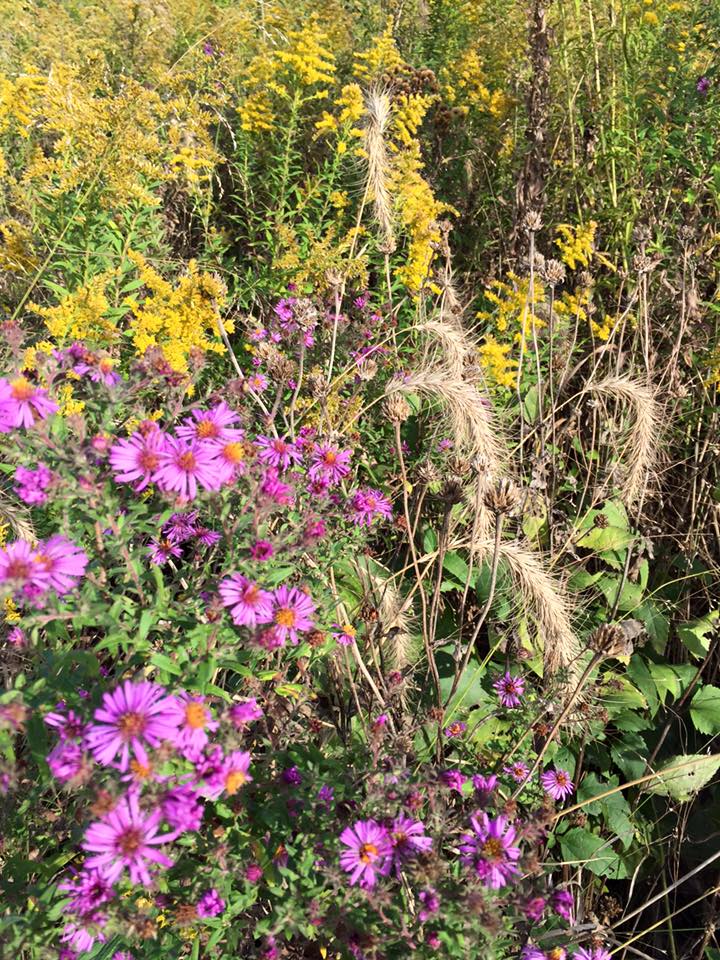
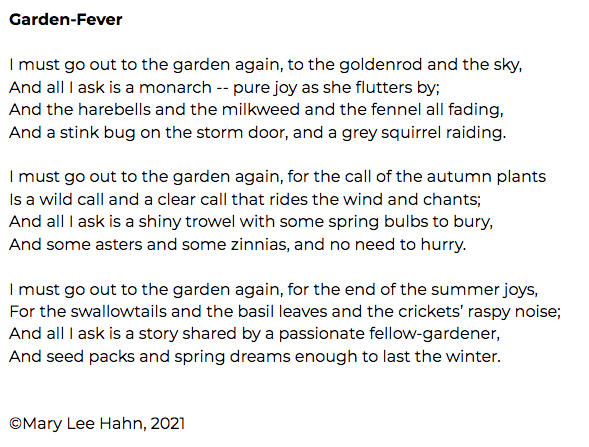
These next two were inspired by my garden. Zinnias (hello again!) comes closest to following Sidman’s form. Crickets is similar to Needle, but its rhymes are 1/3/5 and 2/4/6. Like I said, the operative word this month was PLAY!
I’m still working on a pair that explores WHAT THE POOL KNOWS. One has long lines and is very conversational in tone; the variation is terse.
Check out what the other Poetry Sisters came up with, and join in if you want!
If you want to plan ahead for the Poetry Sisters’ September challenge, we’re each choosing a poem by another Poetry Sister and writing a tanka in response or inspired by or in conversation with that poem. You can choose a poem by someone in the Poetry Friday universe and write a tanka in response or inspired by or in conversation with their poem.
Thank you, Two Writing Teachers, for creating a community of writers and a safe place to share.
Today’s prompt at the Ethical ELA Open Write is to create a one-sentence poem. Such an easy way in. I read back through my notebook until I found an entry that had a bit that seemed like it could be a poem.
Writing in a community is such a pleasure, and I am blessed with so many different communities. Poetry Friday is a constant, as are my two new poetry groups — Sisters and Inklings. I like dipping into the Slice of Life and Ethical ELA communities. The best, though, is the community of one — just me and my notebook most every day after exercise and before reading.
Happy Friday, Poetry Friends! In spite of but also because of all the dire and drastic news from around the world, I wish for you tiny moments of respite, such as the ones we’ve been blessed with recently when the hummingbird comes to the zinnias and sweet peas in our garden.
If you’re up for a challenge, here’s what the Poetry Peeps are working on for next Friday.
Time to start working on the Poetry Peeps August challenge! The last Friday of August will be here before you know it! Here’s the challenge: We’re writing after the style of Jane Yolen’s eight line, rhyming poem, “What the Bear Knows,” a poem written in honor of her 400th book, Bear Outside. Our topic is What the ____ Knows. You might have written one of these for Michelle Barnes’ Today’s Little Ditty Spotlight on Joyce Sidman.
You’ve got a couple of weeks to craft your creation(s), then share your offering on August 27th in a post and/or on social media with the tag #PoetryPals.
Ten Beautiful Things by Molly Beth Griffin illustrated by Maribel Lechuga Charlesbridge, 2020 review copy via the public library
FIRST THE PICTURE BOOK Lily doesn’t want to live in Iowa with her grandmother, but as they drive, they play a game where they try to find ten beautiful things, which brings them home. I love that this book doesn’t explain why Lily needs to live with her grandmother, and it doesn’t even get them inside the front door at the end, so we don’t know for sure what her new life will be like in Iowa. This is very much a book about focusing on the present, and mindfully finding beauty around us, in spite of what might be going on inside us.
AND NOW THE POEMPAIR This book with its list of ten beautiful things seemed to want a list poem as its pair. An excellent mentor text for list poems is, of course, FALLING DOWN THE PAGE: A BOOK OF LIST POEMS, ed. Georgia Heard. This poem was inspired by our recent drive from OH to CO and back.
It’s important to remember that the privilege of a road trip has not been/is not now equally accessible. After spending some time enjoying this book, make sure to explore the history of The Green Book, or The Negro Motorist Green Book. This guide was published (starting in 1936) during the Jim Crow era until just after the Civil Rights Act of 1964 (in 1967) to give African American travelers a list of safe places to get gas or service, eat a meal, or spend a night. Jim Crow was a system of open and often legal discrimination against African Americans, who were frequently refused by white-owned businesses the selling, servicing, or repairing of their cars (often bought to eliminate the segregation experienced on public transportation). African American travelers were denied food or accommodation, and their safety was at risk in “sundown towns” where there was a possibility of physical violence. The Green Book gave Black travelers the same kind of safe path through the United States (and later abroad) that earlier publications provided for Jewish travelers.
Christie has this week’s Poetry Friday Roundup at Wondering and Wandering, along with a FANTASTIC crowd-sourced “Poetry Is” poem (facepalm…I forgot to submit a line).
It’s August 10 so you know what that means–time for Mandy Robek’s and Cathy Mere’s incredible #PB10for10. A day to find lots of great new books from so many people! This year’s posts are being curated at the blog Reflect and Refine so make sure to visit several times today so that you don’t miss a post. Also follow the hashtag #PB10for10 on social media.
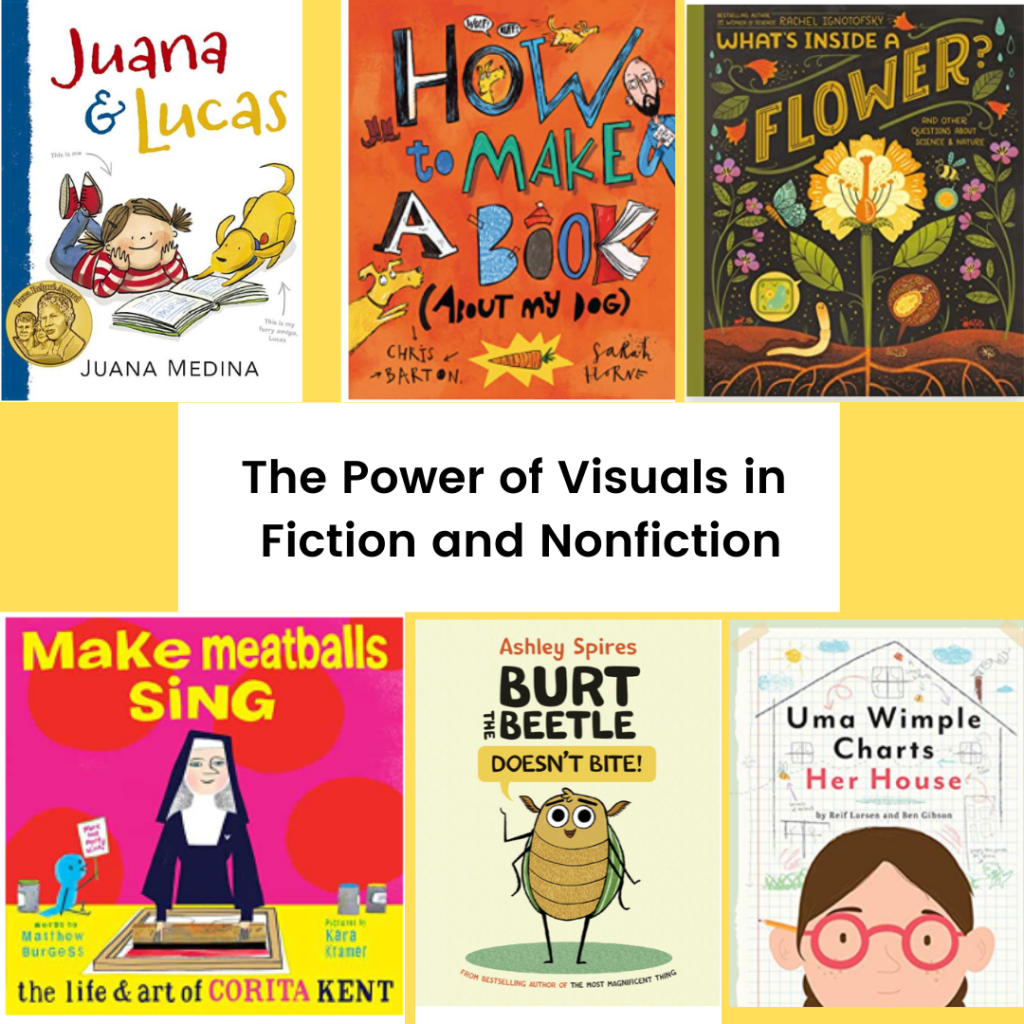
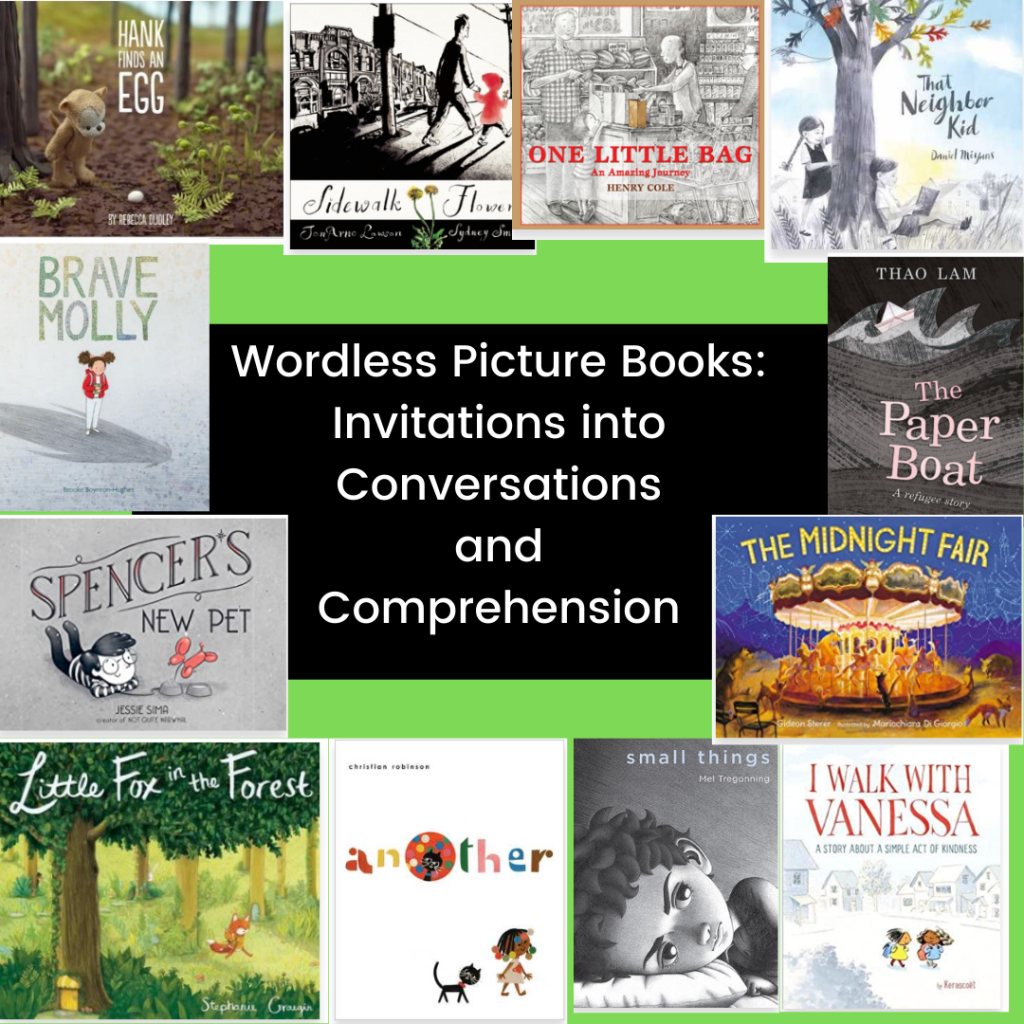
This year, my 10 picture books are books that helped me learn about some story or piece of history that I didn’t know about. Thanks to Dr. Laura Jiménez, I have realized how much history I have not learned and how important it is for us to learn the history we missed. So much of this history was not taught when I went to school and with these great picture books, we can learn important history ourselves and we have great books to share with our students so they don’t miss this history. I’ve learned so much from each of these books and they are all perfect for elementary classrooms. This is certainly not a comprehensive list but it’s a good place to start.
It’s August, and retirement is getting real. My brain is not filled with thoughts of classroom organization, community building, lesson planning, or safety mandates. And that’s okay. Time to move on to new adventures.
This poem was the first villanelle I attempted in July as I prepared for the Poetry Sisters’ challenge. I used my clunker line from Linda Mitchell (I shake the flame out of my matchstick) but I never intended for it to be a poem about retirement. The best poems are the ones that surprise even the poet, right?
Christie, who has next week’s roundup, is gathering lines for a community “Poetry Is…” poem she’ll post next week. Be sure to check out her post and contribute a line!
The Poetry Sisters’ challenge for this month was to write a villanelle on the theme of dichotomy. Have you ever noticed that villanelle begins with villain (almost)? This is a doozie of a form and the added challenge of a dichotomy…whew! I started one with the repeating lines
In early May, on a whim, I chose zinnia seeds to plant in rows.
I managed to make it all the way through a villanelle with those lines, but it fell apart in revision. Luckily, I wrote several villanelles in July! I’m not sure there’s any clear dichotomy in this one (stormy/sunny?), and I definitely bent the rules a bit with my last line, but I had fun with enjambment!
Check out what the rest of the Poetry Sisters came up with: