Awhile back, Margaret shared extra sheets of build-your-own-metaphor-dice that Taylor Mali had sent for her students. I rolled “courage will be a sparkling needle” and it felt like the Universe was speaking directly to me. Earlier in the day I had posted my embroidered mandala for this week (19 of 52 weeks of embroidery mandalas).
Linda gave us our Inkling challenge for this month, suggesting that we “Honor someone’s April Poetry project in some way with a poem in the spirit of their project, a response poem, or some way that suits you.”
I am honoring Amy, who wrote poems in response to proverbs. I’m also honoring Tanita, who did the same, with a few twists. I didn’t dig into the history of the proverb, the way Tanita did, but like her, I wrote short enough to put my poem on a sticky note (also honoring Laura PS) along with a sketch.
MORNING WALK
one deer pair of mallards hawk on the outfield fence unseen bird chorus in the woods coal train
Today’s proverb is “Rain does not fall on one roof alone.” The contrast between the vibrant urban wildlife and the seemingly endless coal train reminded me that every human action has consequences that reverberate well beyond the point of impact. We must learn to be less myopic.
Here’s how the rest of the Inklings interpreted the challenge:
I’m for photosynthetic optimism – the bulbous kind you plant in the fall in spite of squirrels who dig ruthlessly and urban deer who nibble indiscriminately, the kind that seed packets hold through the winter believing in butterflies and hummingbirds before they’ve ever known sun and rain.
Here’s to the blazing green energy of plants– from the toughest blade of crabgrass to the most tender spring ephemeral, from the massive trunks of riverbed sycamores to the tiniest pond-floating duckweeds.
I’m for the plants – for the roots who go about their work silently, mysteriously, collaborating with mycorrhizal fungi.
And I’m for the leaves of trees – especially sweet gum’s stars and ginkgo’s fans.
I’m for the way we share the air with plants – us breathing out, plants breathing in. I’m for the generous chemistry of leaves, combining carbon dioxide with water and sun, creating carbon building blocks for itself, then sharing the extras back into the soil for the microbes.
What moves me? What plays me like a needle in a groove? Plants.
The Poetry Sisters’ challenge for this month was to write in the style of Taylor Mali. The poem I used as my mentor text is Silver-Lined Heart. Next month we are writing poems around the words string, thread, rope, or chain.
Happy Last Friday of National Poetry Month 2022! All of my NPM poems are archived here. Jone has this week’s Poetry Friday Roundup at Jone Rush MacCulloch. Like last weekend, I will be away from my computer this weekend and will look forward to catching up on your posts next week!
My oceans are dying. My forests are cut down or burning. My systems are weakened, and my glaciers are melting. So many species are extinct. How can I convince you to help me?
From the essay, “Loving a Vanishing World,” by Emily N. Johnston in ALL WE CAN SAVE:
“It’s a constant question for me every time I’m entranced by the beauty of this world: What does it mean to love this place? What does it mean to love anyone or anything in a world whose vanishing is accelerating, perhaps beyond our capacity to save the things that we love most?”
Here’s the 2018 NYTimes article about the insect apocalypse that’s been haunting me for four years.
This is not one of my more hopeful poems. It’s hard to witness the natural world fading away, but loving the world is the first step toward saving it.
Contrails don’t give me hope in a time of climate crisis. They play a significant role in aviation-related global warming by creating clouds that trap heat on earth. But the fact that scientists are studying them does give me hope. The sudden, dramatic drop in airplane traffic in 2020 proved to researchers at MIT that their mapping of contrails was accurate.
“But if the world wants a big short-term contribution from aircraft to keep us below some specific temperature target, such as 1.5 degrees C, then action on contrails can provide it.”
“working with major airlines to forecast regions in the atmosphere where contrails may form, and to reroute planes around these regions to minimize contrail production.
Steven Barrett, professor and associate head of MIT’s Department of Aeronautics and Astronautics. “There’s an unusual opportunity to halve aviation’s climate impact by eliminating most of the contrails produced today.”
“Most measures to make aviation sustainable take a long time,” Barrett says. “(Contrail avoidance) could be accomplished in a few years, because it requires small changes to how aircraft are flown, with existing airplanes and observational technology. It’s a near-term way of reducing aviation’s warming by about half.” “
Now THAT’S hopeful. Let’s go, airline industry. The ball’s in your court.
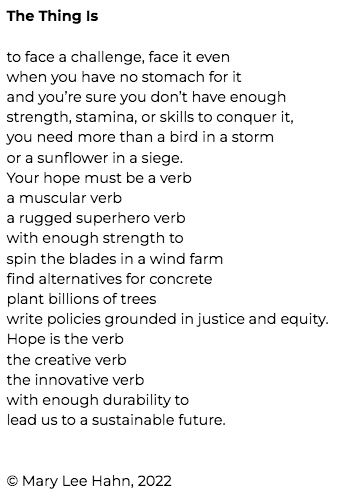
This poem was written using The Thing Is by Ellen Bass as a mentor text. All of my poems from this week can be found here.
Janice has this week’s Poetry Friday roundup at Salt City Verse.
The Progressive Poem has been around since 2012, when Irene Latham got it started. In 2020, Margaret Simon took the reins. I’ve taken part every year!
I thought I was being so clever this year, choosing a day early in the schedule when I would have a chance to perhaps bring the first quatrain to a close, or at least help set the intention for the poem, rather than trying to figure out how to continue it in the middle or turn it towards the end.
Come to find out, beginnings are just as hard as middles and ends. But I guess I already knew that. So now it’s been confirmed.
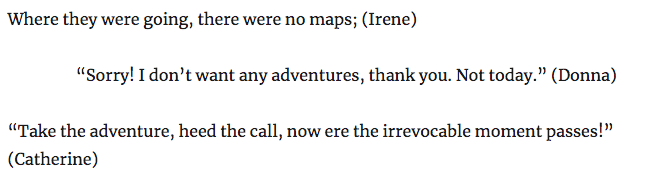
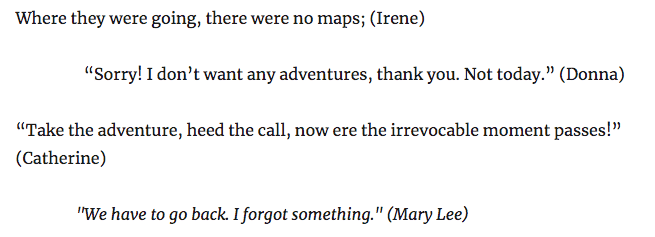
Irene gave us our first line this year, a quote from Emily Winfield Martin’s book, The Imaginaries. In the second line, Donna gave us a quote from The Hobbit set us on the JOURNEY of a poem for two voices, perhaps told all in quotes. Catherine chose a line from The Wind in the Willows . Here’s the poem as I received it. A bold statement about the journey ahead, a polite refusal, and an enthusiastic encouragement to GO FOR IT:
For me, one of the quintessential children’s books featuring a journey is Walk Two Moons by Sharon Creech. If I had time, I’d reread the whole book. Just taking it off the shelf and flipping through the many sticky-noted and dogeared pages makes me wistful for all the times I read it aloud in my classroom. I didn’t have to read much to find the quote I needed for the poem. Salamanca Tree Hiddle both does and emphatically does NOT want to go on the journey to Lewiston, Idaho. “It was not a trip I was eager to take, but it was the one I had to take.” Her voice will add to the reluctance in Donna’s line, and we’ll have to see where Buffy takes us next.
.
.
Here’s where the 2022 Progressive Poem has been and is going:
My poems this month will be inspired by the essays and poems in this book, and by this gorgeous living planet we call home.
Sometimes I get a panicky feeling about our future, but I’m trying hard to hold onto hope and to the actions I can take, no matter how small. It is not too late to turn things around, but I can’t sit on the couch waiting for someone else to do something.
Throughout the week, I’ll be posting at Poetrepository, but I’ll do a mini roundup here on Fridays.
Today’s poem does double-duty. I challenged the Inklings to write a poem using The Thing Is by Ellen Bass as a mentor text. I wrote a couple of drafts, but when I fully processed that this poem would need to introduce my NPM project, it was back to the writer’s notebook to draft again.
Here’s how the rest of the Inklings interpreted my challenge:
I love writing from an image. I love short form poetry. So this month’s Poetry Sisters challenge was right up my alley: ekphrastic dodoitsus. When we dug into the definition of dodoitsus, however, we learned that they are more complicated than a simple 7-7-7-5 syllable count. “The dodoitsu often focuses on love or work with a comical twist.” I’m not sure how well I satisfied all of the requirements, but it was lots of fun.
This first picture is at the historic Open Air School here in Columbus. They have completed renovations and one of our new favorite restaurants, Emmett’s, is located there.
After so many courses laid with rhythmic precision I can’t stand it anymore. Time for a jazz riff.
In this one, the poem only matches the photo on the theme of careless quality control. It’s based on a story Molly Hogan told, and so I’m sorry to tell you that it is as true as that unsliced apple in the picture. But a LOT more gross.
In the pickle factory, he left the frogs on the belt. Quality control loophole: squeamish inspector.
Amy LV has this week’s Poetry Friday roundup at The Poem Farm.
If you want to join the Poetry Sisters’ challenge for next month, we’re going to write in the style of Taylor Mali, which is to say there might be metaphor dice involved, and perhaps some eloquently long-winded spoken-word poetry which may or may not be recorded in videos. Mali’s mentor poems are not always appropriate for children/students, but that doesn’t mean we can’t borrow his style if not all of his subject matter and/or word and gesture choices.
I’m sure you know Mali’s “What Teachers Make,” (look at who he’s on stage with in this version) and if you don’t know “When I Miss Teaching,” it’s time to do something about that. Especially that ending. So true. You should read “The Impotence of Proofreading,” rather than watching it, but in either case, make sure you don’t have food or drink in your mouth. (if you watch, the other guy on stage has warmed up a bit…)
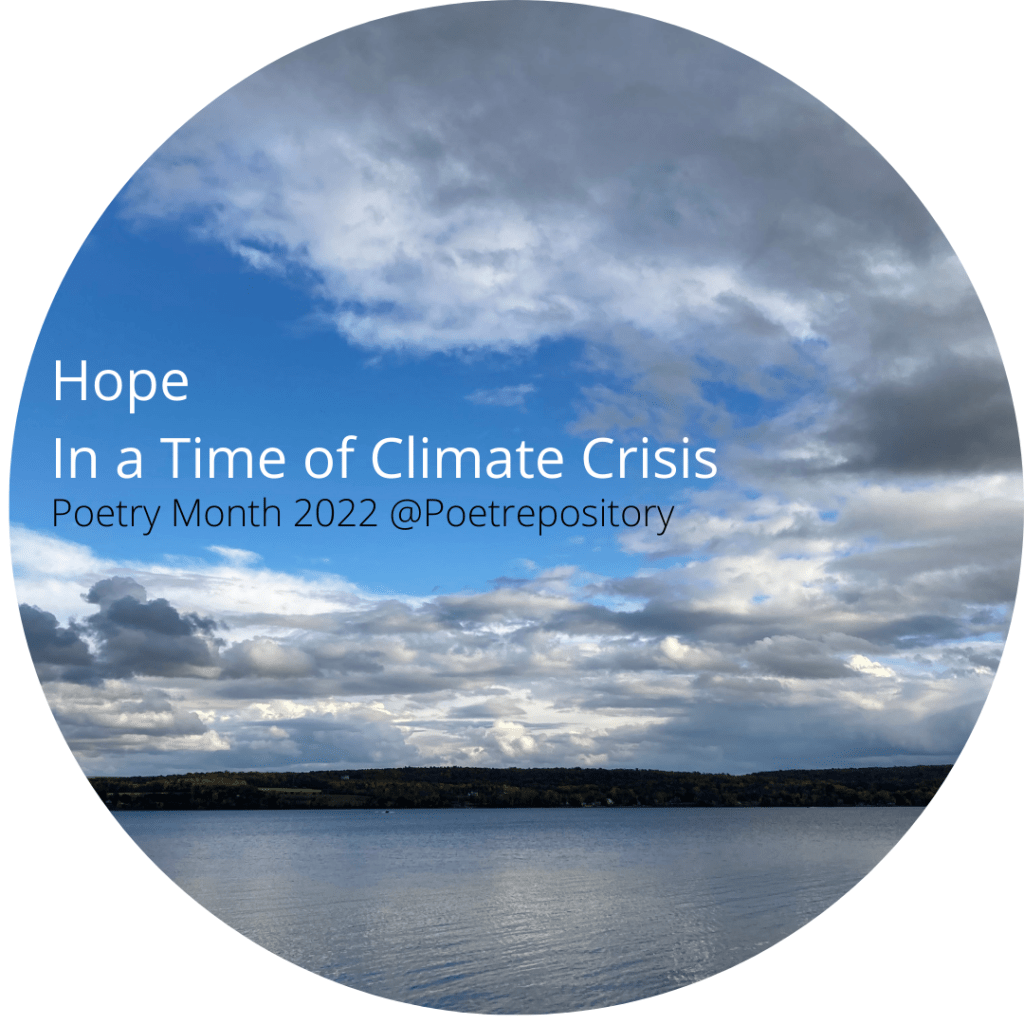
Next week begins the zaniness known as Poetry Month, in which I write AND PUT OUT IN THE WORLD a poem a day. According to Poetrepository, this will be my 9th year of this madness. However, there are three more years of poems at A Year of Reading that I need to move over to Poetrepository. So it’s actually my 12th year. Wow. I’ve got my 2022 theme, but not my cute graphic made on Canva, so you’ll have to stay tuned. I’ll be posting on Poetrepository, but will round up the highlights here on Fridays.
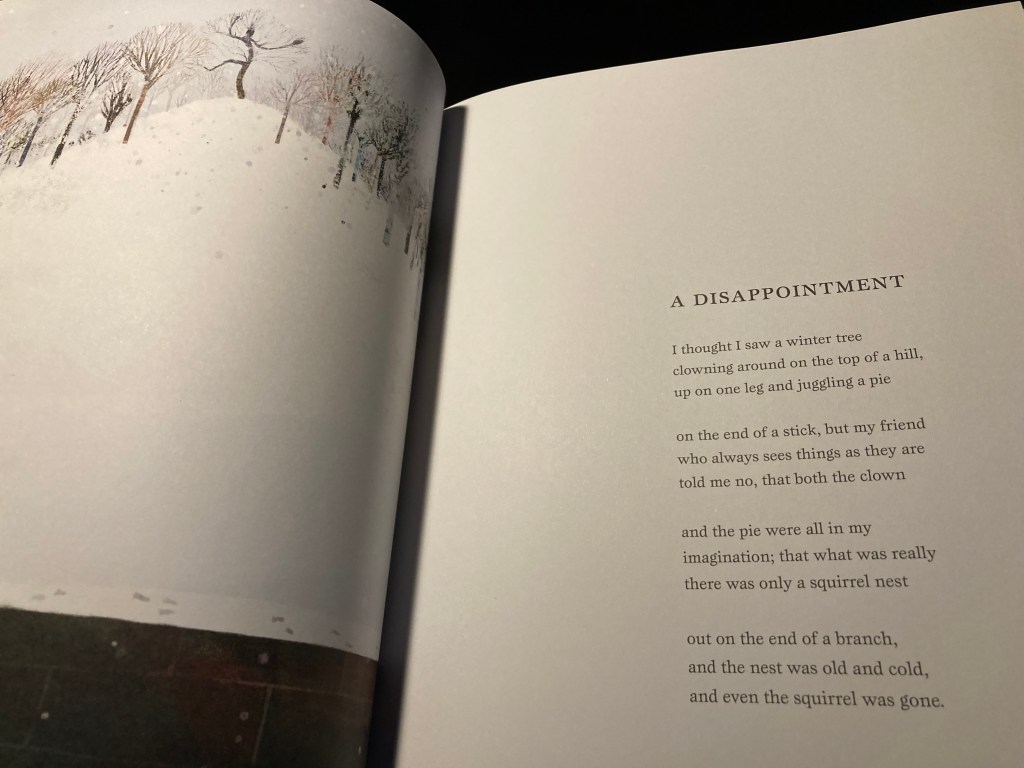
Marshmallow Clouds: Two Poets at Play among Figures of Speech by Ted Kooser and Connie Wanek illustrated by Richard Jones Candlewick, 2022
Two of my favorite poets for adults, Ted Kooser and Connie Wanek, both write poetry that is accessible and that makes me see the world in new ways. How lovely that they combined their talents to do the same for children! None of the poems are signed, so I love imagining the process of collaboration with which they were created.
The book is divided into four parts — fire, water, air, and earth. But the first poem, before the fire section begins, sets the tone for the whole book: this will be a collection of poems that encourage readers to use their imaginations.
The focus on imagination is reinforced in the poets’ afterwords, which feature Kooser’s and Wanek’s thoughts on imagination, and a bonus poem by each of them that illustrates how they (and WE!) might use imagination as we move though the world.
The poems in this collection will help to broaden children’s understanding of what poetry is and what it does for the reader. These poems don’t rhyme or have clappable rhythms. They are plain spoken observations of the world through the lens of imagination. They never talk down to the child reader, and the metaphors and similes are accessible and delightful. Who wouldn’t want to imagine their book as a sandwich, with a folded pita for covers? Or a harpist, holding a giant moth and stroking its wings? Or why our pets don’t write?
Whether they are in your lap or in your class, these poems beg to be shared with children!
Ruth has this week’s Poetry Friday roundup at There is no such thing as a God-forsaken town … and before we head off to read each other’s posts, let’s pause for a moment to think about that blog name, and send out strong and positive thoughts and prayers to all the people in all the towns in Ukraine.







 A(nother) Year of Reading