
I have this thing for books that make me cry. When I was in middle school, Sunday afternoons were for kicking back on my bed and rereading LITTLE BRITCHES or WHERE THE RED FERN GROWS or OLD YELLER or LOVE STORY or CHARLOTTE’S WEB and letting the tears roll down my cheeks and into my ears even though I knew what was going to happen. Maybe especially because I knew what was going to happen.
I recently listened again to Krista Tippet interview Kate DiCamillo (On Nurturing Capacious Hearts) and Kate (in a response to an essay by Matt de la Peña) gave me the words for why I love books that make me cry:
“My childhood best friend read Charlotte’s Web over and over again as a kid. She would read the last page, turn the book over, and begin again. A few years ago, I asked her why.
“‘What was it that made you read and reread that book?’” I asked her. “‘Did you think that if you read it again, things would turn out differently, better? That Charlotte wouldn’t die?’
“‘No,’” she said. “‘It wasn’t that. I kept reading it not because I wanted it to turn out differently or thought that it would turn out differently, but because I knew for a fact that it wasn’t going to turn out differently. I knew that a terrible thing was going to happen, and I also knew that it was going to be okay somehow. I thought that I couldn’t bear it, but then when I read it again, it was all so beautiful. And I found out that I could bear it. That was what the story told me. That was what I needed to hear. That I could bear it somehow.’”
Go listen to the whole interview. Both Kate and Krista are wise and funny and generous.
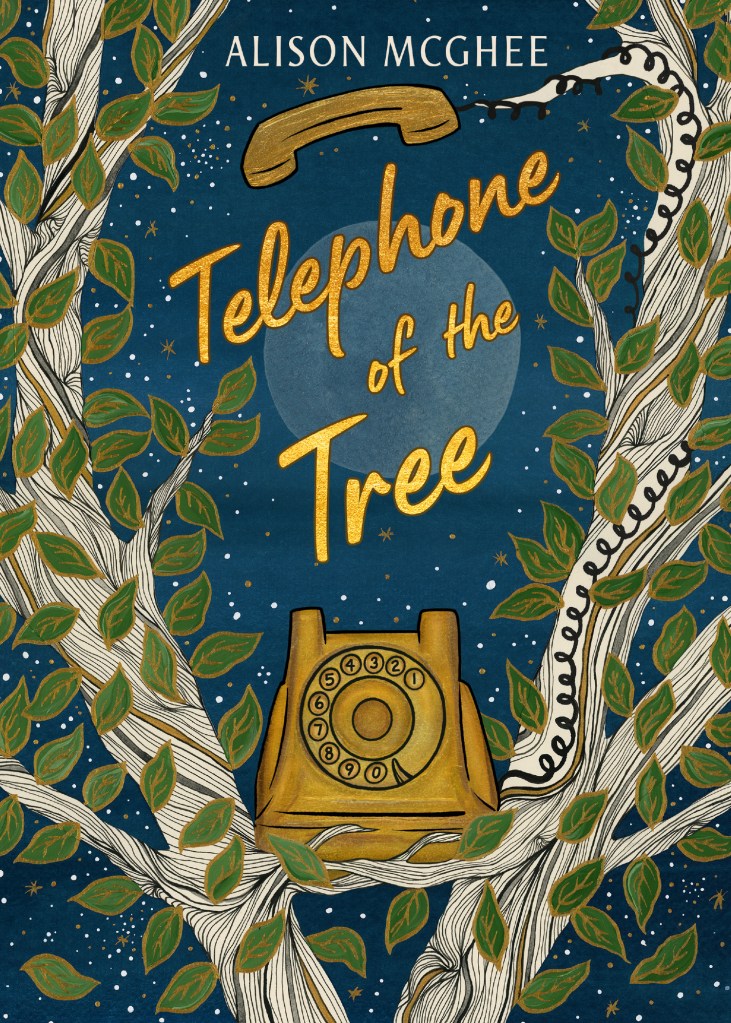
And if you wonder why the world needs TELEPHONE OF THE TREE, a book about a grief so palpable I dare you not to feel it and weep, it’s so that every reader has access to what Ursula Le Guin calls our Operating Instructions and what Rudine Sims Bishop called windows, mirrors, and sliding glass doors.
Here’s more about Ursula Le Guin’s essay “Operating Instructions” from which Kate quotes “The reason literacy is important is that literature is the operating instructions. The best manual we have. The most useful guide to the country we’re visiting, life.”
Here is Matt de la Peña’s essay in Time Magazine, and here is Kate DiCamillo’s response (although you can, alternatively, read it in the transcript of the interview with Krista and not be bothered by the ads).
 A(nother) Year of Reading
I started the On Being podcast this morning. I love Kate and her amazing sense of the world for children. I have a story to connect, but wrote a different one today. I think being in touch with that child within makes us better teachers, as well as better people.
LikeLike
Mary Lee, wow. What a wealth of resources you have provided today. I’m going off to enjoy clicking on your links now. This is so wise and wonderful: “I thought that I couldn’t bear it, but then when I read it again, it was all so beautiful. And I found out that I could bear it.” Thank you for sharing all these gems. Your post brought me happy/sad memories of crying with third graders as I read Where the Red Fern Grows.
LikeLike
I love this interview- it inspired me to choose capacious as my 2023 OLW. I look forward to exploring all your links this weekend. To me experiences like this reveal our common humanity.
LikeLike
Beautiful post!! Kate DiCamillo brought me to tears yesterday on Facebook with a story of interacting with a young reader. She’s an uplifting spirit. (Where The Red Fern Grows and Old Yeller were two of my favorite books as a child. So good. Also Bridge to Terabithia.)
LikeLike
Yes, I saw that post on FaceBook, and yes to Bridge to Terabithia. A new one by Lois Lowry to add to your list: Tree. Table. Book.
LikeLike