Poetry Friday: Double Duty Again

Have you seen Joyce Sidman’s new book? Her clever poems (and Melissa Sweet’s always-fantastic illustrations) just beg for you to write your own Letter Poems To Friends.

So I did!

This is also Inklings Challenge week, and we were given a generously soft challenge from Margaret:

Image Poetry: exchange an image with your partner and write an image poem using a small poem form (15 words, elfchen, haiku, shadorma, etc.).

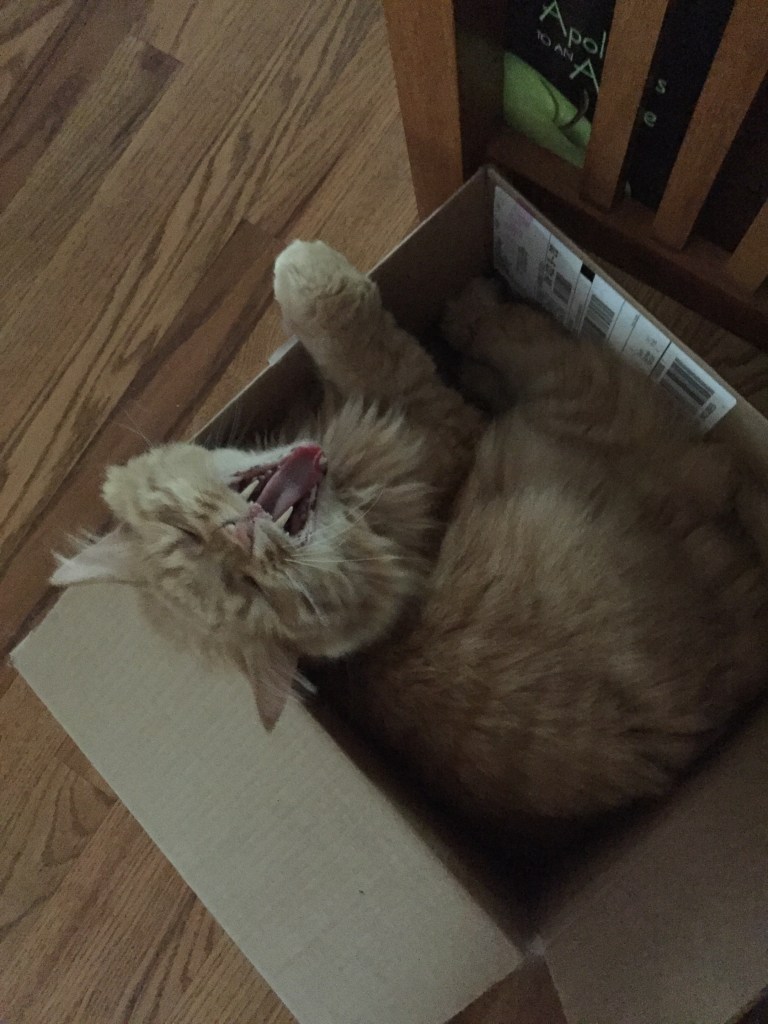
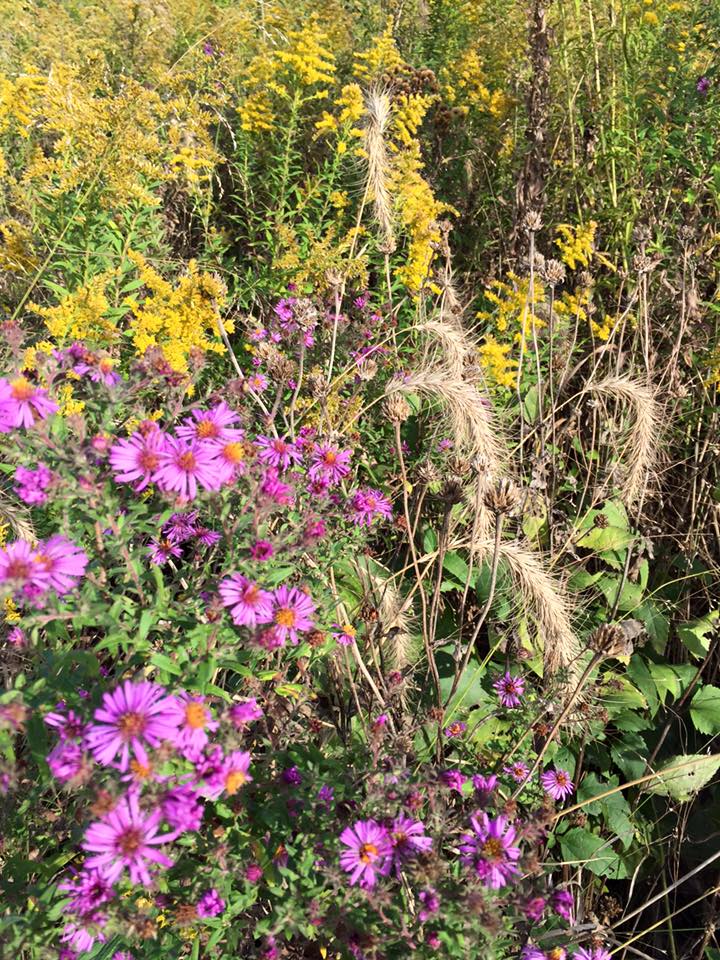
I traded images with Linda Mitchell. She sent me three from which to choose. Each had so much possibility, but I couldn’t NOT write from this one. I also couldn’t NOT write Letter Poems To Friends, so the “small poem form” part of the challenge got lost, but…THIS PICTURE!! and Joyce Sidman’s mentor texts!!! I know all will be forgiven.

Here’s how the rest of the Inklings met this month’s challenge:

Heidi @my juicy little universe
Margaret @Reflections on the Teche
Linda @A Word Edgewise
Catherine @Reading to the Core
Molly @Nix the Comfort Zone

Matt has this week’s Poetry Friday roundup at Radio, Rhythm & Rhyme.

Poetry Friday: Quarter to Six

Or perhaps the last laugh…

I’m having great fun with my 2024 NPM project. I’m writing daily (mostly privately), and…audiencing. After ten years of public projects, when I never managed to both write AND appreciate the writing of others, it feels good to spend time each day reading, appreciating, and being inspired by all you’ve been up to! (If I’ve missed yours, leave a link in the comments!)

This poem was inspired by the villanelle Tanita wrote this week. She compared the experience of writing a villanelle to the Poetry Sisters’ recent writing of another form with repeating lines — the pantoum. I wanted to test Tanita’s hypothesis that a villanelle is better for “…short lines, direct ideas. It’s good for inescapable truths. A pantoum sometimes leaves more wiggle room…”

I’m not sure I hit upon any inescapable truths, but I did have fun.

Jone has this week’s Poetry Friday roundup. Happy National Poetry Month!

Poetry Friday: Who’s Ready For Winter?

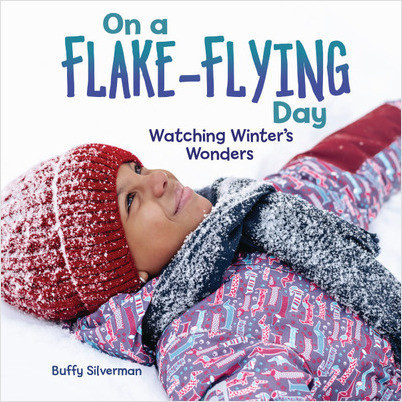
On a Flake-Flying Day: Watching Winter’s Wonders
by Buffy Silverman
Millbrook Press/Lerner Books, coming October 3, 2023
review copy compliments of the publisher

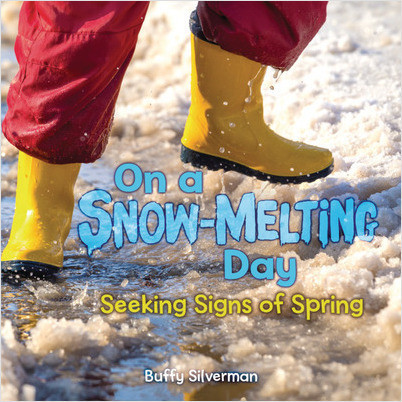
In 2020, Buffy Silverman took readers “puddle-sploshing” in On A Snow-Melting Day: Seeking Signs of Spring. Vivid photographs and a snappy rhyming text earned this book recognition as an NCTE Notable Poetry Book for 2021.

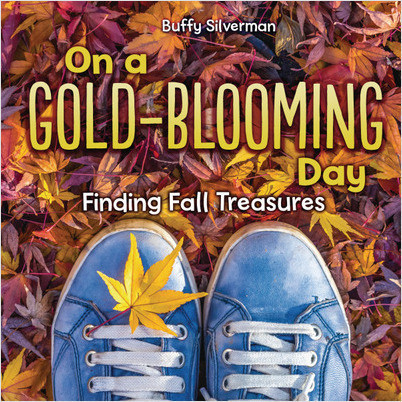
Then last fall, we wandered through forests and meadows, pausing at ponds to witness animals and plants in On a Gold-Blooming Day: Finding Fall Treasures, a 2023 CLA/NCTE Notable Children’s Books in the Language Arts, and a Children’s Book Committee at Bank Street College of Education Best Children’s Books of the Year for 2023.

Lucky us! This year readers get to experience “winter’s wonders” with more gorgeous photos, and Buffy’s evocative rhymes in On a Flake-Flying Day: Watching Winter’s Wonders.

I missed getting to share “Snow-Melting” with students in 2020, but every one of my after-school kiddos loved “Gold-Blooming” last fall. I can’t wait to share “Flake-Flying” in a few months! Reading these books with small groups gathered close allows for time to study and talk about the photographs, to track the rhymes, and, when a question comes up, verify facts or vocabulary with the informational back matter and/or glossary. In a regular classroom setting, teachers could create a seasonal text set for each book using the titles listed for “Further Reading.” And in writing workshop, the books would make fantastic mentor texts for studying creative ways to hyphenate words as well as ways to craft leads and endings.

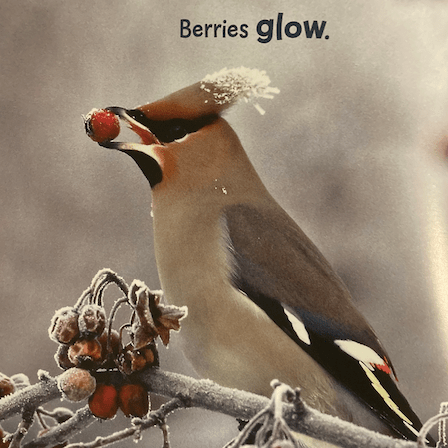
My favorite rhymes in ON A FLAKE-FLYING DAY are the ones that start the book off: “On a feather-fluffing, seed-stuffing, cloud-puffing day…” My favorite photo is the frosty-topped cedar waxwing practically posing with a berry in its beak:

And my favorite fact is that dragonfly nymphs prowl for minnows and other aquatic insects below the frozen surfaces of winter waters. (Dragonflies are amazing in all the stages of their lives!)

I asked Buffy to tell us a little bit about her process. I wondered if the photos came first, or the words. Here’s what she had to say:

Although I enjoy taking photographs, I’m really not a visual thinker. The words always come first for me–and then I hope that there will be a way to illustrate them! With this book I followed the pattern from ON A SNOW-MELTING DAY and ON A GOLD-BLOOMING DAY. In each of the books there are four sets of refrains (On a feather-fluffing, seed-stuffing, cloud-puffing day…) followed by three pairs of rhyming sentences (Weasel whitens. Cardinal brightens…) In each of the books I included sights and sounds from a field, a wetland, and a forest, and ended with a child outside, enjoying the season. Basically the books are the nature walks I would want to take with a child or other reader!

Lots of us in the Northern Hemisphere are looking forward to winter’s relief from this summer’s heat. Pre-order ON A FLAKE-FLYING DAY now so that come October 3, you will be guaranteed snow, ice, and frost…if only between the pages of Buffy’s newest (fantastic-as-the-other-two) book! Thank you, Buffy, for giving me this opportunity to help you spread the word, and thank you, Millbrook Press, for the review copy!

Amy has this week’s Poetry Friday roundup at The Poem Farm.

Those of you who were curious about what I had in mind for my poem last week, it was a combination of literal (a traffic jam of cars) but also metaphorical (life changes following retirement). I had loads of fun hearing what pictures the poem made in your minds and I’m SO glad I chose not to add an image!
Poetry Friday: The Swimming Pool

Heidi gave the Inklings a tough challenge this month. She suggested that we use the “The Lost Lagoon” by Mohawk poet, Emily Pauline Johnson (d. 1913) “to build your own poem FOR CHILDREN about a treasured place that you return to again and again (geographical or metaphorical).”

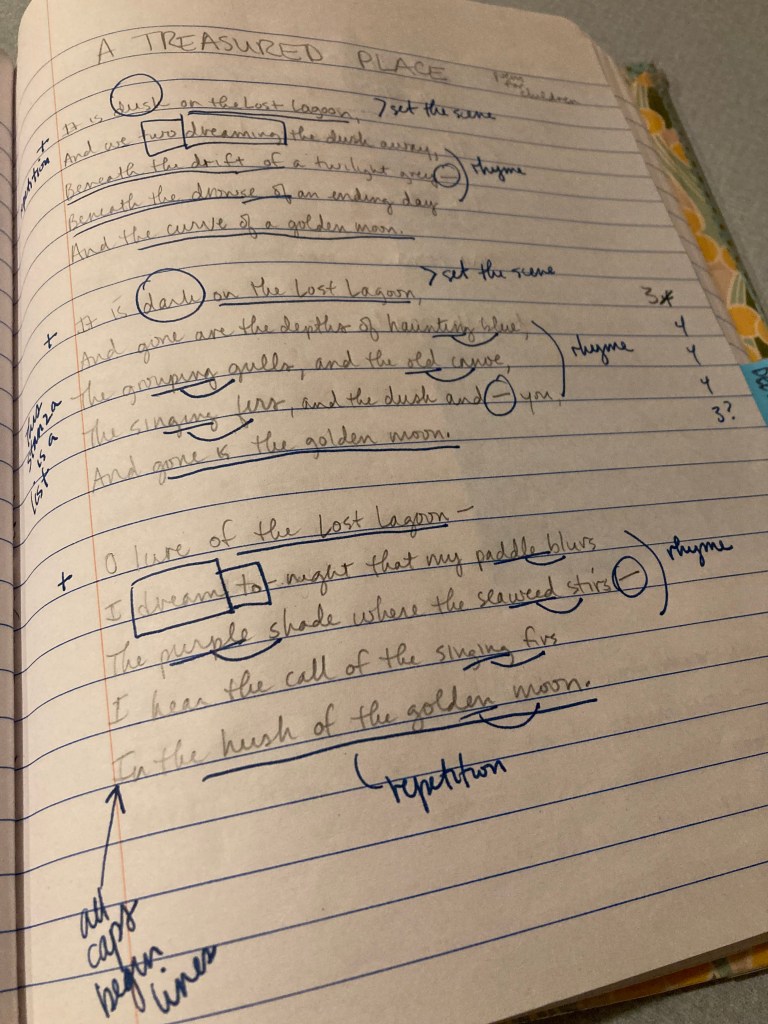
The first thing I did was copy the poem into my notebook and “unpack” the poem the way we used to do weekly in my classroom. As you can see, there’s a LOT going on in this poem!

What wasn’t hard was picking my topic — the swimming pool. What WAS hard was writing a poem “FOR CHILDREN.”

Here’s how the rest of the Inklings interpreted Heidi’s challenge:

Linda@A Word Edgewise
Heidi @my juicy little universe
Molly@Nix the Comfort Zone
Catherine@Reading to the Core
Margaret@Reflections on the Teche

Carol has this week’s Poetry Friday Roundup at Beyond LiteracyLink, and the roundup will be HERE next week!

Franki’s Weekly Text Set: Writing About Important Places in Our Lives

Texts for this Text Set have been posted daily on Instagram. Follow @TextSets there to get daily updates!

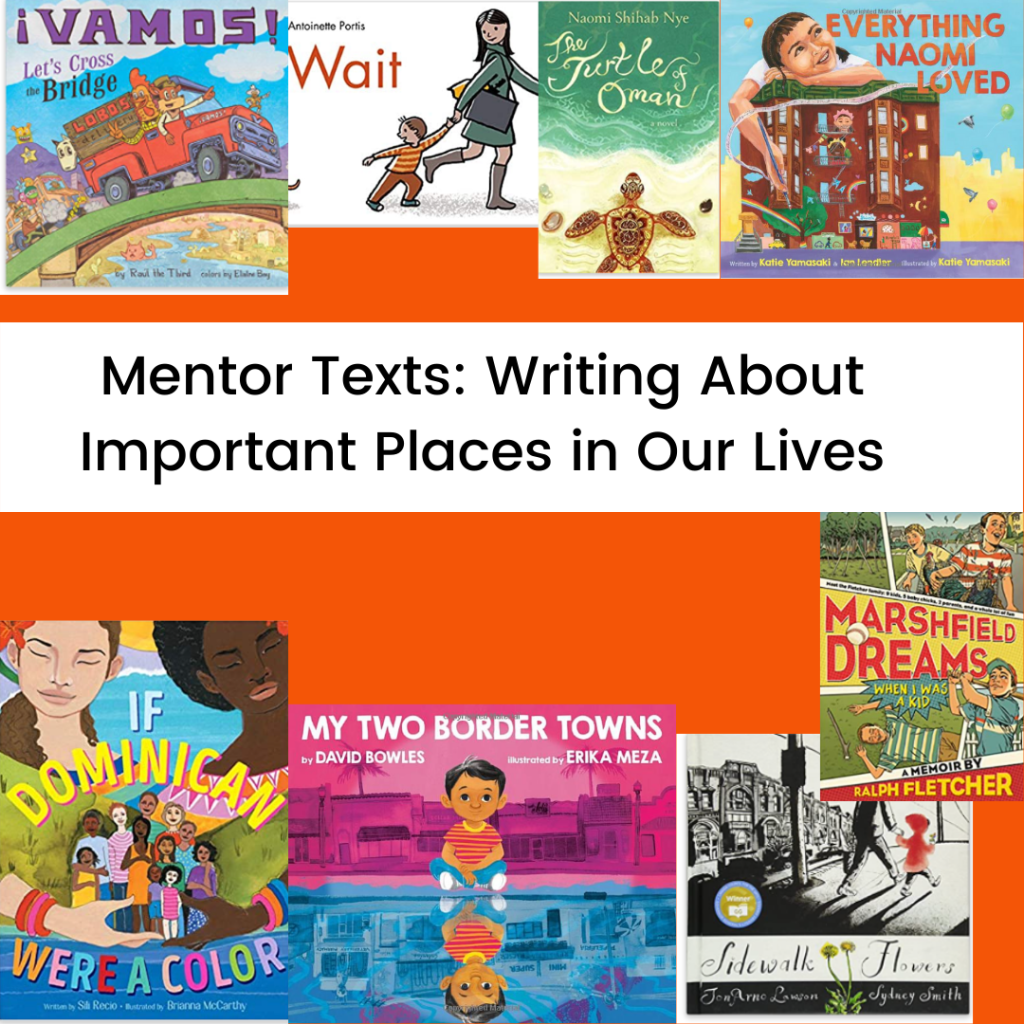
Place is such an important idea in our reading and writing. For our elementary writers, learning various ways to capture all that you love about a place can support writing across units of study. This week’s Text Set will explore books that capture a specific place. These books can be studied as writers to discover new things to try as writers.

I always love starting any mini-cycle of study with wordless or nearly wordless picture books. Sidewalk Flowers and Wait! are similar in that they each follow a young child noticing the little things in a city/neighborhood. The idea of noticing those things that are worth noticing in a place, as writers is a good way to start this cycle.

The language in If Dominican Were a Color is amazing and the rhyming text works well. The thing I love best about this book is the way the author uses colors to describe so many things in the place she loves. The illustrations are amazing and there is so much to learn as a writer and as an artist in this one.

One way to share the joy of a place is to tell stories of the place. I love the book Marshfield Dreams as part of this study because Ralph Fletcher includes so many stories that give readers a sense of the place he grew up. I also love the map at the beginning of the book–this serves as a great mentor for writers –creating a map of a place is often a great way to think about ways to write about it.

Vamos! Let’s Cross the Bridge and My Two Border Towns are two new books about US/Mexico border towns that capture these cities in very different ways. Comparing two ways that two authors captured the joy and stories in different ways will invite great conversations about writing.

Saying goodbye to a place you love is always difficult. Both of these books capture the love of place and the feeling of loss in beautiful ways. Everything Naomi Loved make for an easier mini lesson because of its length, but Turtle of Oman is an incredible quiet read aloud for upper elementary students and almost any page can be studied as a writer. Pairing the two would be powerful.

This week’s books were linked at Bookelicious and/or  Cover to Cover Children’s Bookstore. If you are looking for a fabulous local children’s bookstore to support, Cover to Cover is an amazing one. We are lucky to have them in Central Ohio! If you don’t have an independent children’s bookstore in your town, check out Bookelicious. They are an online independent bookstore for children with an incredible curated collection. 

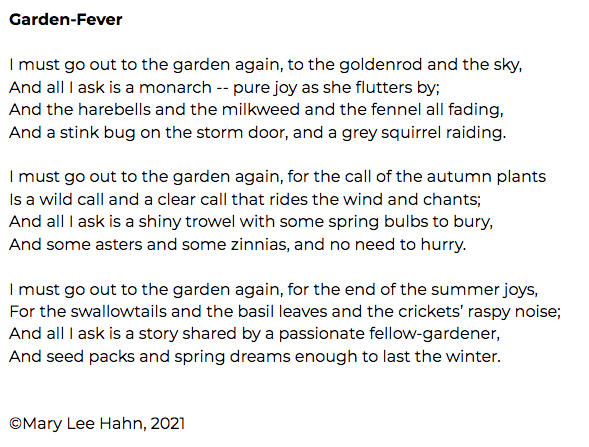
Poetry Friday: Garden-Fever

Gratitudes to John Masefield for my mentor text for this poem, Sea-Fever.

Irene has this week’s Poetry Friday Roundup at Live Your Poem. Please note a change in the roundups next month — I will be taking the November 5 roundup to help out Tabatha. Also, a team of PF Peeps are going to be organizing the Winter Poem Swap, so stay tuned for more information about that!

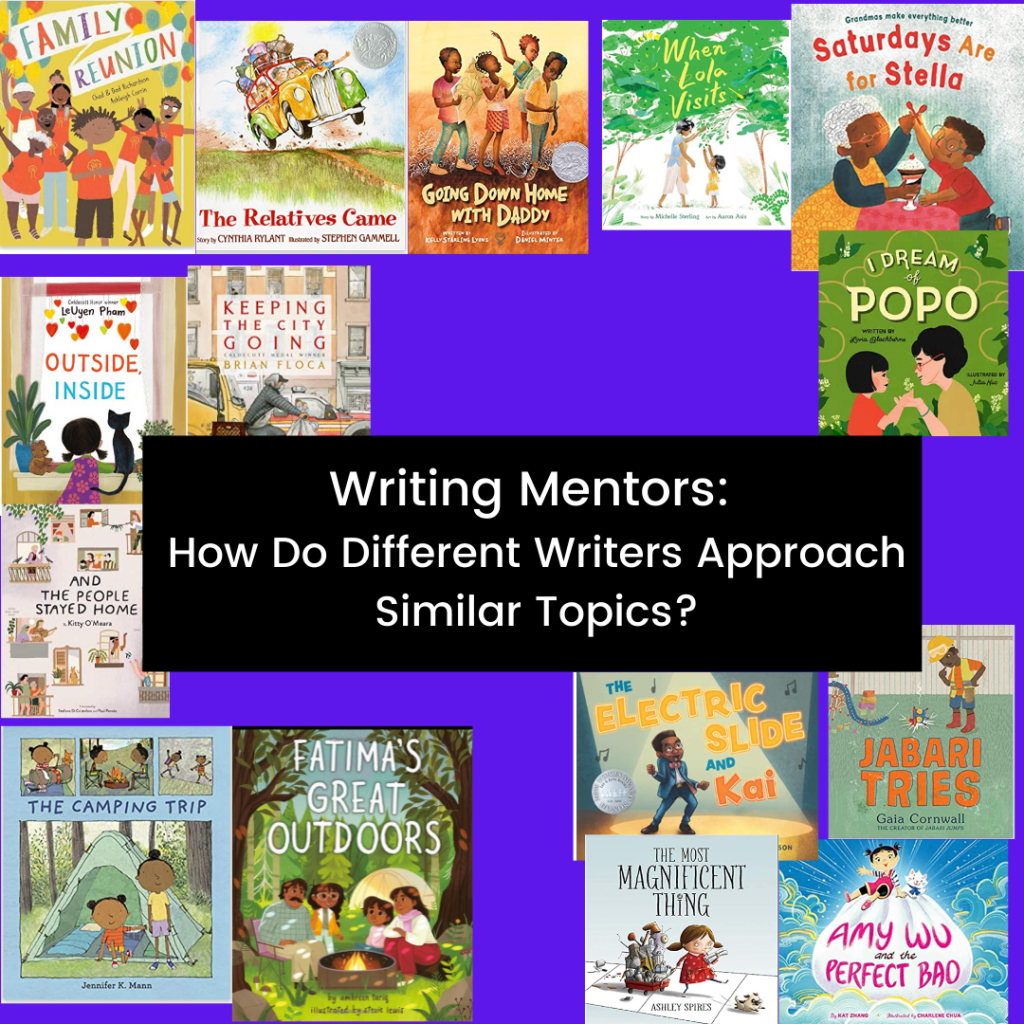
Franki’s Weekly Text Set-Writing Mentors: How Do Different Writers Approach Similar Topics?

Texts for this Text Set have been posted daily on Instagram. Follow @TextSets there to get daily updates!

This week’s Text Set focuses on writing mentors. Often for writers, it is helpful to see the various ways different writers approach similar topics. Studying the possibilities is important in all genres and formats of writing. This week, we’ll focus mostly on narrative texts that would work well in a narrative unit of study.

(You’ll notice a few sets of these books were shared last spring with a reading focus. I am a big believer in using anchor mentor texts across the year for a variety of reasons. So even though some sets are the same or similar, the focus of this set is study as a writer, especially as part of a narrative unit of study.)

Family Get-Togethers

The Relatives Came by Cynthia Rylant is a classic text used in many writing workshops in the study of narrative. To deepen the study, comparing different ways writers write about a family reunion–the word choice, the focus, the imagery, etc. can be done using this classic along with Family Reunion and Going Down Home with Daddy. Each of these has a very different writing style and young writers can learn a great deal from comparing these.

A Trip

Writing about a trip is something young writers like to do, especially within a narrative unit of study. Fatima’s Great Outdoors and The Camping Trip each focus on a camping trip and the experiences of that one trip. Writers can study the format and also the focus that each story has within the topic of a camping trip.

Learning Something New

Learning a new skill takes patience and practice and each of these characters’ stories shows that. The Electric Slide and Kai, The Most Magnificent Thing, Jabari Tries and Amy Wu and the Perfect Bao show the messiness of the learning process! Learning something new is a great topic for narratives and there are so many ways to approach the topic. This set shows writers the variety of things learned as well as a variety of ways to approach the topic as a writer.

Someone We Love

Writing about someone we love to spend time with or someone we miss is a common topic in narrative writing. When Lola Visits, Saturdays are for Stella, and I Dream of Popo explore the relationships as well as coping with missing a loved one in different ways.

The Current Pandemic

The current pandemic something on many children’s minds and these three books (Outside, Inside, And the People Stayed Home, and Keeping the City Going take that current issue and open conversations for children. These books can also be used as mentors because even though each is about the pandemic, the focus and the writer’s purpose of each is very different.

This week’s books were linked at Cover to Cover Children’s Bookstore. If you are looking for a fabulous children’s bookstore to support, this is an amazing one. We are lucky to have them in Central Ohio!