I’m having great fun with my 2024 NPM project. I’m writing daily (mostly privately), and…audiencing. After ten years of public projects, when I never managed to both write AND appreciate the writing of others, it feels good to spend time each day reading, appreciating, and being inspired by all you’ve been up to! (If I’ve missed yours, leave a link in the comments!)
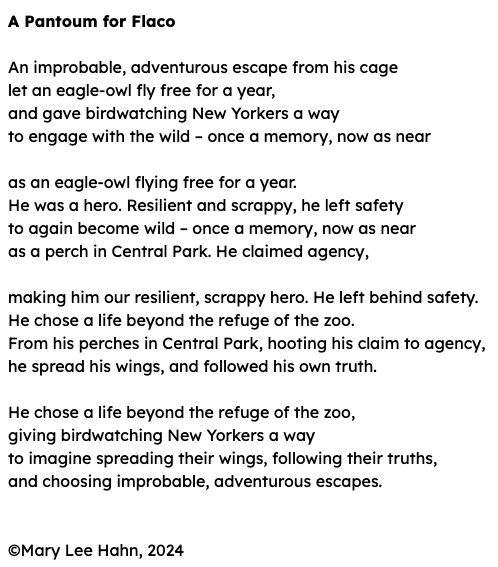
This poem was inspired by the villanelle Tanita wrote this week. She compared the experience of writing a villanelle to the Poetry Sisters’ recent writing of another form with repeating lines — the pantoum. I wanted to test Tanita’s hypothesis that a villanelle is better for “…short lines, direct ideas. It’s good for inescapable truths. A pantoum sometimes leaves more wiggle room…”
I’m not sure I hit upon any inescapable truths, but I did have fun.
Jone has this week’s Poetry Friday roundup. Happy National Poetry Month!
I gave the Inklings their challenge this month. I asked them to “Write a haiku sequence that talks about poetry without mentioning it by name. Here is your mentor text.”
I initially approached the challenge in an entirely left-brained way. Not surprisingly, my attempt fell flat. Once I got that out of my system, I was able to write poetically about writing poetry.
Here’s how the rest of the Inklings met my challenge:
I was as mesmerized by the story of this unlikely hero as many New Yorkers were. And I was as devastated by his death. The necropsy report was recently released, showing that he had high levels of rat poison in his system, along with a severe pigeon virus. Both of which likely contributed to his demise.
Is the vandal who slashed open Flaco’s enclosure at the zoo responsible for his death, or for his incredible final year of life? Would as many people have pondered the importance of The Wild if Flaco had remained in his cage? How can we refocus this attention on the plight of a single bird and help people to understand the cataclysmic extinctions of entire species every. single. day. (up to 150 species per day, according to some estimates)?
Maybe the human brain is incapable of wrapping itself around the big picture, and the best we can do is to love and care for The Wild in our own yard, neighborhood, and city. On that note, I’m going to go check to see if the milkweed in my garden has poked its head up yet. Maybe this summer, I will have monarchs again. If not, I will have done my best for them.
Here’s how the rest of the Poetry Sisters met the challenge of a pantoum to, about, or including an animal:
Yesterday, Maggie Smith (the poet) wrote a column entitled “Cross-Pollination.” In it she said,
“It often feels magical to me, the way our work is constantly in conversation — with the work of others, and with the work we’ve done before, with the world we live in. Everything touches.”
Maggie Smith
I read this quote after everything else happened. It gave me goosebumps.
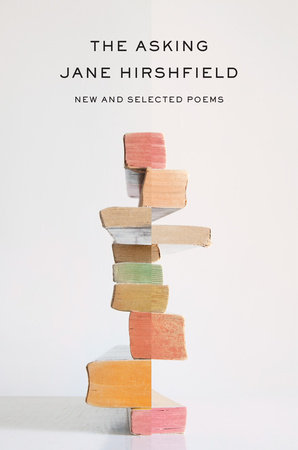
Here’s what happened. First thing yesterday morning, I read this poem by Jane Hirschfield in THE ASKING.
Next, I wrote this cherita in response:
After I added the cherita to my IG stories and the Stafford Challenge 2024 collection on my profile page, I got ready to go to the health club for my Wednesday workout. But my car keys weren’t in the basket where we always leave them. Nor were they in my purse with the house keys. Or the pockets of the coat I wore on Tuesday. The car was locked, so I must have brought them inside. AJ didn’t have them. They were nowhere to be found.
Around and around the house I went, looking at every possible surface. Then I remembered that I had taken the red insulated bag with drinks and snacks to my day of roster judging the election on Tuesday. Not in the bag.
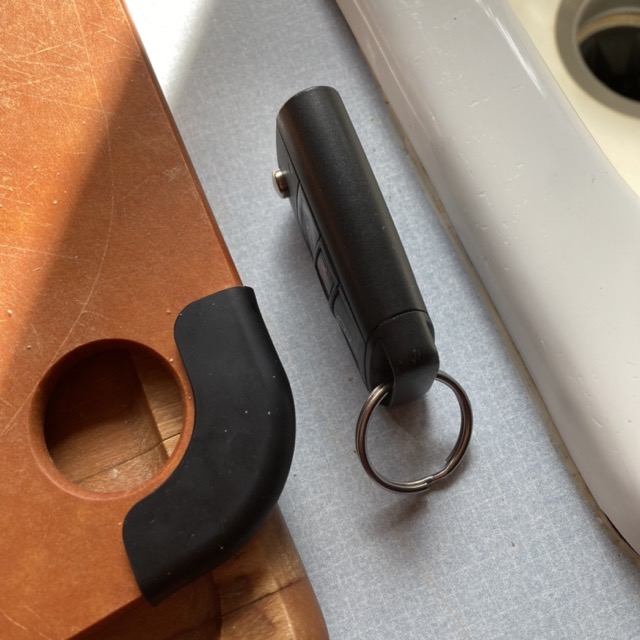
At this point, I grabbed a flashlight to try spotlighting it. And suddenly, there it was:
Between the cutting board and the sink. Where I put it down so I could put the spoon from the red bag into the dishwasher before taking the red bag to the basement and consequently forgetting about the key.
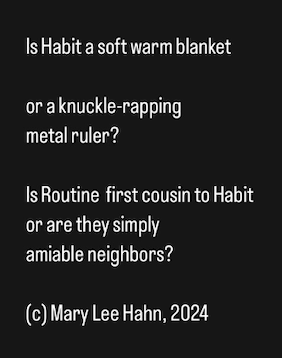
Habit. Routine. I’ve learned that life runs more smoothly if I make sure I put things away where they belong. A place for everything and everything in its place. Which works, except when it doesn’t. In this case, though, Habit and Routine gave me a Life Imitates Art / Art Imitates Life kind of day.
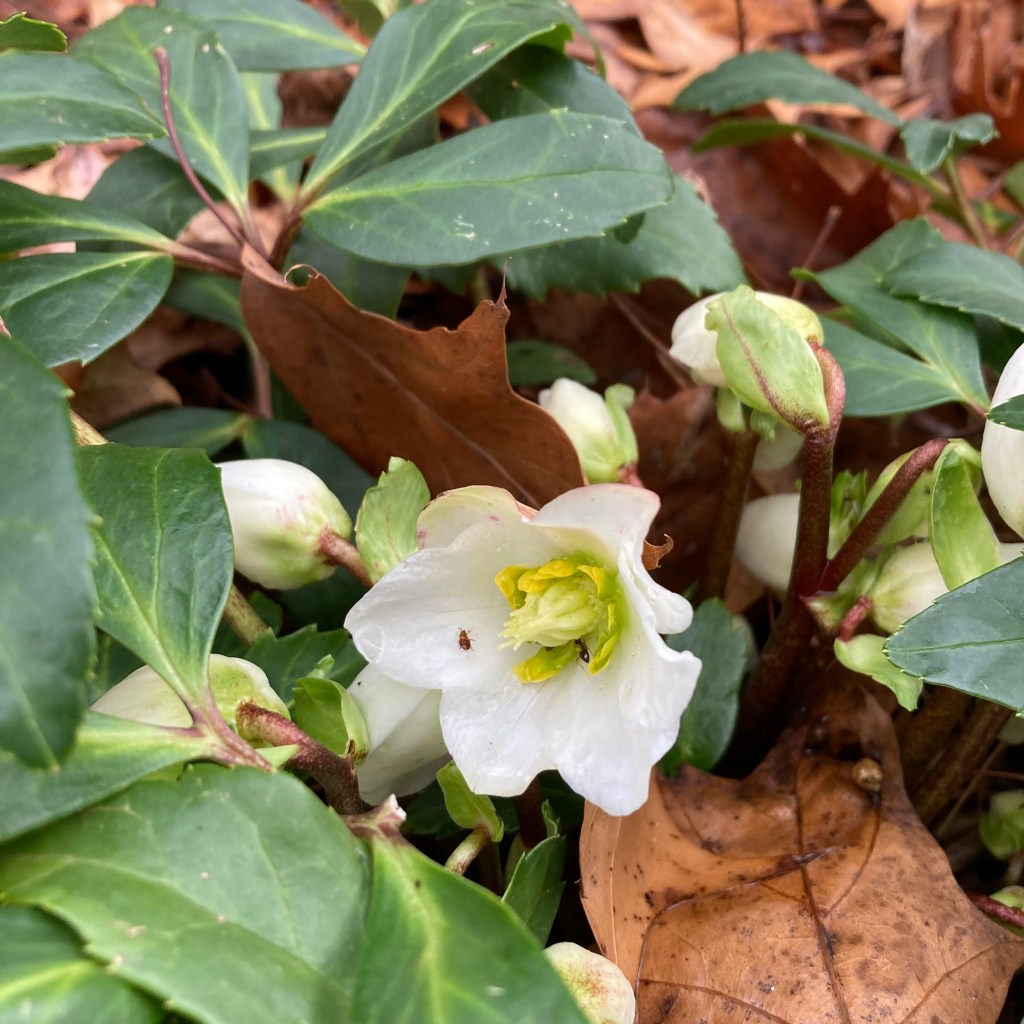
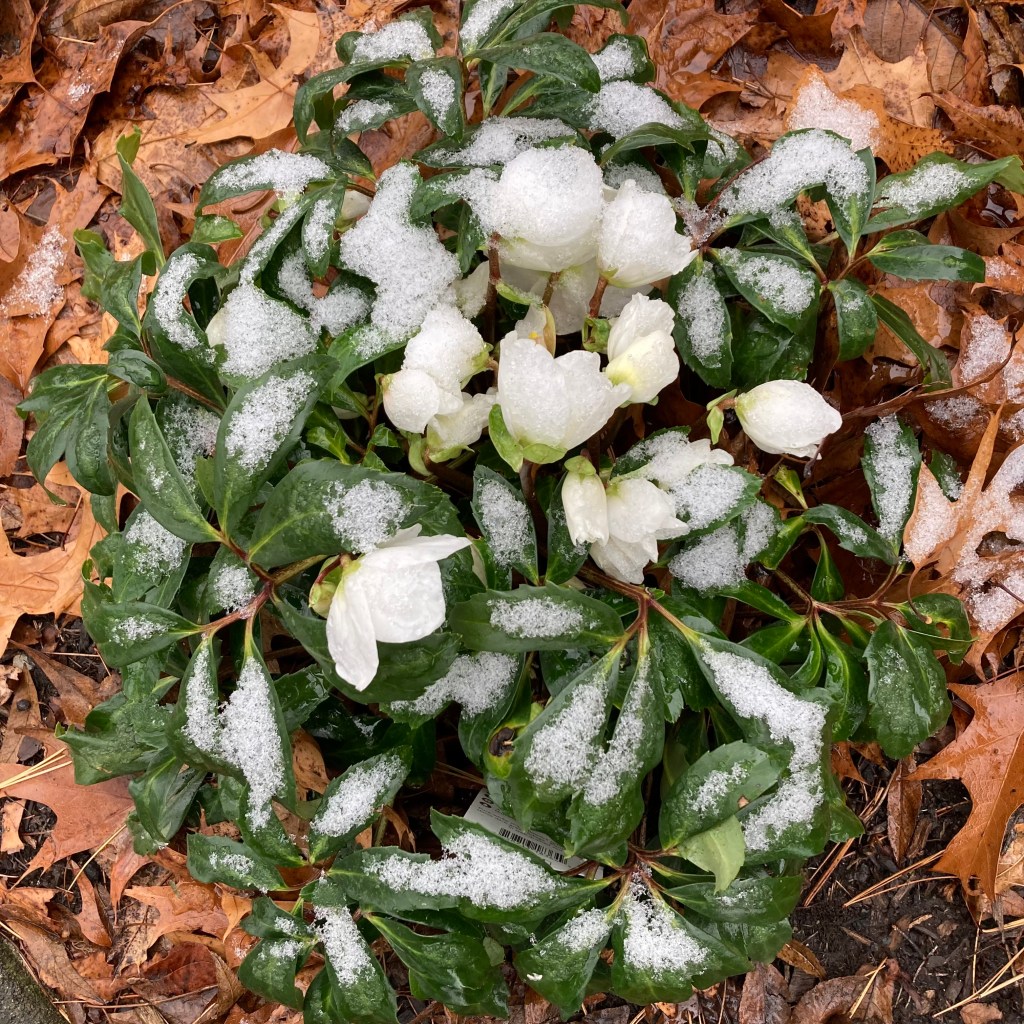
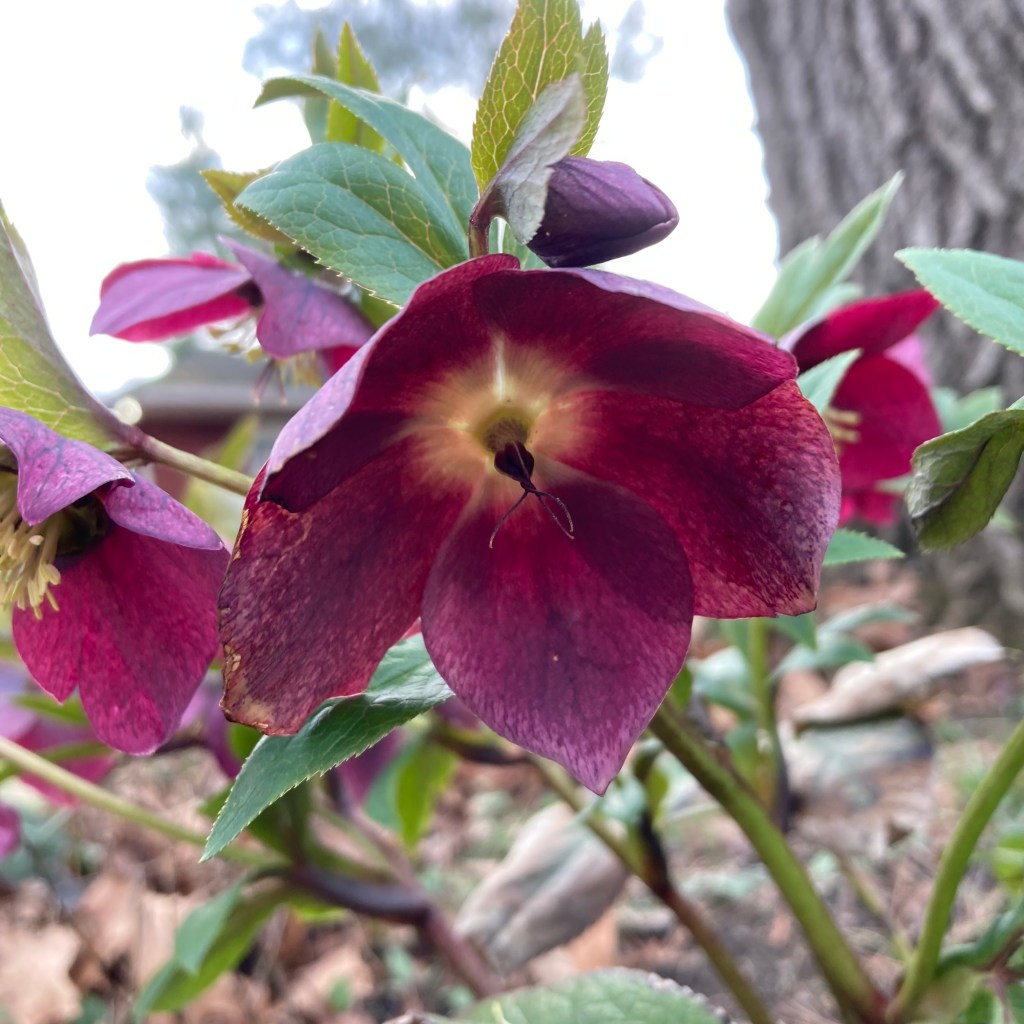
Christmas Hellebore in January (and she’s STILL blooming in March!)
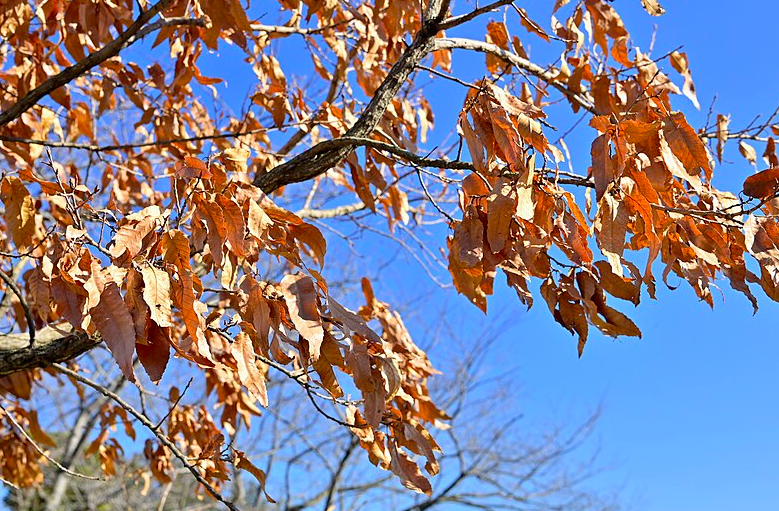
Under the oak.
Such a beauty!
A daily cherita…
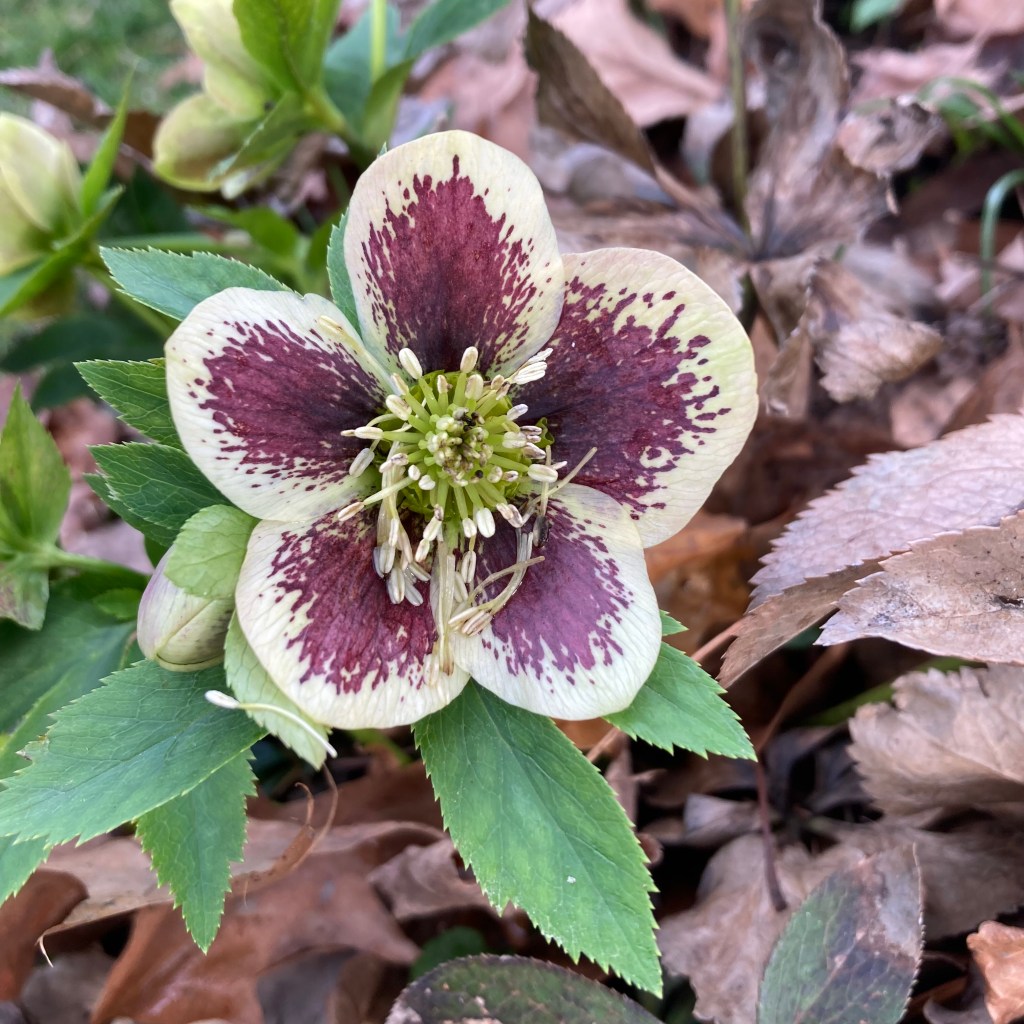
Before I planted hellebores

I never
noticed them.

Now
I see them everywhere.
What else have I been missing?

(c) Mary Lee Hahn, 2024
I’m going to feast my eyes on all the early bloomers in the next couple of days: forsythia, dogwood, magnolias, daffodils, hyacinths, crocuses, and of course, all the hellebores. Because Sunday through Thursday next week the nighttime temperatures will be in the twenties. Before we get there, though, we’ve got to live through the tornado watch for tonight. Ah, springtime.
Cousin Tanita at {fiction, instead of lies} has this week’s Poetry Friday roundup. Or should I say…the UNBOUND up! Here’s to “all things lax, roomy, slack, and slouchy!”
Surprised to see you all offshore this spin. Headed east towards that other continent? Good luck and safe travels – I wish brisk winds for you! What’s that you say? You left this continent clear from coast to coast? What a treat! Thanks!
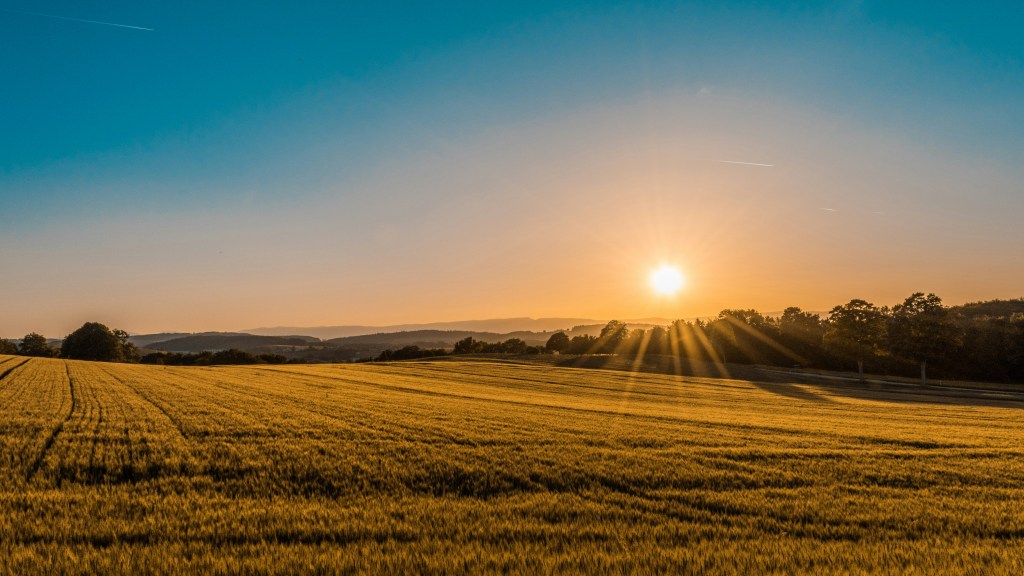
Spin away, Earth! Let’s do this!
First up, the marsh. I hope Camera Lady is ready for me. I’ll give her some misty rays through the dead trees and reeds.
Next, I’ll light some south-facing windows as if on fire to give Breakfast Woman a show.
After that, I’ll lure Woman in Bathrobe halfway down the block to take pictures of my art.
Keep that spin going Earth!
I’ve got to glow awake Early Rising Writer and then shine in a kitchen window on Watercolor Doodler.
I can’t be late to join Morning Walker under the oaks along the bayou.
All through the flat middle, I’ll illuminate farmland until I flow through an east door to warm the bones of an aging Tea Drinker.
Then I’ll light up peaks and eventually their valleys until I get to my last window where I peek in on Talented Twins
before the other ocean suddenly appears below.
Behind my line of sight, it’s noon, then night. Ahead, perpetual morning. I like looking forward, creating all those beginnings over and over again.
Margaret gave the Inklings our challenge for this month — to write persona poems. For Laura Shovan’s birthday month poetry group on FaceBook, Molly challenged us to write poems inspired by the game I Spy. This poem is for both challenges and for my fellow Inklings. (Can you each find yourselves?)
Here’s how the rest of the Inklings met this challenge:
The Poetry Sisters’ challenge for February was to write a Valentine or love poem. A plethora of people, places, things, and ideas are objects of my affection. Why, then, was it so hard to pick one and write a poem?!? Thank you, Irish Breakfast Tea, for helping me crank out an eleventh hour haiku.
Here’s how the other Poetry Sisters met this month’s challenge:
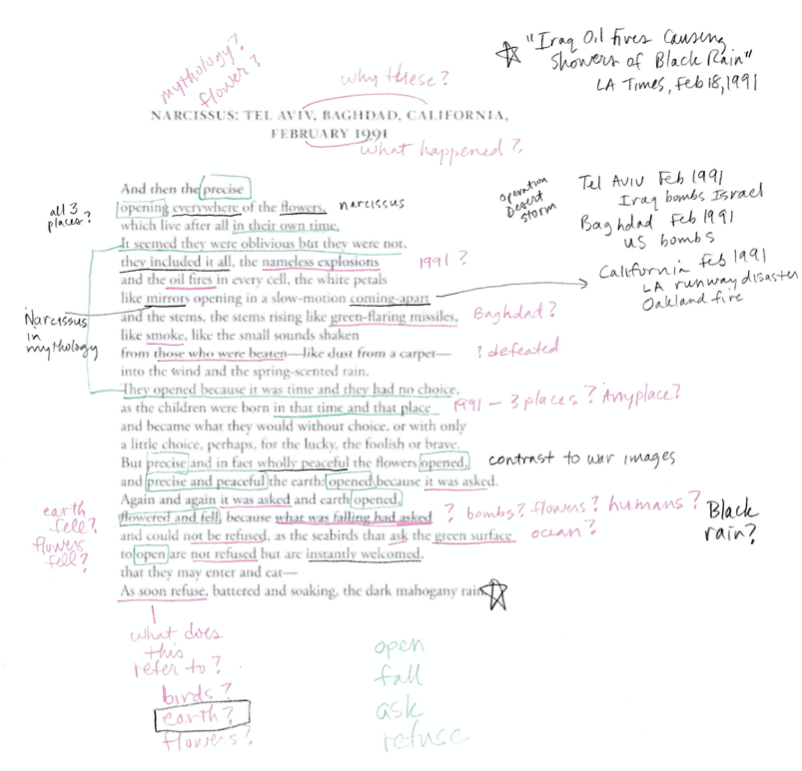
I’m reading a poem or two a day from Jane Hirshfield’s new (2023) collection. I was initially thrilled, but then stumped by yesterday’s poem, so I thought I’d dig into it and see if I could make it make more sense.
I found a faint and blurry but printable copy on Google Books and went at it with colored pencils. Red is for questions, green is for words and phrases that seemed to resonate or repeat, and black is research notes.
If we’re going to do this the way Pádraig Ó Tuama does on Poetry Unbound, you should go to Google Books and read the poem for yourself before I start nattering on about what I think it might mean. I’ll wait.
Okay. Ready? You’ll see all my notes all at once, but I’ll try to recreate my thinking as I combed through the poem over and over again, doing more and more research about what happened in February 1991.
Even though I wasn’t sure about Tel Aviv, Baghdad, California or 1991, I was drawn into this poem because it is February right now and the narcissus (daffodils) are pushing up with great determination. So I started with the delight of spring happening and flowers opening all over the world “in their own time.” But fairly quickly, the poem opened up to include “nameless explosions,” “oil fires,” “missiles,” and “smoke.” These images were clearly referring to Tel Aviv and Baghdad, but they could just as well be from Gaza in 2023-24. Ouch. I read on, and the flowers were compared to children born “in that time and place” who would become “…what they would without choice, or with only / a little choice, perhaps…” (A stab in my heart with the connection to Palestinian children.) Then I was back to the flowers opening peacefully, but now Hirshfield added the earth opening “…because it was asked.” This line: “Again and again it was asked and earth opened” made me think of all the ways we’ve taken from the earth — mining, damming, paving, plowing, deforesting. And the earth cannot refuse. Hirshfield compares this to seabirds diving into the ocean, not refused, but rather welcomed so they can eat, and there was another stab in my heart: we take and take and take from the earth and she keeps giving and giving for our survival. And then Hirshfield lost me with that last line. So many questions!
After this first read-through, I did some research (notes in pencil at the top right, except for the starred note…that came later). Clearly, this poem is speaking to the Gulf War (specifically, Operation Desert Storm). So that explained Tel Aviv and Baghdad in the title. I wasn’t so sure about California in February 1991. There was the LA runway disaster but the Oakland fire I noted turned out to be in October. Maybe California was included for the local blooming of the narcissus.
I kept reading through and noting the contrast between spring / flowering / the inevitable rising of life versus violence / destruction / falling. I kept getting stuck on that last line. What did “As soon refuse” refer to? What was “battered and soaking?” Where did that rain come from? I went back to Google one more time, and…bingo. The headline from the LA Times on February 19, 1991 was the key that unlocked the ending: “Iraq Oil Fires Causing Showers of Black Rain.”
Now I understand that “As soon refuse” refers to the earth. The earth, with its own precise timing and its gifts of life, with its mirroring of human evils in the very flowers that bloom in spring, can as soon refuse our destruction of it, can as soon refuse to soak the “dark mahogany rain” of oil fires into its battered surface, as the ocean can refuse to allow seabirds to dive in.
What do you think? Would Jane Hirshfield agree with my thinking? Do you?
Shh…the Inklings are getting ready to whisper secrets to you. Our challenge this month came from Catherine, who borrowed a prompt from a list Molly shared with us. Unlike the Go-Gos, our lips are NOT sealed — we’ve written poems about secrets.
To help us write about secrets, we had this poem, “Family Secret” by Nancy Kuhl to use as a mentor text.
“When in Doubt” by Sandra Cisneros showed up mid-month in the Poetry Unbound podcast, and it seemed to be in conversation with my poem, which was written to answer the stem which became the title.
Here’s how the rest of the Inklings met Catherine’s challenge:







 A(nother) Year of Reading