Reading Aloud More Nonfiction

*My posts and reviews focus on books for the classroom and library. I am passionate about sharing books that invite natural conversations and learning and choosing the books we share with intention. I am always looking for books that kids will love AND that will support their growth as readers and writers.

I am definitely one that reads aloud and shares more fiction with students than nonfiction. And I always try to balance that better. I know that kids LOVE nonfiction so building in more time for nonfiction read aloud is important. We know nonfiction builds background knowldge and vocabulary. Plus, the skills for reading nonfiction are a bit different from those needed to read and understand fiction. So I have been looking for informational books that also make great read alouds and are short enough for minilesson work.

I found 3 new picture books that are perfect for elementary readers. I’m not sure these would be categorized as nonfiction but each is based on a true story, information is embedded and each one has backmatter that is nonfiction and tells more of the true story behind the picture book. 

I used to ignore the author’s notes and back matter, but not anymore. When reading aloud and sharing these stories with readers, I’d definitely make time to read the back matter as it is fascinating information and I don’t think the books are complete without it. Geting young readers in the habit of reading the author’s note and back matter helps them read with more depth and understanding.

The Escape Artist: A True Story of Octopus Adventure by Thor Hanson and Galia Bernstein tells the story of Inky, the octopus who escaped from a New Zealand aquarium. The story is told in a way that predicts what Inky might have been thinking and doing. It tells the reader what investigators know and what they wonder. Readers learn not only about Inky but there is a lot of octopus information throughout. 

The True and Lucky Life of a Turtle by Sy Montgomery and Matt Patterson is the story of Fire Chief, a snapping turtle. The story includes information on baby turtles and how they grow and then focuses on the accident that injured Fire Chief and of the Turtle Rescue League that helped in his recovery. Readers can see the real Fire Chief in photo in the backmatter. They can also learn more about snapping turtles. 

Not a Spot to Spot: The True Story of Kipekee, the Giraffe Born without Spots by Elizabeth Weiss Verdick and Zoe Waring is the story about a rare giraffe born without any spots. One thing that is unique to this story is that the backmatter touches on which parts of the story are true and which were changed a bit, as this is a book “inspired by” the true story. 

All three of these books are perfect for elementary readers, whether as read alouds or to read independently. Each may also ignite an interest in a topic they want to read more about.
Slice of Life: You’ve Got This!

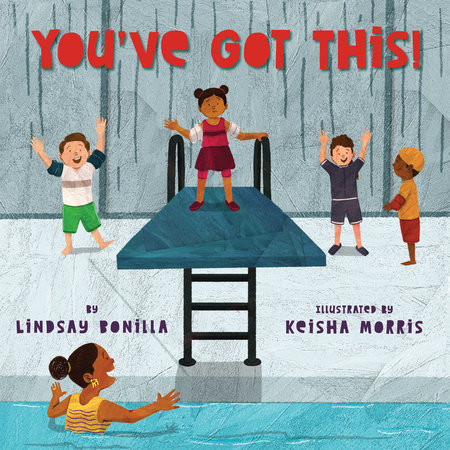
You’ve Got This!
by Lindsay Bonilla
illustrated by Keisha Morris
Holiday House, 2024

We all need some encouragement at times. Life can be hard.

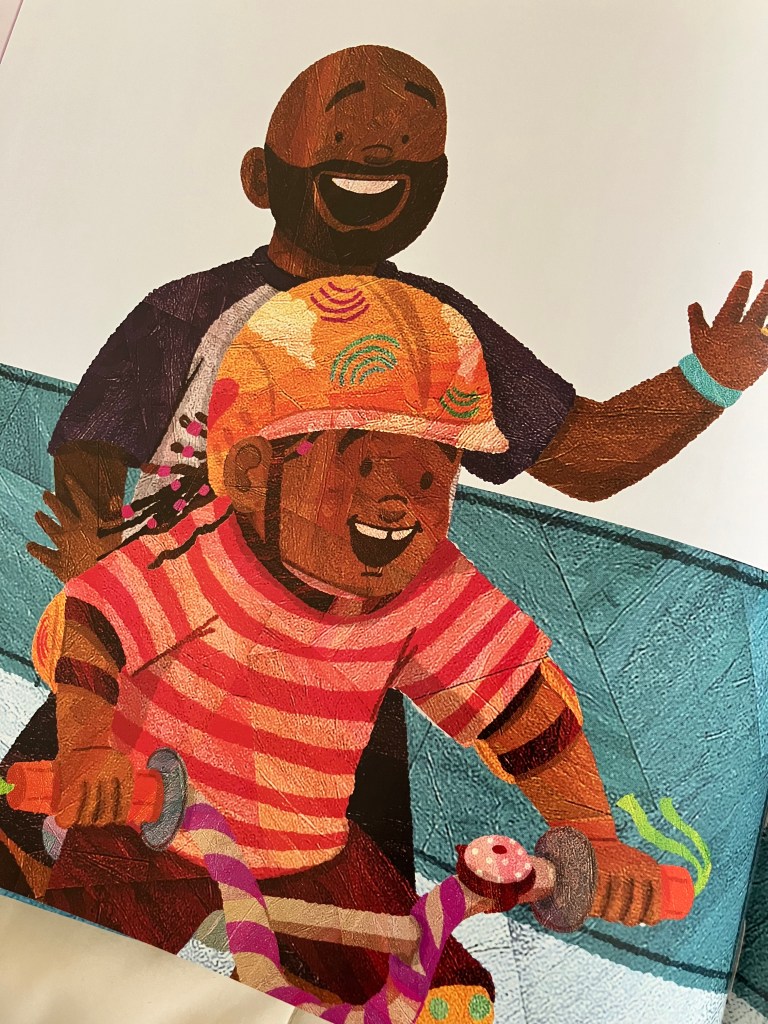
Whether it’s learning to ride a bike…

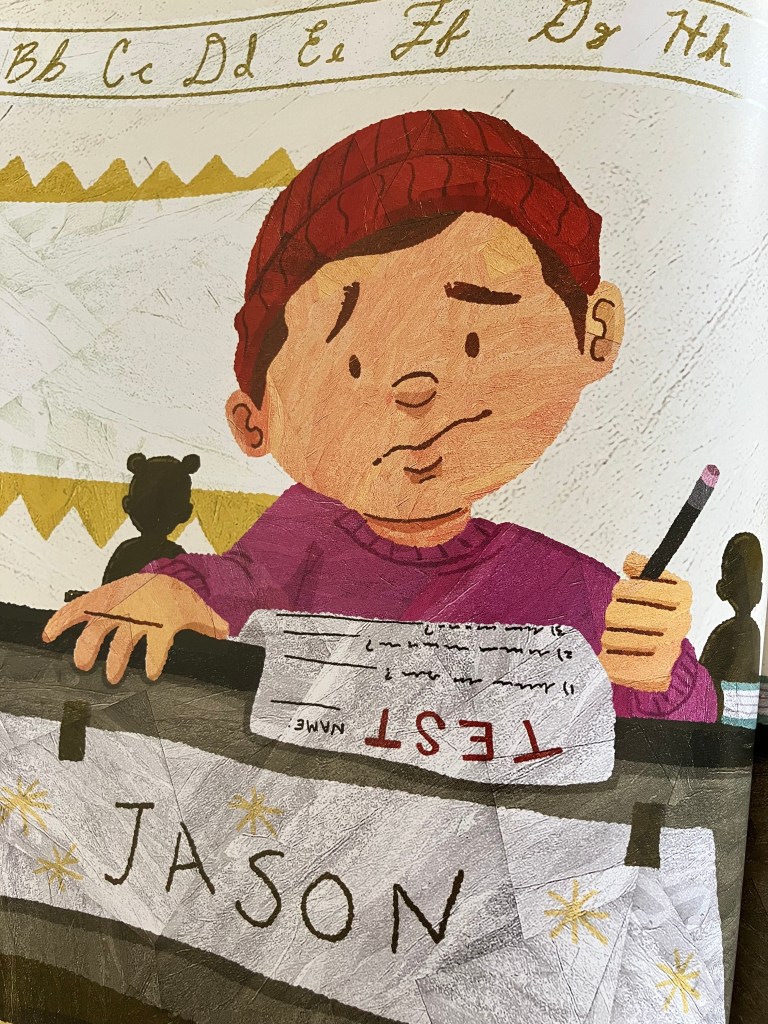
…or taking a test…

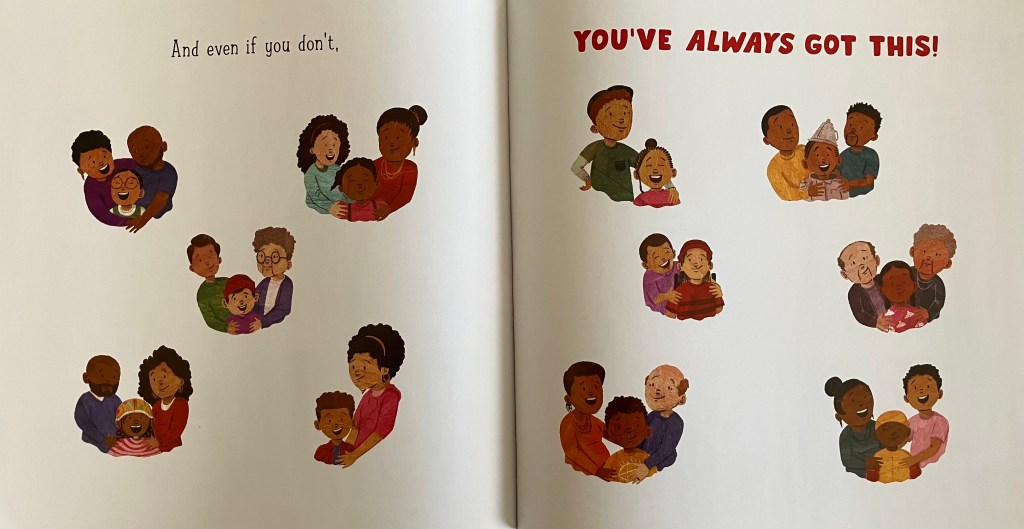
…it helps when there’s someone there who cheers us on with, “YOU’VE GOT THIS.”

Stepping out on stage? Getting a shot? Standing up to bullies? Admitting your mistakes? YOU’VE GOT THIS!

But the best part is

This book, with its catchy rhyming text, was made for the beginning of the school year (and frequent re-reads thereafter), the week before state tests, graduations (all ages and stages), and for anyone who needs a reminder that you’re there for them, believe in them, are rooting for them.

Slice of Life: Research

YOU BROKE IT!
by Liana Finck
Rise x Penguin Workshop, 2024
review copy from the public library

This is a very funny book and it made for an interesting research question, but you don’t need to buy it for your classroom or school library.

It was written/drawn by a cartoonist, so it should come as no surprise that the whole story consists of a series of sight gags — adult animals scolding their young for doing what they naturally do: a turtle moving slowly, a tornado making a mess, an earthwork squirming. Finally, the young octopus stands up for itself, the adult has an AH-HA moment, and all is made well with a multi-armed hug.

My research question was, “Who would think this is a funny book?” I took it to the after-school program where I work and tested four different audiences.

The director, a mom with grown children, thought it was funny. One of the classroom aids, a college-aged lad, didn’t think it was funny at all.

When the kids arrived after school, I tested it on a group consisting of two kindergarteners and a first grader. They were quick to use the cover and endpapers to infer that the adult bird was mad at someone who broke the egg. The adult bird didn’t break the egg, and the baby bird didn’t break the egg. Someone else broke the egg and this was going to be a book about Who Broke The Egg. So when the second spread featured an earthworm, they were thrown for a loop. However, some very good inferring ensued: “I’m not sure what squirming means,” said the first grader, “but I think it might mean wiggling.”

Besides the inferring, some surprising background knowledge was revealed. Eventually they realized that the adult animals were probably parents, and because the tornado was wearing a bowtie, it was a dad. When we turned the page to the frog, the first grader refused to choose between mom and dad. “I think the frog is non-binary.” Then, concerned, she asked me, “Do you know what non-binary means?”

“Yes, I know what that means.”

“Good,” she said, turning to the kindergarteners. “Do you want me to explain what non-binary means?”

I quickly intervened, “Let’s save that conversation for later.”

Final verdict from the K/1 crew: not a funny book. It didn’t even answer the question of Who Broke It?

My next group consisted of two third graders and a first grader, all in gifted/enrichment programs at school. On the first page turn after the bird and chick (worm and wormlet), one of the third graders exclaimed, “Oh, I get it! This is going to be a book about grownups yelling at kids for doing what they naturally do!” Every page turn after that was met with a chorus of “…because that’s what we’re SUPPOSED to do!” At the pony page (“Get the hair out of your eyes!”) I stopped and asked if adults had ever said any of these things to them. And indeed, they had been told (“a million times”) to get the hair out of their eyes, or hurry up, or settle down.

Final verdict from the 1/3 crew: a very funny book.

Everything we know about the development of children’s ability to move beyond the literal and understand humor was confirmed. There also seems to be a component of experience that determines whether this book is funny. The 1/3 crew is still in the phase of life where adults are correcting their behavior on a regular basis. The college lad is well-removed from that, but hasn’t had the experience of being on the parental end of those corrections. The mom with grownup kids has the lived experience of this book.

So, who should buy this book, since lots of kids are either not going to get it, or not going to pick up a book that consists of a series of corrections they hear from the adults in their lives, with very little agency given to the young animals in each situation (except for the octopus fry)? Seems like a $20.00 baby shower card, given to remind new parents that kids will be kids, even though the “big idea blurb” on the back of the book has it the other way around: “Parents will be parents…”

Thank you to Two Writing Teachers for creating an amazing community of writers and a safe, welcoming space to write and share.

Slice of Life: Book Awards

Thank you to Two Writing Teachers for creating an amazing community of writers and a safe, welcoming space to write and share.

Yesterday was one of the happiest days of the year: ALA Youth Media Award Day!

Back in 2006 when Franki and I started the original A Year of Reading blog, our main purpose was to have a public chat about books all year and then see who could pick the Newbery and Caldecott in January.

We have rarely been right, but along the way, we found ways to give each other grace. The winner was in your Amazon cart? That counts. On the stack beside your bed? Counts. On reserve from the library but hasn’t arrived yet? Definitely counts. And my new one this year — read halfway through but didn’t love it and abandoned it? Still counts.

For a retired person, I’m pretty proud of how many winners in different award categories I read: American Indian Youth Literature Awards (CONTENDERS and MASCOT), Coretta Scott King (BIG, THERE WAS A PARTY FOR LANGSTON, AN AMERICAN STORY), YALSA Award for Excellence in Nonfiction for Young Adults (NEARER MY FREEDOM), Pura Belpré (REMEMBERING, 1/2 of MEXIKID), Robert F. Sibert Informational Book Award (THE BOOK OF TURTLES, JUMPER [on hold at the library]), Caldecott (IN EVERY LIFE, THERE WAS A PARTY FOR LANGSTON, BIG), Newbery (1/2 of MEXIKID).

I’ve got the Newbery winner, THE EYES & THE IMPOSSIBLE by Dave Eggers on reserve at the library but rather than going back to fill in any other holes, I’m going to concentrate on reading all the best that 2024 has to offer.

Did you read some winners in 2023? What 2024s are already on your TBR stack?

Poetry Friday: Who’s Ready For Winter?

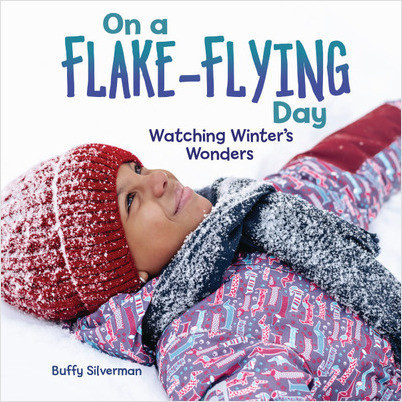
On a Flake-Flying Day: Watching Winter’s Wonders
by Buffy Silverman
Millbrook Press/Lerner Books, coming October 3, 2023
review copy compliments of the publisher

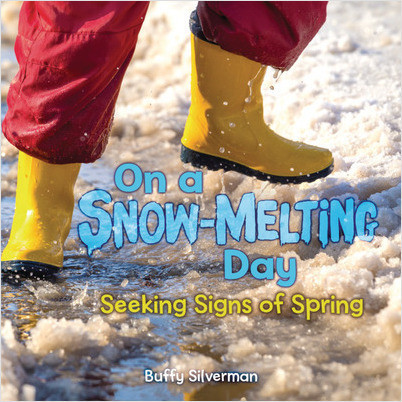
In 2020, Buffy Silverman took readers “puddle-sploshing” in On A Snow-Melting Day: Seeking Signs of Spring. Vivid photographs and a snappy rhyming text earned this book recognition as an NCTE Notable Poetry Book for 2021.

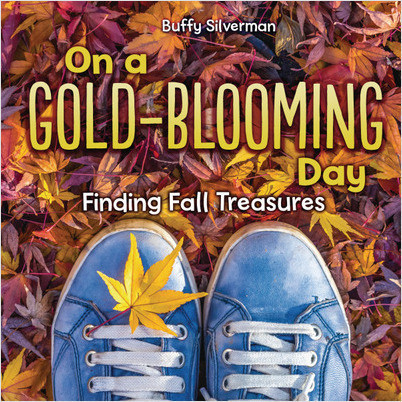
Then last fall, we wandered through forests and meadows, pausing at ponds to witness animals and plants in On a Gold-Blooming Day: Finding Fall Treasures, a 2023 CLA/NCTE Notable Children’s Books in the Language Arts, and a Children’s Book Committee at Bank Street College of Education Best Children’s Books of the Year for 2023.

Lucky us! This year readers get to experience “winter’s wonders” with more gorgeous photos, and Buffy’s evocative rhymes in On a Flake-Flying Day: Watching Winter’s Wonders.

I missed getting to share “Snow-Melting” with students in 2020, but every one of my after-school kiddos loved “Gold-Blooming” last fall. I can’t wait to share “Flake-Flying” in a few months! Reading these books with small groups gathered close allows for time to study and talk about the photographs, to track the rhymes, and, when a question comes up, verify facts or vocabulary with the informational back matter and/or glossary. In a regular classroom setting, teachers could create a seasonal text set for each book using the titles listed for “Further Reading.” And in writing workshop, the books would make fantastic mentor texts for studying creative ways to hyphenate words as well as ways to craft leads and endings.

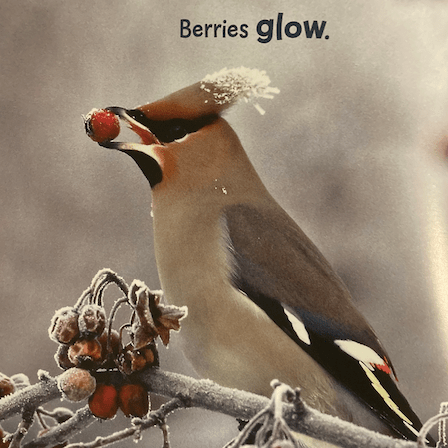
My favorite rhymes in ON A FLAKE-FLYING DAY are the ones that start the book off: “On a feather-fluffing, seed-stuffing, cloud-puffing day…” My favorite photo is the frosty-topped cedar waxwing practically posing with a berry in its beak:

And my favorite fact is that dragonfly nymphs prowl for minnows and other aquatic insects below the frozen surfaces of winter waters. (Dragonflies are amazing in all the stages of their lives!)

I asked Buffy to tell us a little bit about her process. I wondered if the photos came first, or the words. Here’s what she had to say:

Although I enjoy taking photographs, I’m really not a visual thinker. The words always come first for me–and then I hope that there will be a way to illustrate them! With this book I followed the pattern from ON A SNOW-MELTING DAY and ON A GOLD-BLOOMING DAY. In each of the books there are four sets of refrains (On a feather-fluffing, seed-stuffing, cloud-puffing day…) followed by three pairs of rhyming sentences (Weasel whitens. Cardinal brightens…) In each of the books I included sights and sounds from a field, a wetland, and a forest, and ended with a child outside, enjoying the season. Basically the books are the nature walks I would want to take with a child or other reader!

Lots of us in the Northern Hemisphere are looking forward to winter’s relief from this summer’s heat. Pre-order ON A FLAKE-FLYING DAY now so that come October 3, you will be guaranteed snow, ice, and frost…if only between the pages of Buffy’s newest (fantastic-as-the-other-two) book! Thank you, Buffy, for giving me this opportunity to help you spread the word, and thank you, Millbrook Press, for the review copy!

Amy has this week’s Poetry Friday roundup at The Poem Farm.

Those of you who were curious about what I had in mind for my poem last week, it was a combination of literal (a traffic jam of cars) but also metaphorical (life changes following retirement). I had loads of fun hearing what pictures the poem made in your minds and I’m SO glad I chose not to add an image!

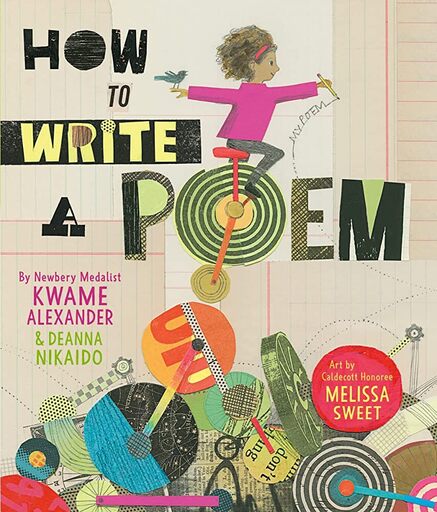
Poetry Friday: How to Write a Poem

In the past two weeks, this book has done good work in the world. (Okay, in all fairness…has helped ME do good work in the world!)

I’m a once-a-week Reading Specialist at each of the three sites of our community resource center’s after school program. The first week of May, we had a whole-group read aloud and then in small groups, folded zines that would be the container for our own poems, which we would write the following week.

My young friends and I have a ritual for reading picture books. We examine the dust jacket, opening the book wide to see if the cover illustration spans the entire cover (our favorite), or if there’s an important nugget from the book on the back cover. In the case of How to Read a Poem, there is this nugget that we watched for as we read:

“The words have been waiting to slide down your pencil.”

Next, I lift the dust jacket so we can see if the cover illustration is the same. (Our favorites have a different cover illustration!) Then, we examine the end papers, which, for How to Read a Poem, show the alphabet, and which were the source of a lively discussion:

Me: Melissa Sweet chose the alphabet for the endpapers. These letters are everything you need to make the words for your poems!

Child 1: There’s no A!

Me: I noticed that. I wonder why she…

Child 2: There’s the A! It’s really big!

And then, just like the best optical illusions, the A showed itself to all of us. Now I can’t unsee it!

Before I began reading at one site, one of my youngest friends asked, “But what IS poetry?” After praising him for his insightful question, I quoted Kwame’s back matter. He quotes a third grader’s response to this very question:

“Poetry is an egg with a horse inside it.”

This led to a discussion about what makes poetry poetry: it gets to break rules, it doesn’t have to make the kind of sense we expect, it’s short, and yes it sometimes rhymes and has a form like haiku or acrostic or limerick, but mostly it gets to be whatever it wants to be.

Kwame’s book reinforces these ideas (and Melissa Sweet’s illustrations are just as much a poem as his words). His poem-text hits the notes of wonder, listening to the world, using imagination, playing with words (“…a cotton candy cavalcade of sounds”), accessing both joy and sorrow, and becoming “a voice with spunk.” The book ends with the invitation, “Now show us what you’ve found.”

Here is some of what we found this week:

“Inspiration is everywhere
you just need to look.”

“Lonch youere self to the
MOON with your jet pack
of ceativeaty.”

“Star bright
in the air
let my dreams
fall down
to my hands.”

“There is magic falling
all around us growing tall
roped into our life
like how forks
are roped to food
open your door
and let in the wind
let it go in and out”

“alligators eat
the sun”

“flower birds
sing rain”

“the pizza
is made of
teeth”

So. Much. Fun.

Here’s wishing you joyful poetry writing!

Robyn has the Mother’s Day edition of Poetry Friday at Life on the Deckle Edge. Happy Mother’s Day to all the men and women and non-binaries who nurture small humans, fur babies, gardens, and the world.

My Powerful Hair

My Powerful Hair
by Carole Lindstrom
illustrated by Steph Littlebird
Abrams Books, 2023
review copy from the public library

Once upon a time, I wrote a book about the power of read aloud. One of the stories in that book was about the time when I read aloud The Watsons Go To Birmingham by Christopher Paul Curtis. Our exploration of Byron’s new “conk” hairstyle led to a whole class share time of hair products and tools, with the highlight being my Sikh student and his mother educating us about the role of uncut hair in their religion. It was one of the most powerful moments in my teaching career.

There are now lots of books exploring hair and identity, the newest being My Powerful Hair. This book is important AND it is beautifully written and illustrated. Don’t miss the endpapers. Don’t ignore the Author’s Note and definitely don’t shy away from the shameful history of Indian boarding schools. Don’t neglect to share with your children/students that both the author and illustrator are Indigenous creators. Don’t miss this book.

Twenty Questions

Twenty Questions
by Mac Barnett
illustrated by Christian Robinson
Penguin Random House, 2023
review copy from the public library

While we’re on the subject of questions (see previous post), you need this book in your classroom and/or life.

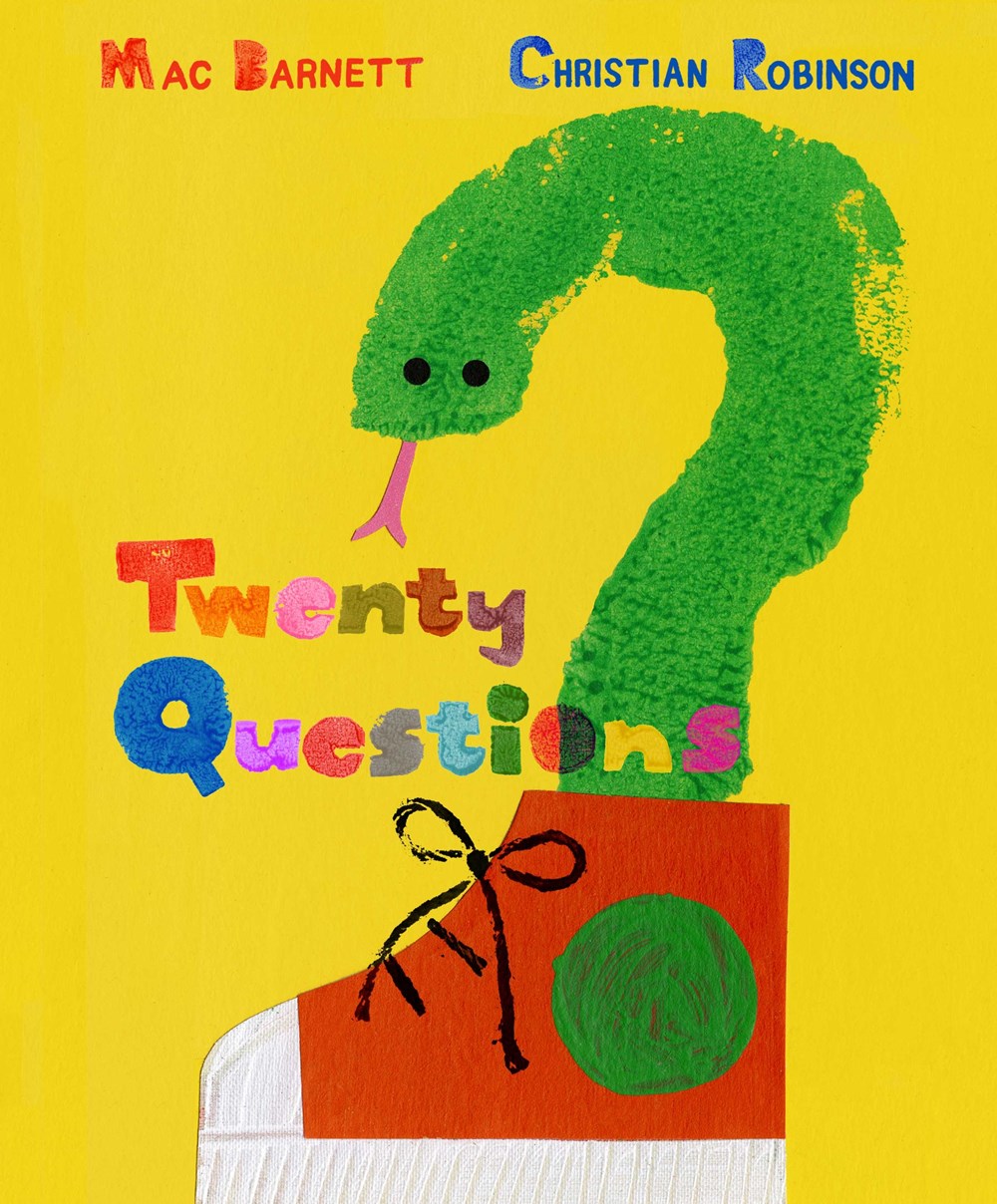
The text of this book is, indeed, composed of twenty questions. (I counted.) The first is very literal. You can use it to teach the word literal: “How many animals can you see in this picture?” The next question lets the reader know that this will not be a (boring) literal book: “How many animals can you not see in this one, because they’re hiding from the tiger?” It gets more and more creative (inferential, opinion based) from there, one of my favorites being “Which of these children is dreaming of peaches?”

This is a book that will invite conversation and story telling. This is a book that will invite creative question-asking. It might even invite collage-making along with creative question-asking. Let’s get started!

The Tree and the River

The Tree and the River
by Aaron Becker
Penguin Random House, 2023
review copy from the public library
Full disclosure: I am NOT the Mary Lee to whom the book is dedicated!

This is a GORGEOUS wordless picture book. If it feels like Becker is painting from life, it might be because, according to the back flap,

“To prepare for the illustrations he first constructed a scale model of the book’s rolling landscape, which he then transformed with clay and wood over many months.”

At first, the story might seem like a tale of environmental destruction/dystopian future with a bit of a rainbow (literally) at the end. But look closely. Go back to the title page, to the first illustration. Look closely. You might see a different kind of long-term hope. For our planet. For humanity.

Yoshi, Sea Turtle Genius

Yoshi, Sea Turtle Genius: A True Story About an Amazing Swimmer
by Lynne Cox
illustrated by Richard Jones
Penguin Random House, 2023
review copy from the public library

Lynne Cox is one of my sheroes. She herself is an amazing swimmer, breaking records for long-distance swimming in difficult water without a wetsuit — most notably, swimming to Antarctica! If SHE thinks Yoshi is an amazing swimmer, Yoshi must be an amazing swimmer.

Yoshi is a loggerhead turtle. She hatched on a beach in Australia, then survived and grew in the Indian Ocean for five years before being snagged by a fishing net off the coast of South Africa. She was rescued by a fisherman, then placed in an aquarium, where she lived for over 20 years. After conditioning and training, and with a tracker attached to her shell, Yoshi was released back into the wild as an adult loggerhead. She first swam north, up the coast of Africa, then she turned around and swam south and then east, all the way to Australia, mating along the way and laying her eggs on the very beach where she (likely) hatched herself.

Amazing, right? Plus, this book is beautifully written and gorgeously illustrated. It has just the right amount of text for a read aloud, and I can bet there will be passionate conversations about the consequences of pollution, the pros and cons of zoos and aquariums, and the absolute genius of Yoshi.