I know many of you get the same daily poems I do, and maybe like me, you don’t always have time to read them all. Here’s one I want to make sure you didn’t miss.
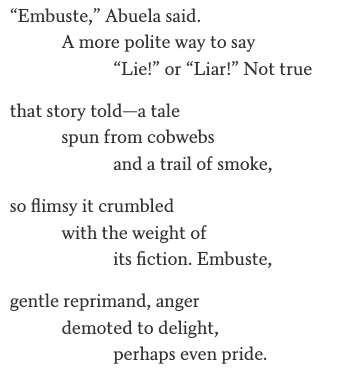
Lessons At the Legendary Institute for Yarn Spinning by Rigoberto González.
Now, this poem won’t do for the kinds of lies and stories being told by the creeps and grifters in our current government, but it’s perfect for all the stories write into our poems. As the author’s grandmother advises, “If you’re going to make things up, do it well.”
Here’s to all the things you made up this week, and especially the ones you’re sharing in the Poetry Friday roundup, which is hosted this week by Susan at Chicken Spaghetti and as I type this I realize that I have not written to her challenge. Yikes! Since I’m uncharacteristically early getting this post ready, there might be time for a flash draft. Stay tuned.
Write a poem after Wendell Berry’s “Like Snow”— word for word. Choose a subject: rain, a butterfly, granite, the ocean, anything. Berry’s poem is three lines long. Break down each line. In line one, replace the word “suppose” with something else: what if; in spite of; imagine etc., replace the pronoun and the verb, replace “snow” with your chosen subject. Do the same with the second and third lines. Be sure to write an epigraph that reads “after Wendell Berry”.
Like Snow by Wendell Berry
Suppose we did our work like the snow, quietly, quietly, leaving nothing out.
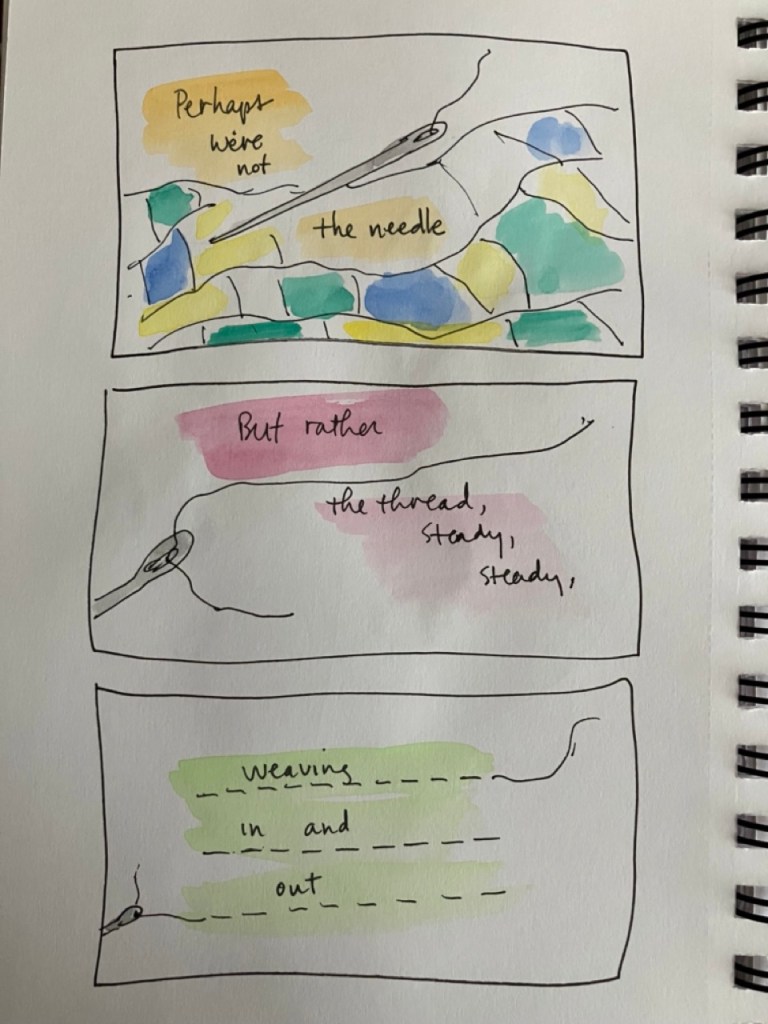
Like Stitching by Mary Lee Hahn after Wendell Berry
Perhaps we’re not the needle but rather the thread, steady, steady, weaving in and out.
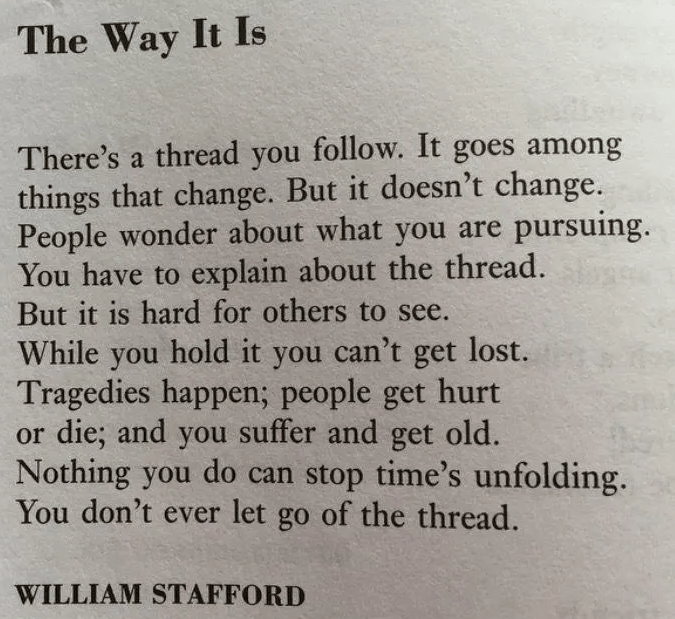
If you look closely, there’s also a hint of William Stafford in my poem:
.
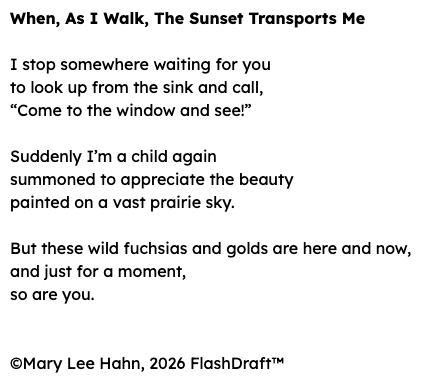
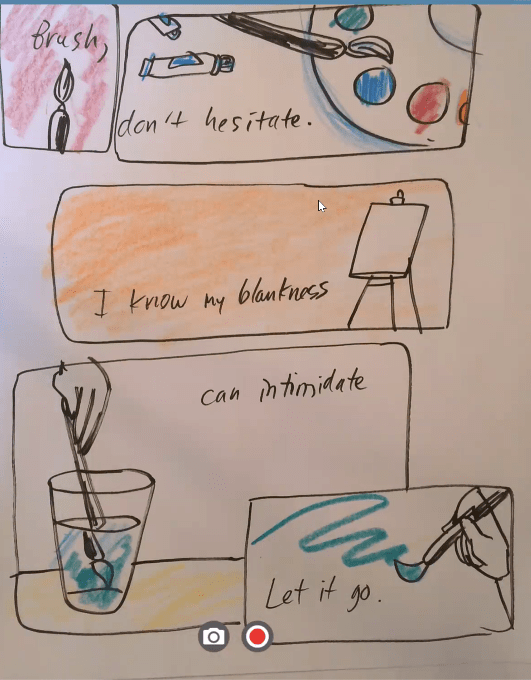
Last Monday, I had the opportunity (along with lots of other Poetry Friday Peeps!) to learn, on a zoom organized by Georgia Heard, about making poetry comics from none other than Grant Snider, the author of POETRY COMICS! He even used the poem I submitted as one of his examples!! The title is “If Canvas Could Talk.”
Since our poetry challenge this month resulted in a poem the perfect size for a poetry comic, I couldn’t resist. I created the image at the beginning of this post during the zoom. Poetry comics are fun, they challenge your brain in a new way, and you don’t have to be too precious about the art to make something you can be proud of!
Here’s how the rest of the Inklings met this month’s challenge:
Thank you to Two Writing Teachers for creating an amazing community of writers and a safe, welcoming space to write and share.
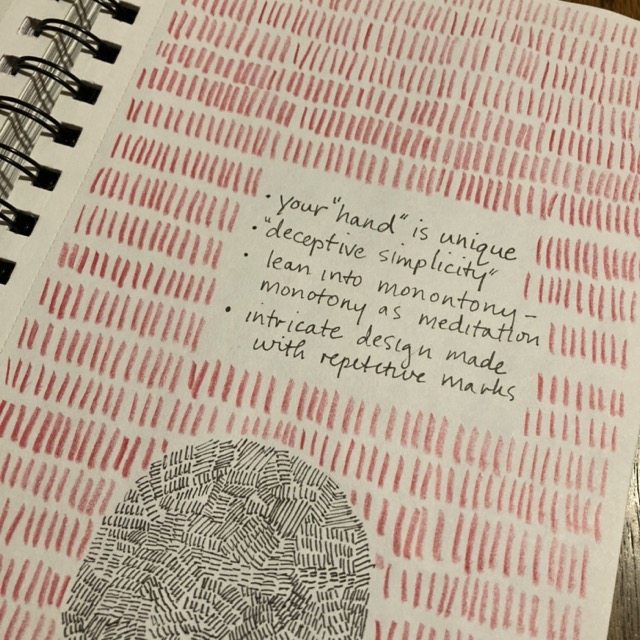
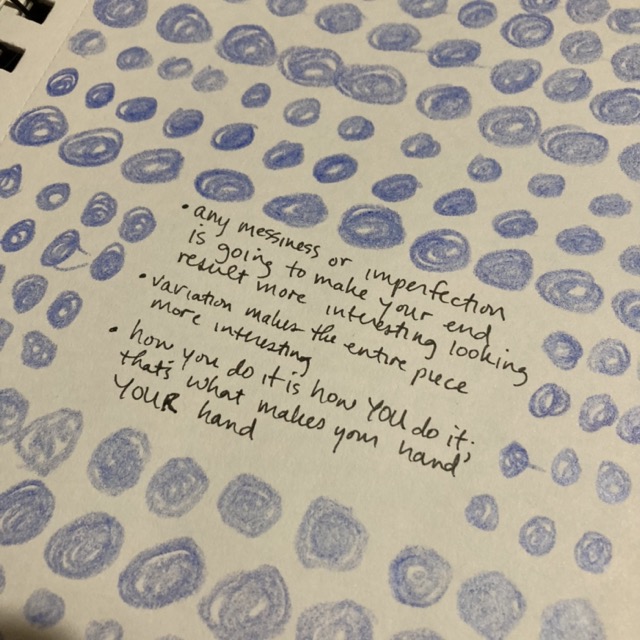
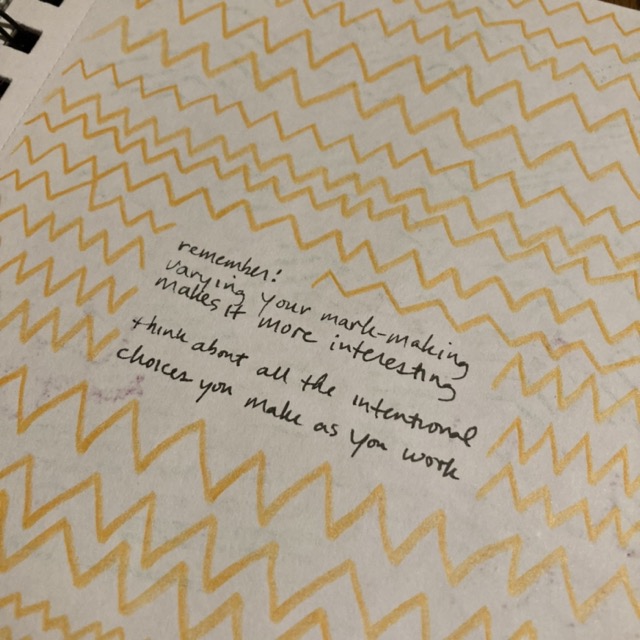
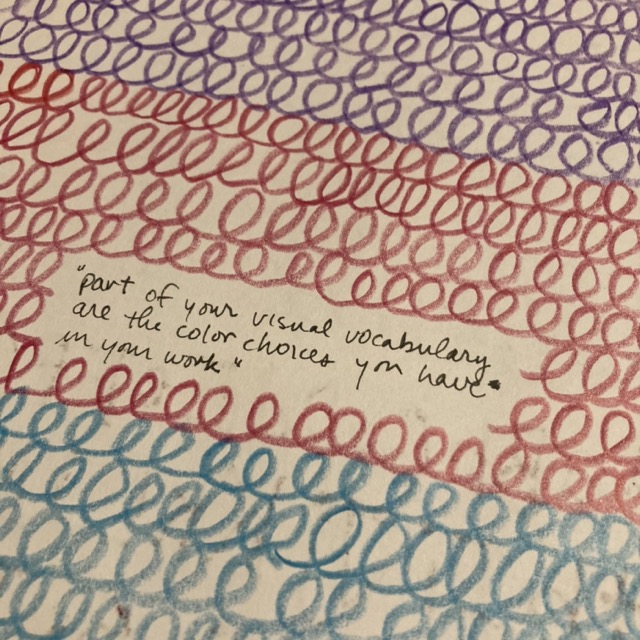
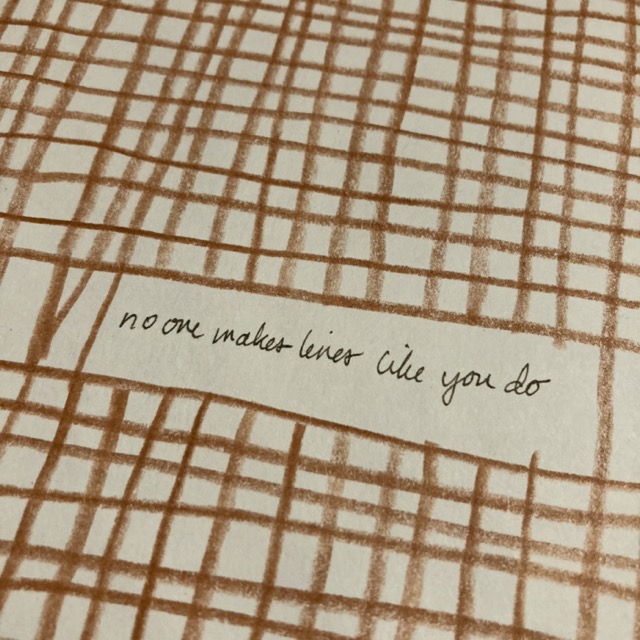
I just finished Lisa Congdon’s 30-day challenge “Developing Your Visual Vocabulary: A Daily Practice in Mark Making” on CreativeBug.
She dropped a lot of big wisdom throughout the course.
This wisdom can inform mark making with colored pencils, watercolor, thread, or words on a page: the importance of practice, the acceptance (or even cultivation) of wonkiness (she used the word “wonky” a LOT and it made me love her even more every time), and the development of your own particular VOICE.
Throughout the course, I’ve often copied her lesson and then “riffed” on it by trying it with watercolor instead of colored pencil, or by combining lessons when I didn’t have the energy for a whole-page design.
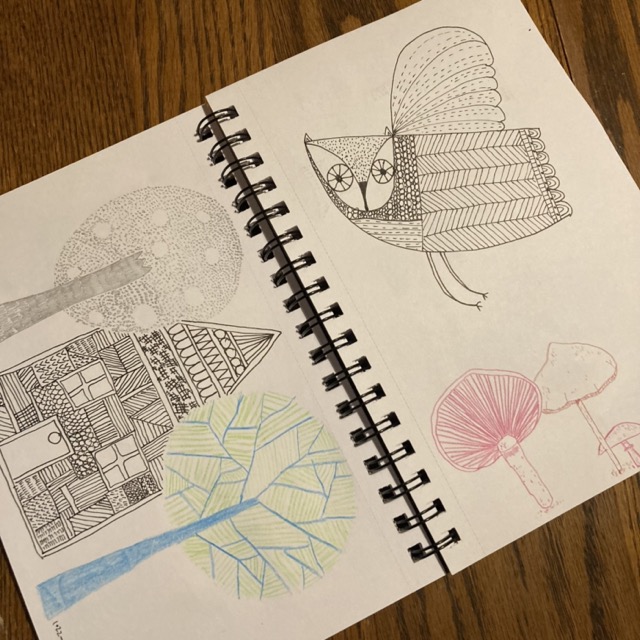
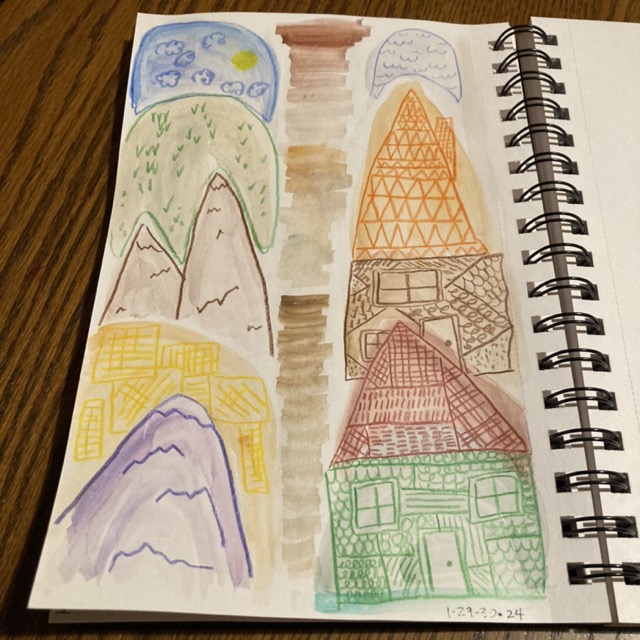
Last night, I pulled out my watercolors and doodled. It was blobs of color with a stack of brush marks down the center. It was a journal entry of random “thoughts” made with marks rather than words. I knew I could do more with it, but I set it aside, as I often do with the entries in my writer’s notebook.
This morning, in Lisa’s final lesson, she invited us to “go big” on the biggest piece of paper we had using all the marks she had taught us. She modeled how she would set up her paper for an arial-view landscape, and then in time lapse, we watched her fill the whole page, first with watercolor in each section, and then with marks.
I opened my sketchbook to my blobs of watercolor from last night, and suddenly I could see a village in a valley across the road from mountains with wheat fields and high pastures tucked in between. Without looking back at any of the previous lessons, I chose my colors and made my marks.
There are such beautiful echoes between what happens in my writer’s notebook, my sketchbook, and the scraps of cloth where I test different threads and stitches — my “scrappy stitch book.” I’m glad I’ve taken the opportunity to slow down and listen to my own voice.
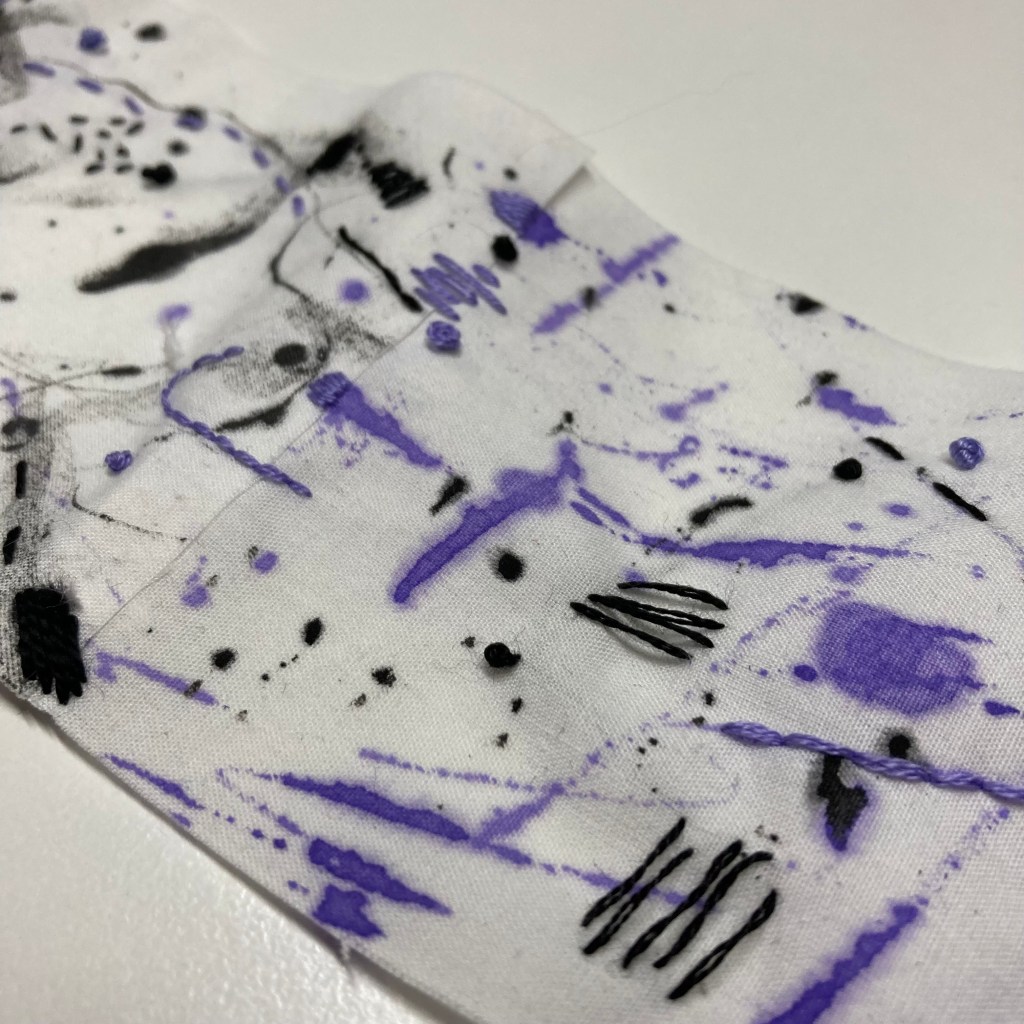
Last week, I took part in the @textileartsite (textileartist.org) #StitchCamp. I learned to use paint on fabric, cut apart and recombine bits of painted fabric, and add all kinds of stitching to blend the pieces into a unified whole.
Then, on the day when the final video dropped, I lost interest. I finally had a big block of time and I wanted nothing more than to dig into the servicing of my (formerly my mom’s) Singer Featherweight sewing machine.
At first, I was hard on myself for not finishing what I’d started. But then I reminded myself that #StitchCamp was not the boss of me. In fact, as the week progressed, I had realized that #StitchCamp was actually a very slick marketing tool to get me to sign up for #StitchClub. For the low-low price of $38/month I could learn from fabric artists around the world! And yes, I was tempted. But “Look what you can create in just 30 minutes a day for a week! Imagine the amazing artist you will become if you take our classes!” gradually morphed in my mind into “You’re going to PAY someone else to steal time away from the projects YOU choose to do? Are you NUTS?”
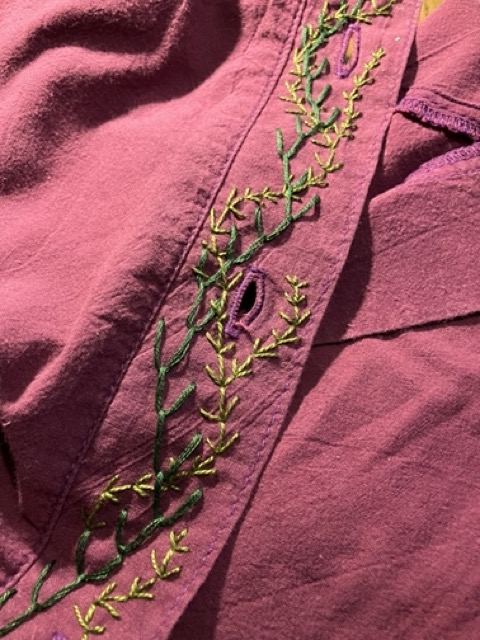
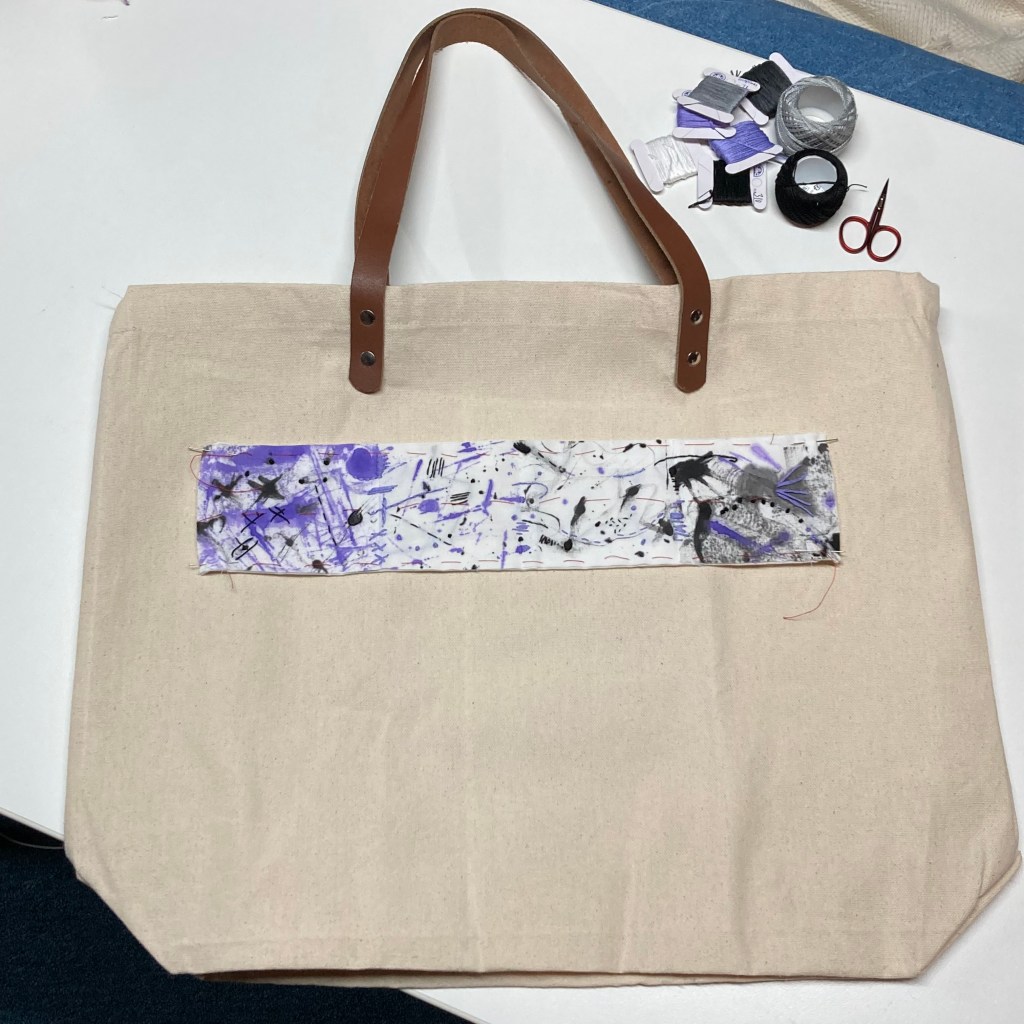
Needless to say, I’m not signing up for #StitchClub. I’m going to follow my own path of learning, most of which won’t cost me a dime. I’ve got a quilt to make and another to repair. There’s a jean jacket yoke to finish embroidering and hoop that’s a playground when I just need to drop some random stitches or some beads and sequins. And yes, I’m going to finish the scrap I made in #StitchClub and use it to embellish a canvas bag that I’ll donate to the Casting for Recovery Ohio online auction in March. Stay tuned for the final product and information about bidding!
These lessons about choice are ones I’ve already internalized as a writer, and which I whole-heartedly embraced when I was a teacher of writers. It’s interesting to me that when I switched my media from words to stitches, I had to learn about the power of choice all over again.

 A(nother) Year of Reading