Slice of Life: Voice

Thank you to Two Writing Teachers for creating an amazing community of writers and a safe, welcoming space to write and share.

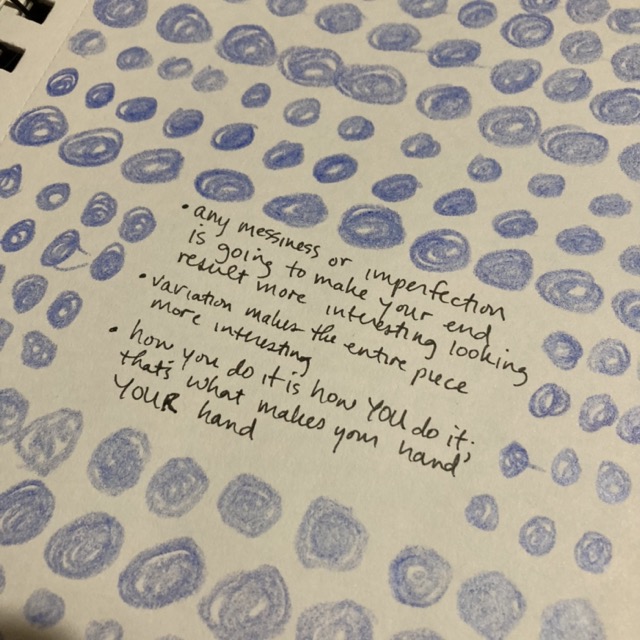
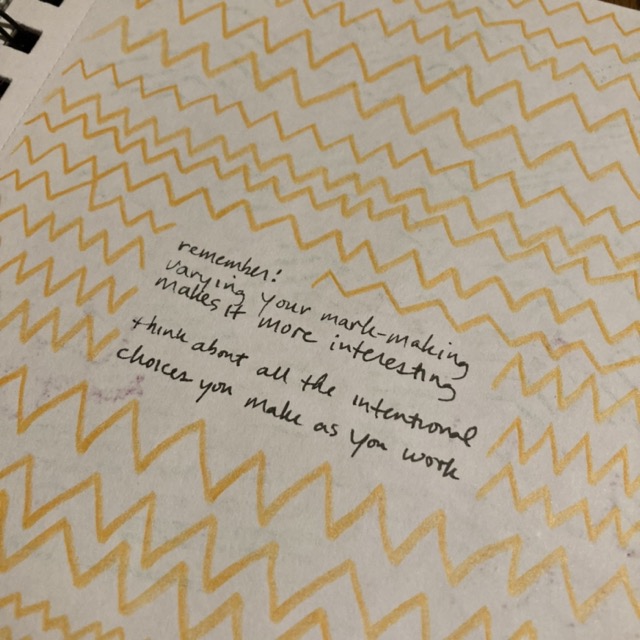
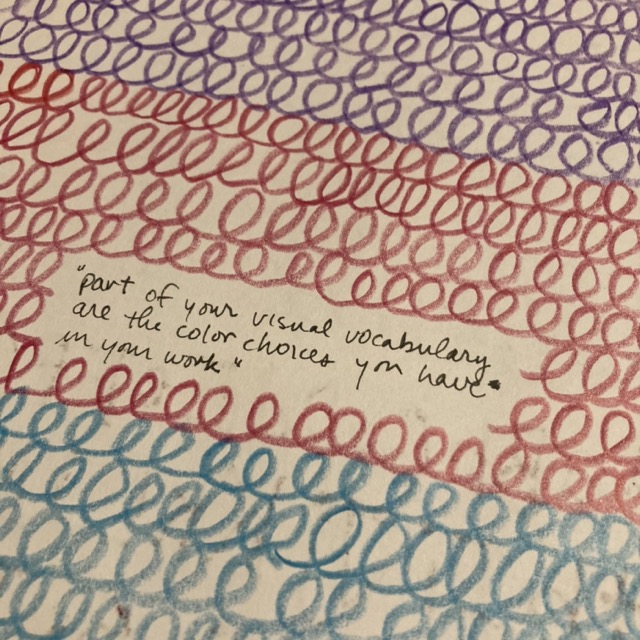
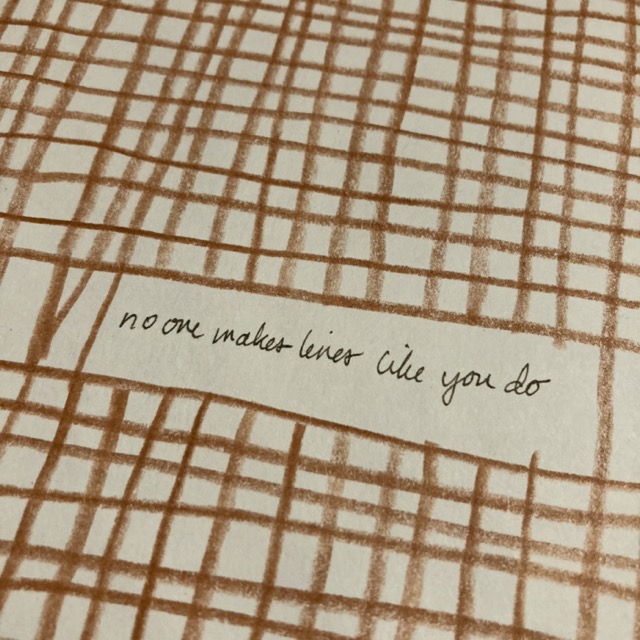
I just finished Lisa Congdon’s 30-day challenge “Developing Your Visual Vocabulary: A Daily Practice in Mark Making” on CreativeBug.

She dropped a lot of big wisdom throughout the course.
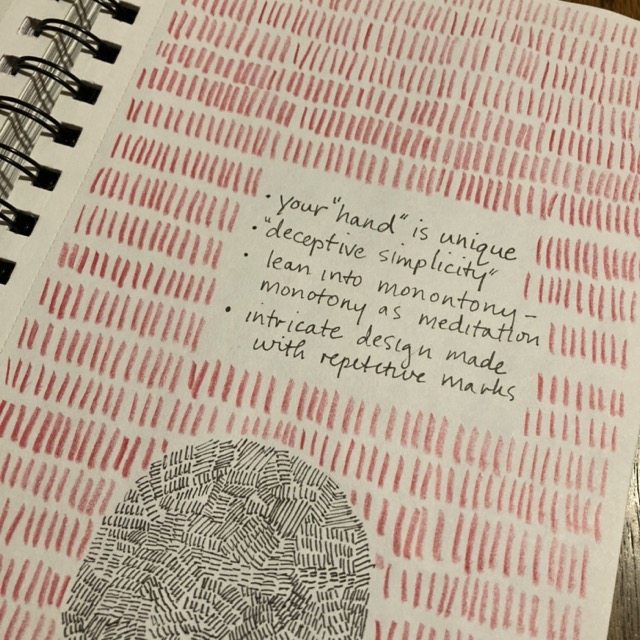
This wisdom can inform mark making with colored pencils, watercolor, thread, or words on a page: the importance of practice, the acceptance (or even cultivation) of wonkiness (she used the word “wonky” a LOT and it made me love her even more every time), and the development of your own particular VOICE.

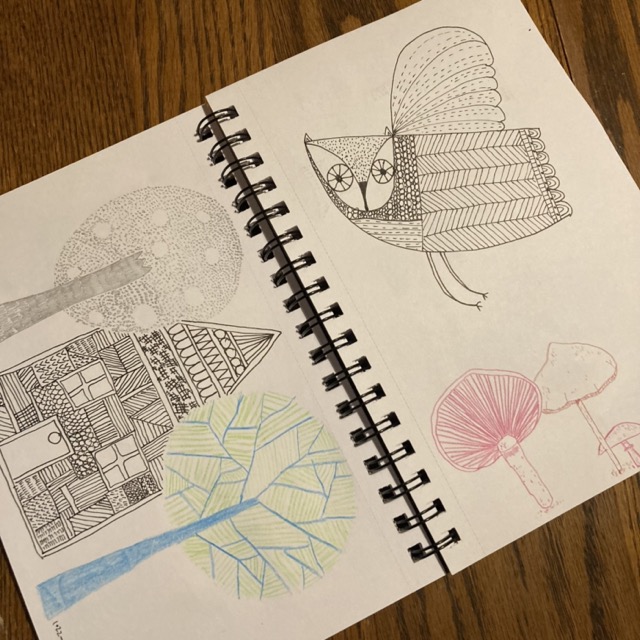
Throughout the course, I’ve often copied her lesson and then “riffed” on it by trying it with watercolor instead of colored pencil, or by combining lessons when I didn’t have the energy for a whole-page design.
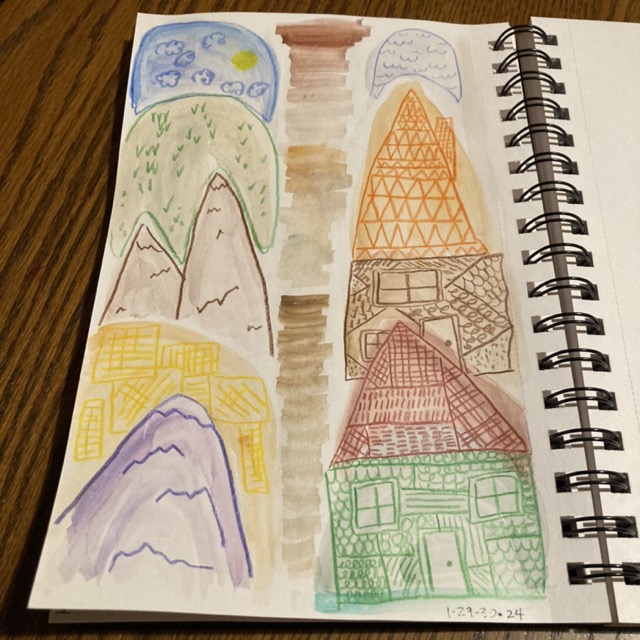
Last night, I pulled out my watercolors and doodled. It was blobs of color with a stack of brush marks down the center. It was a journal entry of random “thoughts” made with marks rather than words. I knew I could do more with it, but I set it aside, as I often do with the entries in my writer’s notebook.

This morning, in Lisa’s final lesson, she invited us to “go big” on the biggest piece of paper we had using all the marks she had taught us. She modeled how she would set up her paper for an arial-view landscape, and then in time lapse, we watched her fill the whole page, first with watercolor in each section, and then with marks.

I opened my sketchbook to my blobs of watercolor from last night, and suddenly I could see a village in a valley across the road from mountains with wheat fields and high pastures tucked in between. Without looking back at any of the previous lessons, I chose my colors and made my marks.
There are such beautiful echoes between what happens in my writer’s notebook, my sketchbook, and the scraps of cloth where I test different threads and stitches — my “scrappy stitch book.” I’m glad I’ve taken the opportunity to slow down and listen to my own voice.
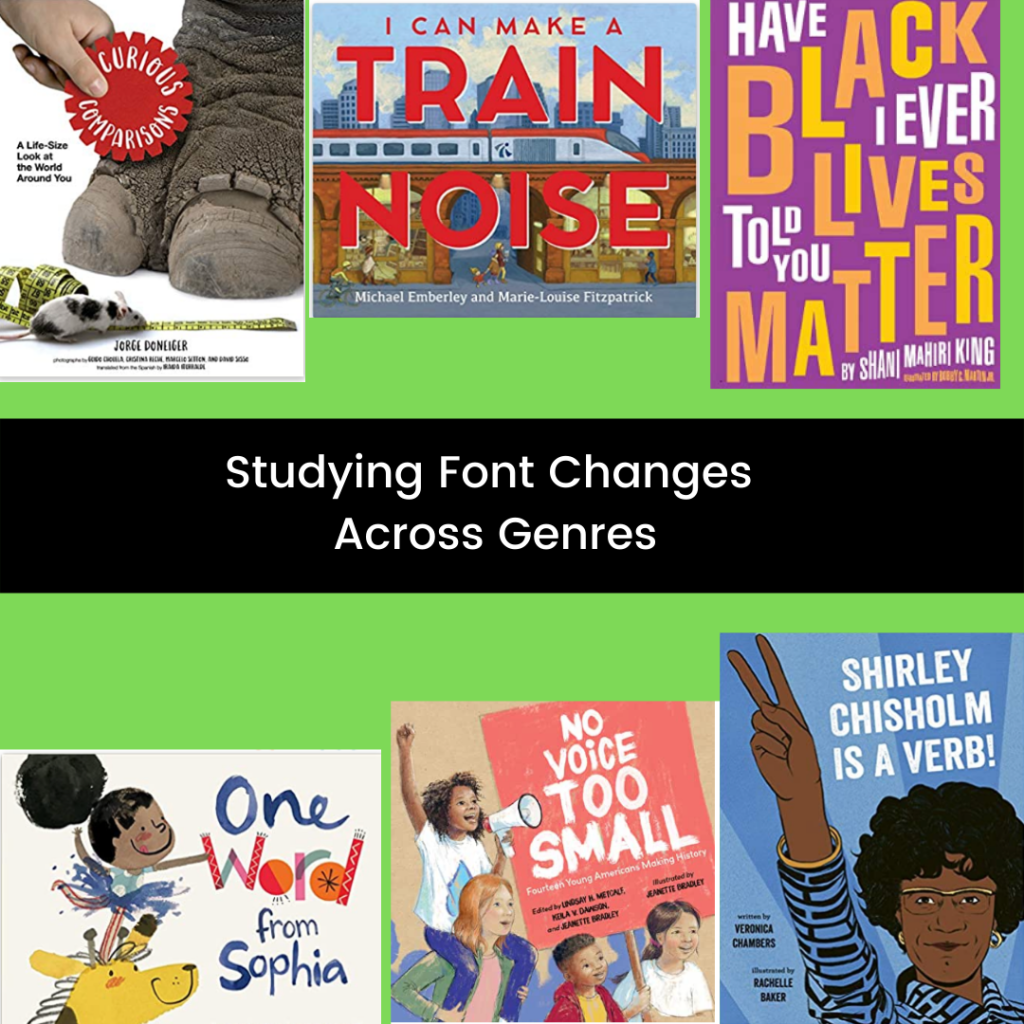
Franki’s Weekly Text Set-Studying Font Across Genres

Texts for this Text Set have been posted daily on Instagram. Follow @TextSets there to get daily updates!

This week’s Text Set focuses on font changes across. This is a great quick study to do early in the school year as it creates access points into mentor texts for all readers and writers. The books shared this week have font changes that can be studies for readers (how the font change impacts meaning) as well as for writers as they find possibilities for their own writing.

I Can Make a Train Noise is the perfect book to begin a mini-unit on fonts and font changes. The same line repeats itself throughout the book (“I can make a train noise now.”) but the size and layout of the words change. The font tells the reader how they might read the words differently on each page. This is a book that readers of all ages will have fun with and then will be able to learn about font choices throughout.

Poetry is always important when looking at font. These two books give readers and writers so much to think about. In No Voice Too Small, the concrete poem about Mari Copeny: Little Miss Flint (Written by Carole Boston Weathorford) is worth studying when it comes to font. The choices in which words to enlarge is important for readers and writers. In Have I Ever Told You Black Lives Matter, each page is a work of art in the way the words are placed on the page, the size and color of words, etc.

Font changes in narrative can be fun and it doesn’t take a lot of font changes to give new meaning or emphasize dialogue, etc. One Word from Sophia is a book that plays a bit with font and the choices of each font change can be invitations for writers to try something new in their own narratives.

Curious Comparisons uses a variety of fonts and sizes in the way the book is formatted. Different information is given with different fonts and the layout/font choices on any individual page would make a great mini lesson. As our students write informational texts, font and layout are critical visual pieces and this is a great nonfiction book to invite those possibilities.

The picture book biography, Shirley Chisholm is a Verb, is an incredible story of Shirley Chisholm. The verbs in the book–that tell so much about the impact Shirley Chisholm has made are in different fonts and colors. Discussing the ways font is used to highlight important ideas throughout is the way I’d start this conversation and invitation for readers and writers. #TextSets #kitlit #BuildYourStack #MentorTexts

This week’s books were linked at Bookelicious and/or  Cover to Cover Children’s Bookstore. If you are looking for a fabulous local children’s bookstore to support, Cover to Cover is an amazing one. We are lucky to have them in Central Ohio! If you don’t have an independent children’s bookstore in your town, check out Bookelicious. They are an online independent bookstore for children with an incredible curated collection. (Warning: You will want to create a bookmoji while you are there. This will be the highlight of your weekend I’m sure! Below is one of mine:-)

One of my 4 bookmojis on Bookelicious!