
I just finished Lisa Congdon’s 30-day challenge “Developing Your Visual Vocabulary: A Daily Practice in Mark Making” on CreativeBug.
She dropped a lot of big wisdom throughout the course.
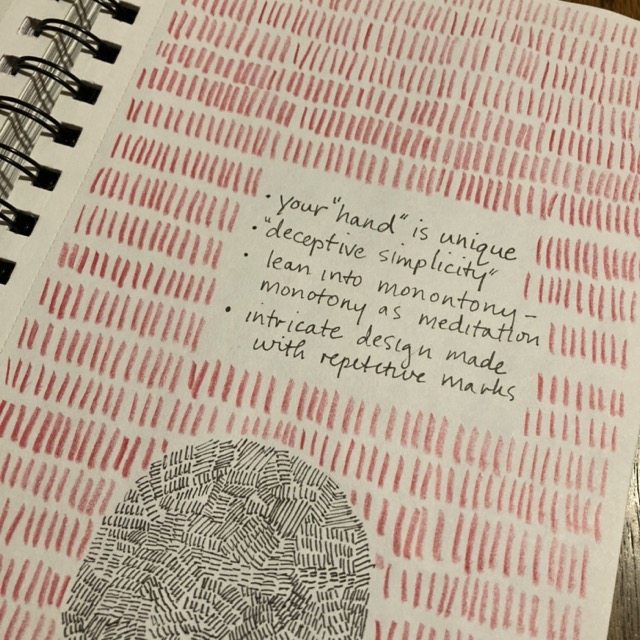
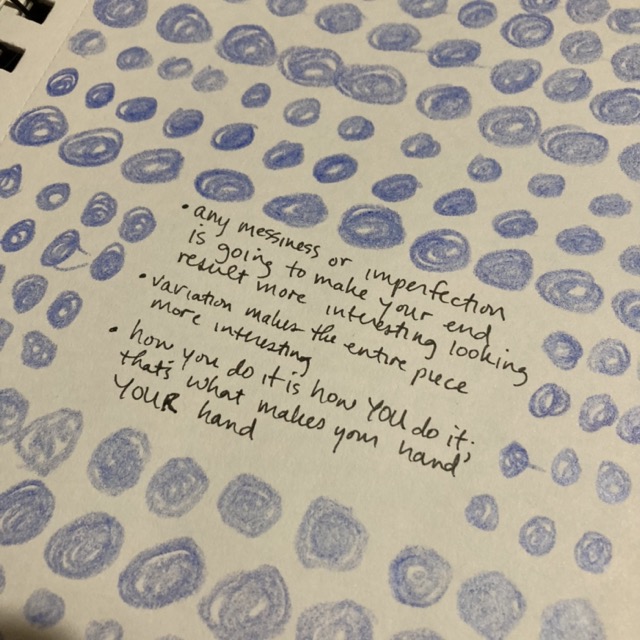
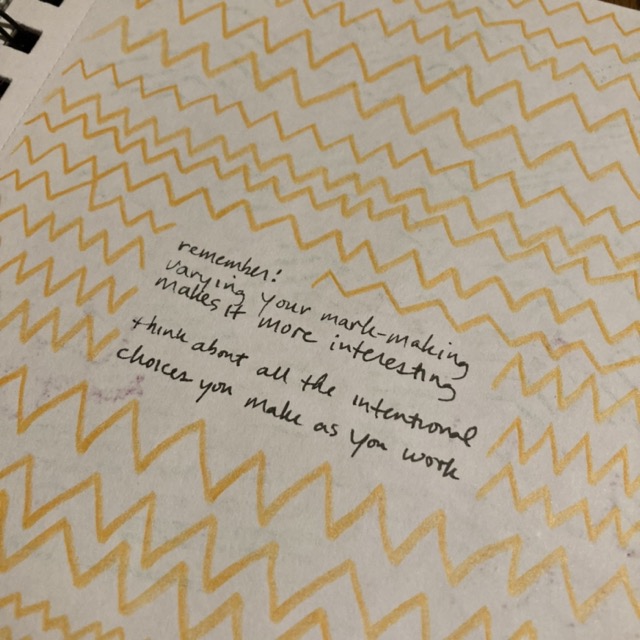
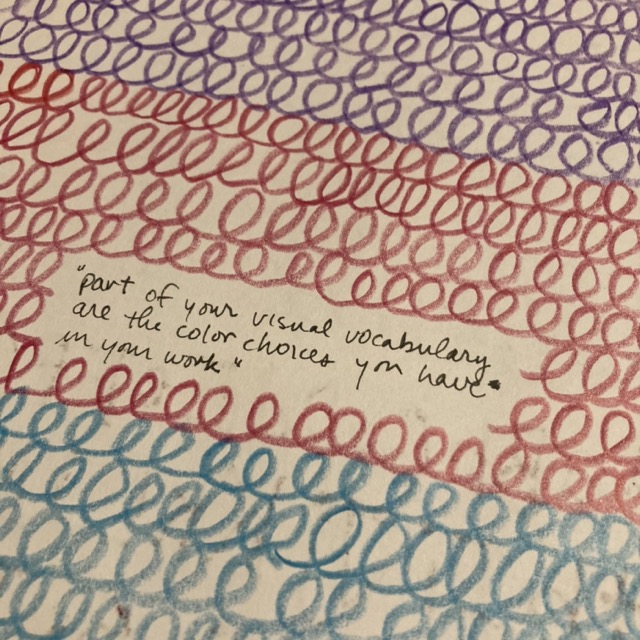
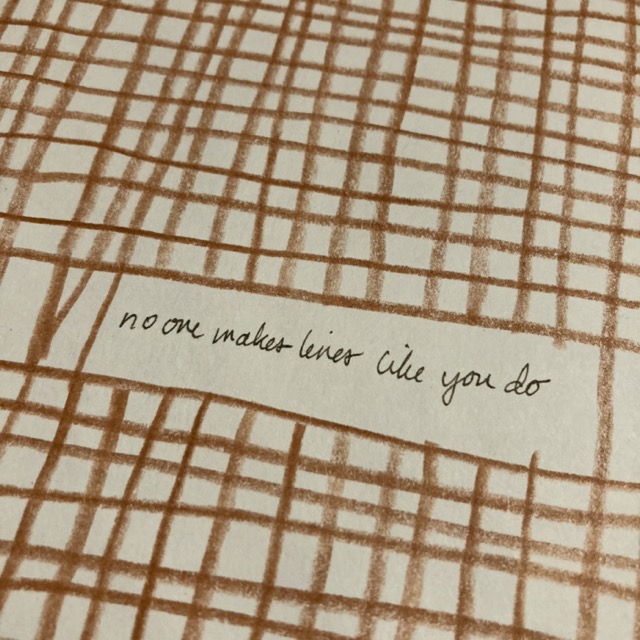
This wisdom can inform mark making with colored pencils, watercolor, thread, or words on a page: the importance of practice, the acceptance (or even cultivation) of wonkiness (she used the word “wonky” a LOT and it made me love her even more every time), and the development of your own particular VOICE.
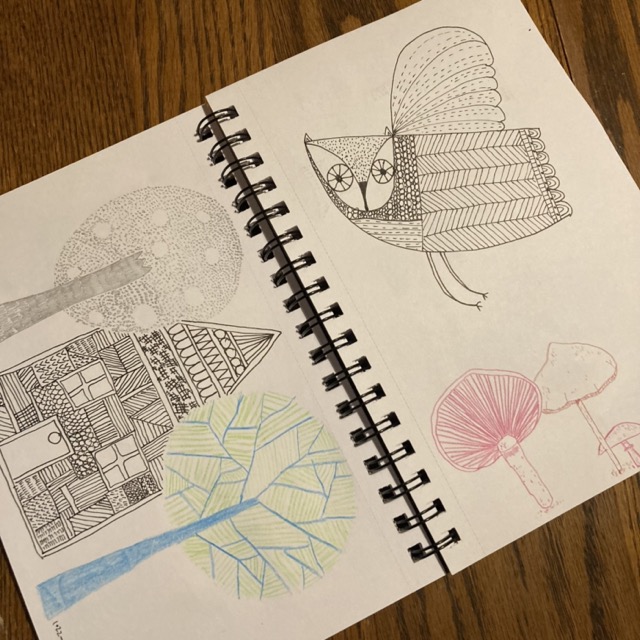
Throughout the course, I’ve often copied her lesson and then “riffed” on it by trying it with watercolor instead of colored pencil, or by combining lessons when I didn’t have the energy for a whole-page design.
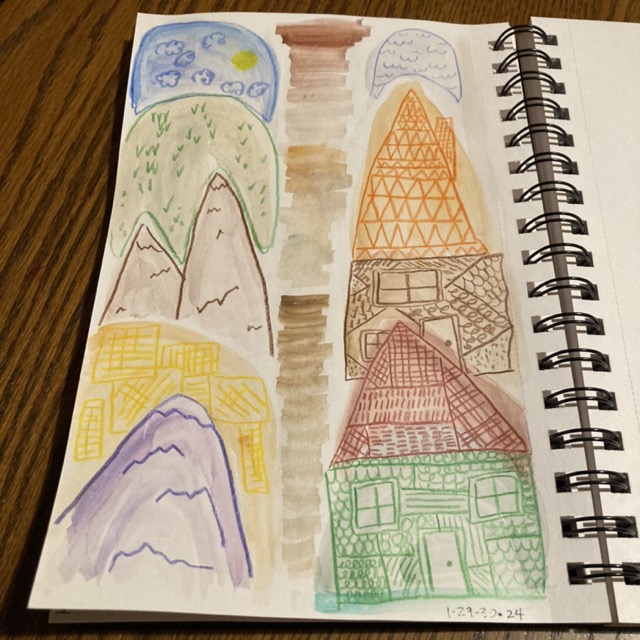
Last night, I pulled out my watercolors and doodled. It was blobs of color with a stack of brush marks down the center. It was a journal entry of random “thoughts” made with marks rather than words. I knew I could do more with it, but I set it aside, as I often do with the entries in my writer’s notebook.
This morning, in Lisa’s final lesson, she invited us to “go big” on the biggest piece of paper we had using all the marks she had taught us. She modeled how she would set up her paper for an arial-view landscape, and then in time lapse, we watched her fill the whole page, first with watercolor in each section, and then with marks.
I opened my sketchbook to my blobs of watercolor from last night, and suddenly I could see a village in a valley across the road from mountains with wheat fields and high pastures tucked in between. Without looking back at any of the previous lessons, I chose my colors and made my marks.
There are such beautiful echoes between what happens in my writer’s notebook, my sketchbook, and the scraps of cloth where I test different threads and stitches — my “scrappy stitch book.” I’m glad I’ve taken the opportunity to slow down and listen to my own voice.
 A(nother) Year of Reading