Thank you to Two Writing Teachers for creating an amazing community of writers and a safe, welcoming space to write and share.
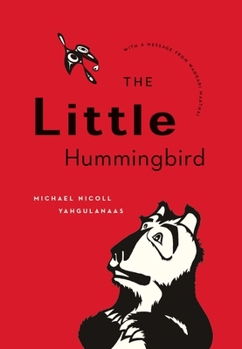
I’m coming to the end of my time as the reading specialist for an after school program. I didn’t have to think very hard about the book I would feature in my final lesson cycle:
Do you know this fable? The forest is on fire and all the animals run away in fear. All except the Hummingbird. She carries single drops of water from the stream to the fire over and over again. Finally, the bear asks her, “What are you doing?” And the Little Hummingbird answers, “I’m doing everything I can.”
If you are feeling bleak about the world these days, read this book with small humans and let them tell you what they know about the ways small actions can add up to a big difference.
Several groups didn’t like that the book ended the way it did. They wanted more. They knew for certain that the Little Hummingbird’s choices were influencing the other animals and that they, too, would get involved and help put out the fire, each using their own talents. “When they work together, they can put out the fire.”
Thank you to Two Writing Teachers for creating an amazing community of writers and a safe, welcoming space to write and share.
My job title for the after school program is “Reading Specialist,” but I much prefer “Reading Enricher” or “Lead Reader.” I am blessed with the freedom to be creative and to choose the books I share (and ostensibly, the lessons I teach.)
We spent National Poetry Month immersed in poetry. I chose matching pairs of poems by two of my favorite children’s poets, Douglas Florian and David Elliott. Their poems are similar: usually funny, often with puns or word play, and short enough to be just the right size for the small amount of time I have at each of my sites. I created a tournament bracket that pitted Hummingbird against Hummingbird, Barn Cat against Persian, Giraffe against Giraffe and Stegosaurus against Stegosaurus.
As we read and discussed the poems before voting, the lessons of the children’s classroom teachers shone through their comments. The children identified and celebrated rhythm and rhyme. A third grader compared simile to metaphor. A fifth grade boy praised one poem’s hyperbole. Two fifth grade girls traded lines as they recited William Carlos Williams’ “The Red Wheelbarrow.” Kindergarteners identified (and preferred) the more positive message in Elliott’s “Stegosaurus:”
“…there’s some- thing more to life than just intelligence.”
In the end, “Barn Cat” by David Elliott won the first side of the bracket, and Douglas Florian’s “Stegosaurus” won the second side. So it was
The Barn Cat by David Elliott
Mice had better think twice.
versus
Stegosaurus by Douglas Florian
Ste-go-SAUR-us Her-bi-VOR-ous Dined on plants inside the forest. Bony plates grew on its back, Perhaps to guard it from attack. Or to help identify A Stegosaurus girl or guy. Its brain was smaller than a plum. Stegosaurus was quite DUMᗺ.
A group of older students at one of the sites helped me brainstorm a list of the qualities of poems to guide the final voting away from choice based on a favorite animal or illustration and towards rhythm, rhyme, word choice, details, and message: poems that make you think, poems that surprise you.
By a vote of 25 to 19, “Stegosaurus” by Douglas Florian won. It was valued most for its rhythm and rhyme, and for the humor in the surprising word choice at the end. “Barn Cat” owed its strong showing to the rhyme, the realism, and the way the reader has to think in order to understand the poem and its humor.
YOU BROKE IT! by Liana Finck Rise x Penguin Workshop, 2024 review copy from the public library
This is a very funny book and it made for an interesting research question, but you don’t need to buy it for your classroom or school library.
It was written/drawn by a cartoonist, so it should come as no surprise that the whole story consists of a series of sight gags — adult animals scolding their young for doing what they naturally do: a turtle moving slowly, a tornado making a mess, an earthwork squirming. Finally, the young octopus stands up for itself, the adult has an AH-HA moment, and all is made well with a multi-armed hug.
My research question was, “Who would think this is a funny book?” I took it to the after-school program where I work and tested four different audiences.
The director, a mom with grown children, thought it was funny. One of the classroom aids, a college-aged lad, didn’t think it was funny at all.
When the kids arrived after school, I tested it on a group consisting of two kindergarteners and a first grader. They were quick to use the cover and endpapers to infer that the adult bird was mad at someone who broke the egg. The adult bird didn’t break the egg, and the baby bird didn’t break the egg. Someone else broke the egg and this was going to be a book about Who Broke The Egg. So when the second spread featured an earthworm, they were thrown for a loop. However, some very good inferring ensued: “I’m not sure what squirming means,” said the first grader, “but I think it might mean wiggling.”
Besides the inferring, some surprising background knowledge was revealed. Eventually they realized that the adult animals were probably parents, and because the tornado was wearing a bowtie, it was a dad. When we turned the page to the frog, the first grader refused to choose between mom and dad. “I think the frog is non-binary.” Then, concerned, she asked me, “Do you know what non-binary means?”
“Yes, I know what that means.”
“Good,” she said, turning to the kindergarteners. “Do you want me to explain what non-binary means?”
I quickly intervened, “Let’s save that conversation for later.”
Final verdict from the K/1 crew: not a funny book. It didn’t even answer the question of Who Broke It?
My next group consisted of two third graders and a first grader, all in gifted/enrichment programs at school. On the first page turn after the bird and chick (worm and wormlet), one of the third graders exclaimed, “Oh, I get it! This is going to be a book about grownups yelling at kids for doing what they naturally do!” Every page turn after that was met with a chorus of “…because that’s what we’re SUPPOSED to do!” At the pony page (“Get the hair out of your eyes!”) I stopped and asked if adults had ever said any of these things to them. And indeed, they had been told (“a million times”) to get the hair out of their eyes, or hurry up, or settle down.
Final verdict from the 1/3 crew: a very funny book.
Everything we know about the development of children’s ability to move beyond the literal and understand humor was confirmed. There also seems to be a component of experience that determines whether this book is funny. The 1/3 crew is still in the phase of life where adults are correcting their behavior on a regular basis. The college lad is well-removed from that, but hasn’t had the experience of being on the parental end of those corrections. The mom with grownup kids has the lived experience of this book.
So, who should buy this book, since lots of kids are either not going to get it, or not going to pick up a book that consists of a series of corrections they hear from the adults in their lives, with very little agency given to the young animals in each situation (except for the octopus fry)? Seems like a $20.00 baby shower card, given to remind new parents that kids will be kids, even though the “big idea blurb” on the back of the book has it the other way around: “Parents will be parents…”
Thank you to Two Writing Teachers for creating an amazing community of writers and a safe, welcoming space to write and share.
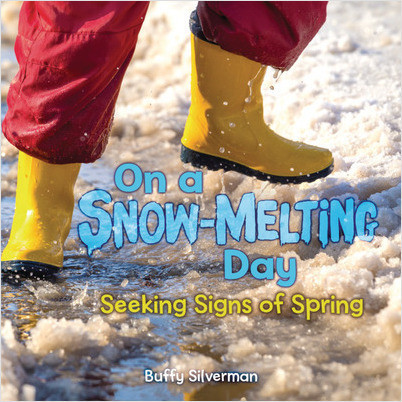
In 2020, Buffy Silverman took readers “puddle-sploshing” in On A Snow-Melting Day: Seeking Signs of Spring. Vivid photographs and a snappy rhyming text earned this book recognition as an NCTE Notable Poetry Book for 2021.
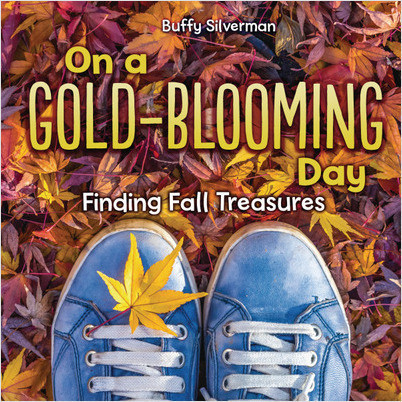
Then last fall, we wandered through forests and meadows, pausing at ponds to witness animals and plants in On a Gold-Blooming Day: Finding Fall Treasures, a 2023 CLA/NCTE Notable Children’s Books in the Language Arts, and a Children’s Book Committee at Bank Street College of Education Best Children’s Books of the Year for 2023.
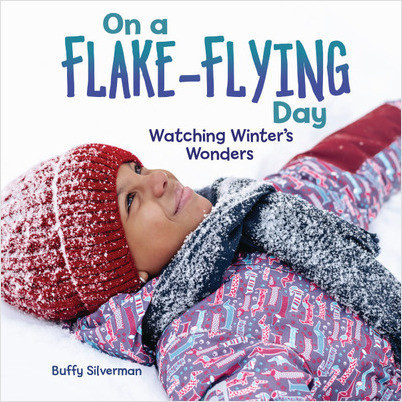
I missed getting to share “Snow-Melting” with students in 2020, but every one of my after-school kiddos loved “Gold-Blooming” last fall. I can’t wait to share “Flake-Flying” in a few months! Reading these books with small groups gathered close allows for time to study and talk about the photographs, to track the rhymes, and, when a question comes up, verify facts or vocabulary with the informational back matter and/or glossary. In a regular classroom setting, teachers could create a seasonal text set for each book using the titles listed for “Further Reading.” And in writing workshop, the books would make fantastic mentor texts for studying creative ways to hyphenate words as well as ways to craft leads and endings.
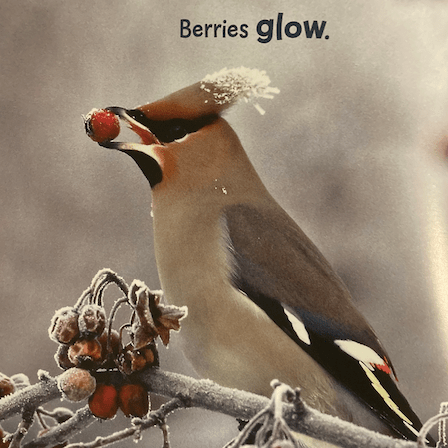
My favorite rhymes in ON A FLAKE-FLYING DAY are the ones that start the book off: “On a feather-fluffing, seed-stuffing, cloud-puffing day…” My favorite photo is the frosty-topped cedar waxwing practically posing with a berry in its beak:
And my favorite fact is that dragonfly nymphs prowl for minnows and other aquatic insects below the frozen surfaces of winter waters. (Dragonflies are amazing in all the stages of their lives!)
I asked Buffy to tell us a little bit about her process. I wondered if the photos came first, or the words. Here’s what she had to say:
Although I enjoy taking photographs, I’m really not a visual thinker. The words always come first for me–and then I hope that there will be a way to illustrate them! With this book I followed the pattern from ON A SNOW-MELTING DAY and ON A GOLD-BLOOMING DAY. In each of the books there are four sets of refrains (On a feather-fluffing, seed-stuffing, cloud-puffing day…) followed by three pairs of rhyming sentences (Weasel whitens. Cardinal brightens…) In each of the books I included sights and sounds from a field, a wetland, and a forest, and ended with a child outside, enjoying the season. Basically the books are the nature walks I would want to take with a child or other reader!
Lots of us in the Northern Hemisphere are looking forward to winter’s relief from this summer’s heat. Pre-order ON A FLAKE-FLYING DAY now so that come October 3, you will be guaranteed snow, ice, and frost…if only between the pages of Buffy’s newest (fantastic-as-the-other-two) book! Thank you, Buffy, for giving me this opportunity to help you spread the word, and thank you, Millbrook Press, for the review copy!
Amy has this week’s Poetry Friday roundup at The Poem Farm.
Those of you who were curious about what I had in mind for my poem last week, it was a combination of literal (a traffic jam of cars) but also metaphorical (life changes following retirement). I had loads of fun hearing what pictures the poem made in your minds and I’m SO glad I chose not to add an image!
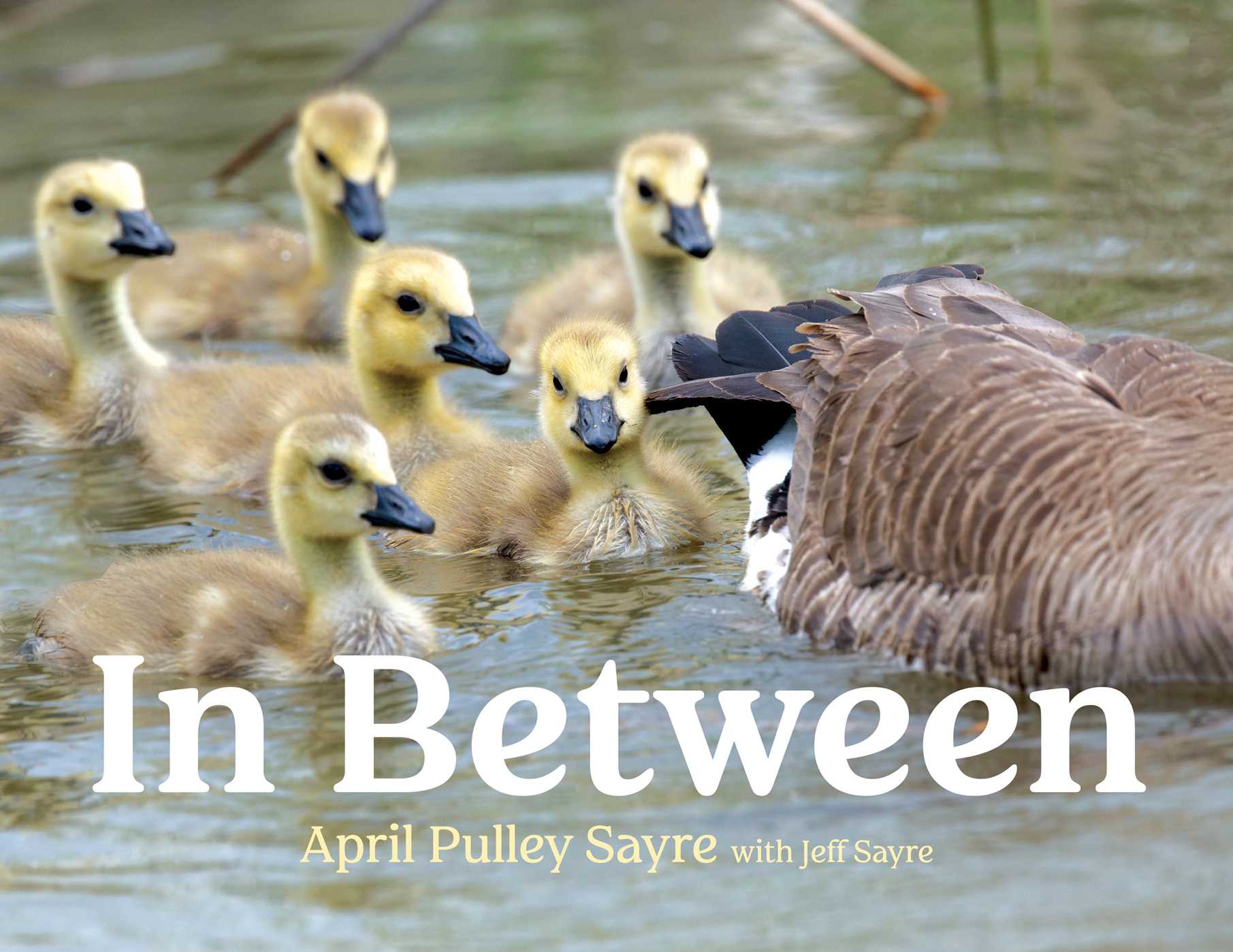
In Between by April Pulley Sayre with Jeff Sayre Simon and Schuster, 2023 review copy from the public library
It’s been a minute since this blog has been anything except Poetry Friday, but last week I sat down with the March/April issue of The Horn Book and the Columbus Metropolitan Library app. As I read reviews, I reserved titles. The bounty has begun to come in, and I’ve got LOTS of great new books to share.
We’ll start with In Between. This is April’s last book. But even as a last, it is also an in between. An in between for her readers as well as for her husband and co-author, Jeff. In the dedication, April wrote, “For anyone walking the uncertain path between endings and new beginnings.” That would be all of us, all the time, right?
April’s photographs in this book are more stunning than usual, and paired perfectly with her words. She reassures us that it is perfectly normal to be in between, and although we (and the animals) are feeling awkward and not at all ready for what comes next, we “Grow stronger.”
And although “Paws may pause. Eyes may stare.” we’ll be okay, because, “…it’s only an in between.”
I can’t wait to read and discuss this book with my Kids Club kids!
My work so far as the Kids Club Reading Specialist has been very peripheral, very fragmented. I’m at each site weekly, and I’ve met with students one-on-one or in small groups every other week…if we’re lucky and their parents don’t pick them up in the middle of a lesson or before we even get started.
I’m not complaining, but I AM looking forward to next week when schools are closed for two days following Martin Luther King, Jr. Day for a Professional Development Day and a Records Day. On Tuesday and Wednesday, 24 students will participate in all-day Kids Club, and I’ll have the opportunity to work with them as a whole group!
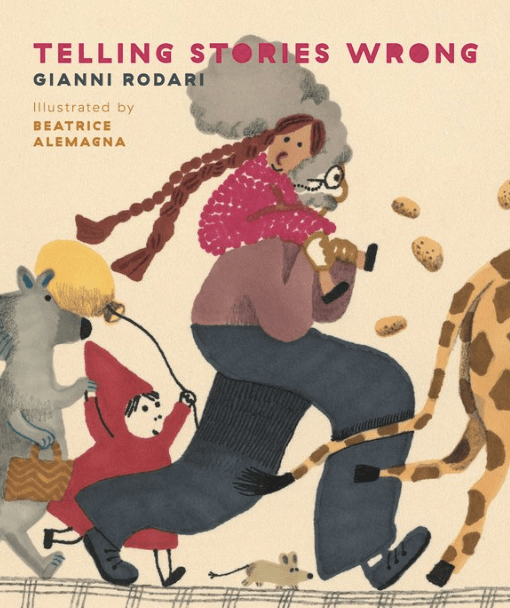
Tuesday will be Fairy Tale Day. We’ll start with TELLING STORIES WRONG by Gianni Rodari. This is the story of a grandfather who just can’t seem to tell the story of Little Red Riding Hood the way it’s supposed to be told. Clever readers will be able to figure out why. This book doesn’t rhyme, but it will lead us to others that do.
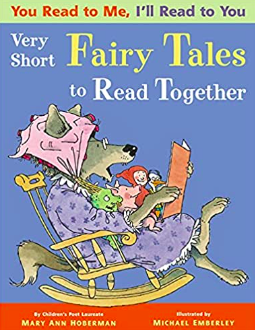
Next up, I’ll have some of the older students prepped to perform a poem from VERY SHORT FAIRY TALES TO READ TOGETHER by Mary Ann Hobermann. Then I’ll invite pairs of students to practice and perform a poem from one of the You Read To Me, I’ll Read To You books.
Finally, in the upcoming weeks when we’re back to the regular schedule, my read aloud with small groups and individuals will be…
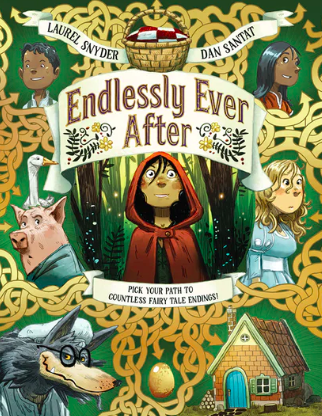
…ENDLESSLY EVER AFTER: PICK YOUR PATH THE COUNTLESS FAIRY TALE ENDINGS by Laurel Snyder. This rhyming picture book is a tour de force of planning. I literally have no idea how she must have plotted this book so that the reader has SO many different paths to follow! And in RHYME, no less! I love that not all of the endings are happy and not all of the paths are long. Plus, Dan Santat’s illustrations are tons of fun! I can’t wait to explore this book with readers of all ages and see what they think. I’m not sure we’ll get much past read aloud in those sessions…and that’s just FINE!
This week’s Poetry Friday Roundup is hosted by Susan at Chicken Spaghetti.
And here’s the lowdown on the Poetry Sisters’ January Challenge: We chose the word TRANSFORMATION to guide our work throughout the year, and for January, we’re writing a CASCADE poem. The Cascade form takes every line from the first stanza of your poem and TRANSFORMS those lines into the final lines of each stanza thereafter. (The link helpfully creates a little form that shows you how easy this might be.) Beyond that, there are no additional rules. Long or short, free verse, sonnet, or sestina, find a way in which you can incorporate the idea (or word) transformation as you write. We’ll post our poems on the last Friday of the month (1/27/23). I hope you’ll join us!
Hard to believe that it’s been TWENTY years since my book, Reconsidering Read-Aloud was published! And here I am, still a teacher (kinda-sorta) and still thinking about the power of the books I choose for read aloud.
As the reading specialist for an after school program, I no longer have a classroom of the same-aged students every day all day long. No more chapter book read alouds that span weeks/months with conversations that evolve as our experience with the book deepens.
Now I have K-5 students in small groups or one-on-one for 15-20 minutes once a week. I try to make sure I see every child at least once every two weeks. My lesson plans are required to address information standards, literature standards, and functional skills/fluency standards. These constraints have changed the way I choose my core read alouds.
I’m still learning, but here are some successes I’ve had, and my thinking around my choices.
I have established a pre-reading ritual for each read aloud. First we look at the front and back covers to see if the image spans across both covers. If there is a dust jacket, we check to see if the dust jacket image and the cover image are the same. Next, we look at the endpapers and think about the reasons behind this design element.
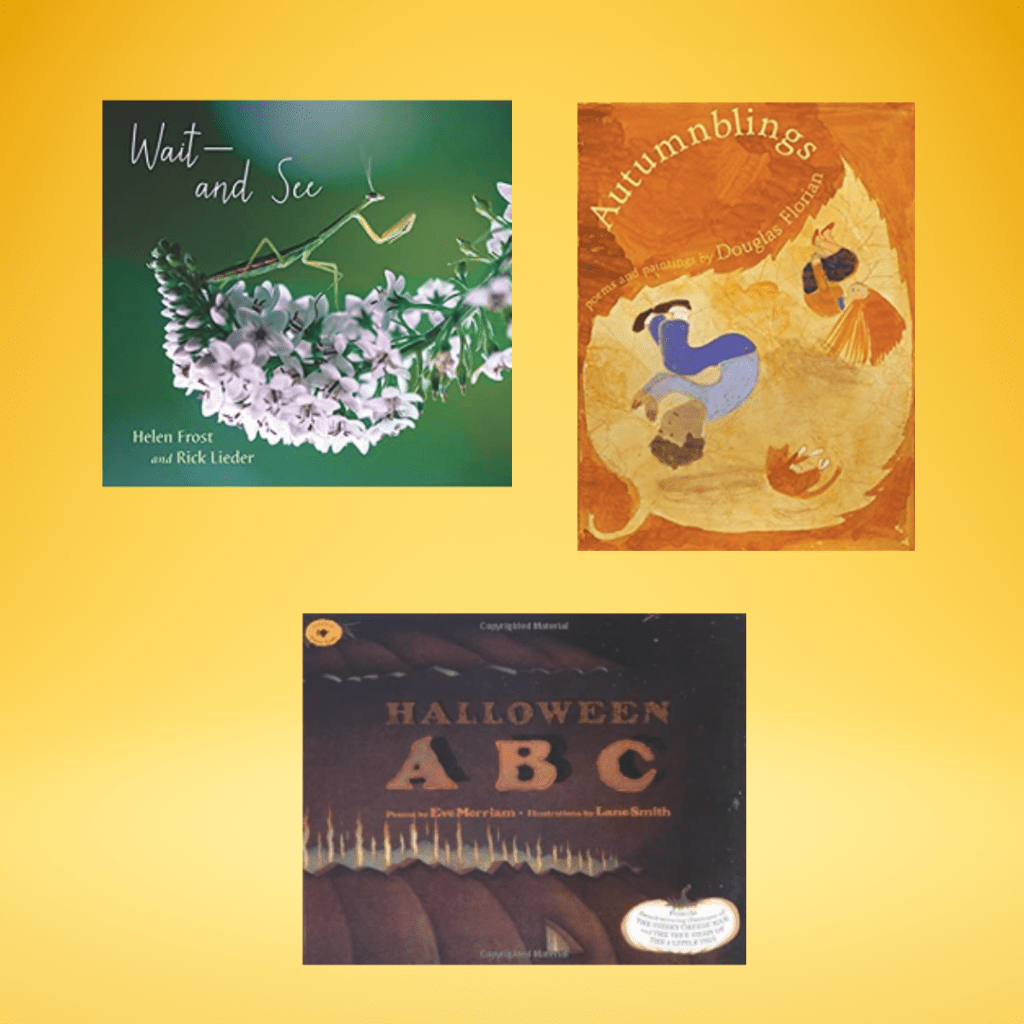
WAIT AND SEE by Helen Frost was my main read aloud in October. This book is an informational text that I’m calling “lyrical nonfiction.” It has photographic endpapers which, in the beginning, show a preying mantis hanging upside down on a spikey leaf with a light background. At the end, there is a preying mantis upright on a rounder leaf with a dark background. The conversations about the reasons behind these choices of images were fantastic! (Day/night, light/dark, colors, shapes, position, etc.) The photo-illustrations also prompted lots of conversation both during and after reading. We didn’t read the back matter, but I pointed out to every group that it was there to satisfy any curiosity you might have for more facts.
AUTUMNBLINGS by Douglas Florian and HALLOWEEN ABC by Eve Merriam were my backup literature choices. (I’d forgotten how dark Merriam’s poems are, but luckily kids are kind of into spooky, so it was all good.)
Are you noticing the trend towards poetry? I figure poetry is one of the least represented genres in the classroom and so it will have the greatest representation in my work!
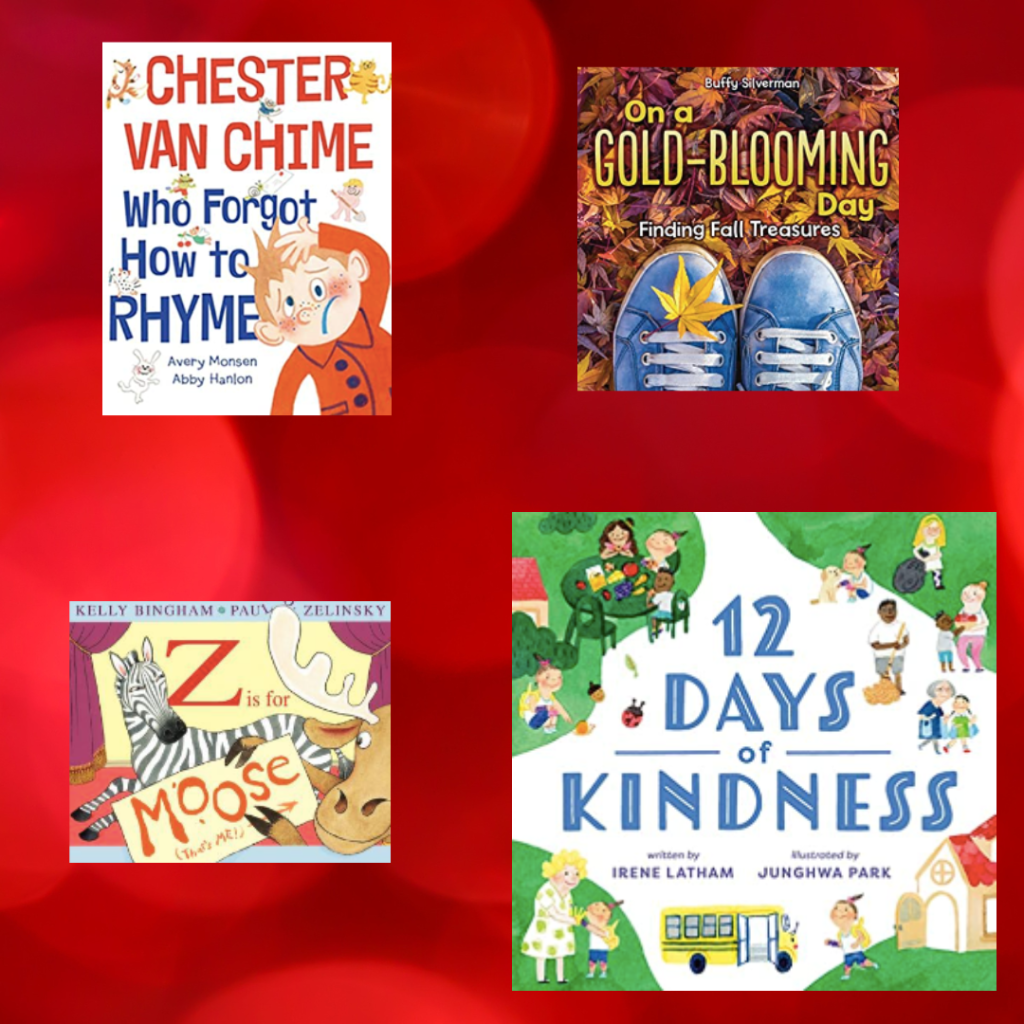
There were a couple of other books that made an appearance in October and November. I fell in love with CHESTER VAN CHIME WHO FORGOT HOW TO RHYME by Avery Monsen and tried it out with a variety of ages. Fourth and fifth graders had a ball with Chester. I was surprised that the younger students weren’t able to provide the missing rhymes. I filed that tidbit and will be doing some focused work on rhyming in the upcoming months. ON A GOLD BLOOMING DAY by Buffy Silverman was a great rhyming photographic book to pair with WAIT AND SEE. I waited until later in the fall to start working with my Kindergarteners. I wanted to meet them and read with them before I gave them their letter identification assessment, so I chose Z IS FOR MOOSE by Kelly Bingham. It has a different image on its dust jacket and its cover, and the story starts before the title page. It begins predictably, but then Moose causes chaos (which the Kinders loved!)
But the absolute best read aloud so far, the one that stood up to multiple readings with all ages, the one that kept surprising me all the way to the last reading, was 12 DAYS OF KINDNESS by Irene Latham. This book has everything! Cover and dust jacket are the same, but we had a chance to discuss the Big Idea that’s on the back of the book (“Kindness is a gift.”) The end papers are different illustrations and foreshadow the story that’s found in the illustrations, and the arc of that story (morning to night). The story begins in the illustrations before the title page. The text has repetition and rhyme and is cumulative. It can be sung to “The 12 Days of Christmas,” and I had one group of 3/4/5 girls who did just that! All the way through! So fun! Without being didactic, Irene Latham shows the reader that there are lots of small ways to be kind to those around us. There is much to discover about the way the illustrator (Junghwa Park) contrasts the new text on the left page of each spread and the cumulative text on the right page of each spread. The illustrations tell a story that doesn’t match the text, but rather extends the meaning of the text. There’s lots to infer about the characters in the illustration’s story, plus so many fun details! I didn’t notice the kisses in the last spread until one of the final readings! This is the book I’ll use as my gold standard in choosing all future read alouds!
Karen has this week’s Poetry Friday roundup at Karen Edmisten*.
There was much to love about building a classroom community filled with mostly same-aged students and designing plans for daylong learning across all subject areas. Now, there is much to love about sitting side-by-side with one or two students at a time from across the grade levels and getting to know each as readers, writers, and fascinating human beings. Here are some random snippets from the first few weeks on the job:
3rd grader: “You know why I like science? It never ends.”
4th grader: “I like the Harry Potter books, but I kind of have a problem with J.K. Rowling’s stand on trans people. My cousin is trans.”
3rd grader: “The other reading teacher gave us lollipops if we were good.” Me: “I’m not sure if I’m a lollipop kind of teacher.” “That’s okay. You’re nice anyway.”
5th grader: “I always use ‘adieu’ as my first word in Wordle, but I don’t know what it means.” (a small French lesson ensued)
3rd grader: Making random words with Scrabble tiles: add…wood…one…to…make…a…bat… “No, that should be ‘add one wood to make a bat.’ This is like an equation! What do you call the person who makes a bat? This makes more sense: ‘add one wood carver to make a bat.’ “
2nd grader: “How do you spell ‘George?’ “ Me: “Your name’s not George; why do you want to spell that?” “George was the husband of Beatrice, a WWII engineer who could fix anything.” (Likely this book, and no surprise: he likes to read informational text.)
4th grader: “I learned a new word today: toey. T-O-E-Y. When I play Words With Friends, I always check to see what I could have played for more points. Toey would have been worth 48 points.” Me: “What do you think toey means? If something is juicy, it’s full of juice. Do you think toey means full of toes? (laughter) Let’s look it up.” (Amazement when I open the Merriam Webster app from the first screen on my phone. But it wasn’t there! So I opened a web browser and demonstrated the “define ___” search and we found it. Toey means nervous, anxious, worried.) Me: “I hope the rest of your day isn’t toey!”
Next week I begin a new part time job that seems like it will be a better fit for my skillset than washing dishes at Sur la Table: I’m the Reading Specialist for the Clintonville Resource Center’s Kids Clubs, their after school program. There are three sites, and I’ll spend about two hours a week at each site working to help K-5 children become better readers (and writers).
I know exactly what to do, and yet I have no idea what I’m doing.
I have no classroom to prepare, no classroom library from which to easily pull books, no real context for the work we will do or real influence outside of the bits of time we will spend together.
If it was true as a classroom teacher, it is even more true now: I have to make every minute count. Guess what I’m planning to use as short texts that are brimming with all kinds of instructional moves for students of all ages? POETRY, of course! And because poetry is often neglected in the regular classroom, that is where I hope to find my opportunity for context and influence.
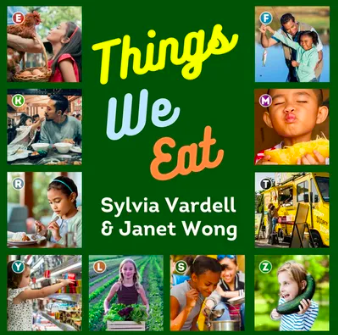
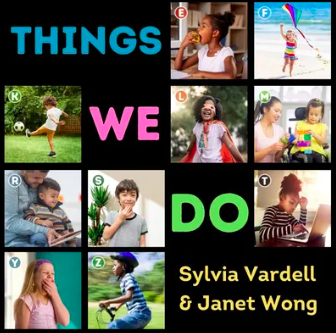
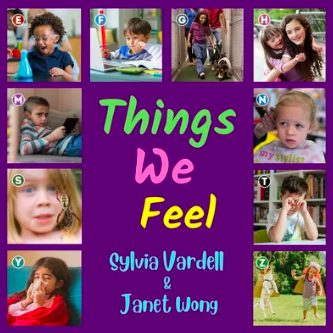
Just like in the classroom, we will begin by getting to know each other. We’ll start by sharing our favorites — favorite foods, favorite things to do, favorite (and maybe not so favorite) ways to feel.
We’ll talk and read and draw and write. I’ll listen, ask, and notice. All very good places to begin, even when you think you have no idea what you’re doing.



 A(nother) Year of Reading