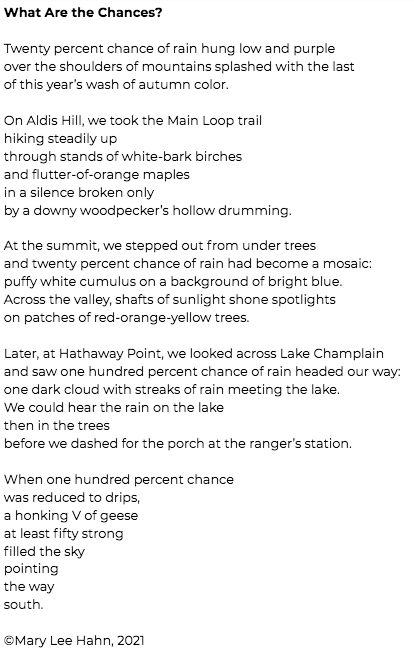
Linda Mitchell (@A Word Edgewise) gave the Inklings our challenge this month. She charged us with writing “a poem that includes the idea of percentage or percent. Percentages are all around us in recipes, prices, assessments, statistics. Include the idea of percentage in your poem in some way.”
My poem was born during the drive home from Vermont. Our day in St. Albans and along the coast of Lake Champlain at Hathaway Point was fresh in my mind. As we burned up the miles through the Adirondacks, I wrote, looking up every few lines to take in the beauty of the fall foliage.
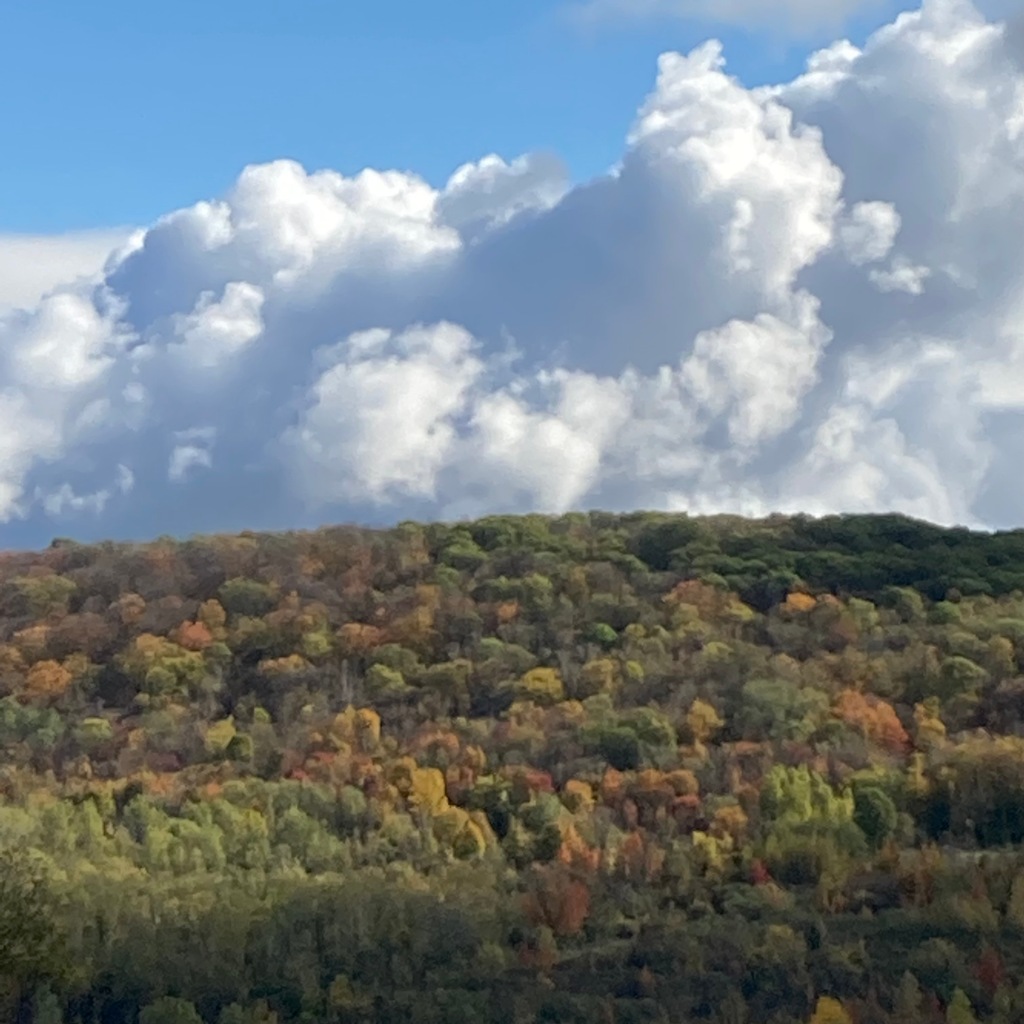
View from the summit of Aldis Hill, St. Albans, VT
Here’s how the rest of the Inklings interpreted Linda’s challenge:
You’re invited to join the Poetry Sisters’ challenge for the month of November! We’re writing an Ode to Autumn. An ode is a lyrical poem in the form of an address to a particular subject, often meant to be sung. Whether you choose an irregular ode with no set pattern or rhyme, or the ten-line, three-to-five stanza famed by Homer himself, we hope you’ll join us! You can share your offering with the rest of us on November 26th (the Friday after Thanksgiving, so plan ahead) in a post and/or on social media with the tag #PoetryPals.
For her birthday, Linda Baie GAVE the gift of poetry — she handpicked volumes for anyone who sent her their address. I’ll enjoy the David Ignatow book (POEMS 1934-1969) a little at a time, but her pick of CRY OUT: POETS AGAINST THE WAR was magical. From the blurb on the back: “On February 16, 2003, eleven contemporary poets held a reading in Manchester, Vermont, called “A Poetry Reading in Honor of the Right to Protest as a Patriotic and Historical Tradition.” Organized in response to the cancellation of a White House poetry symposium, the reading was sponsored by the Northshire Bookstore and drew a crowd of over seven hundred people. CRY OUT: POETS PROTEST THE WAR gathers together the poems read by the participants, many of them original poems and others poems by…renowned poets…”
We were in Manchester, VT just.last.week!! The Northshire Bookstore is one of our favorite destinations there! Magical! Thank you, Linda!!
Outside Manchester, VTOne of the poems read by Donald HallWords that still ring true today.
Laura Shovan and I are helping Tabatha with the Winter Poem Swap. The Winter Poem Swap is a little different than the Summer Swap. In the SummerPoem Swap, poets do up to five swaps, while the Winter Poem Swap is just ONE swap. This time, though, you are asked to send a wee gift along with your poem. If you would like to participate, send Laura an email (laurashovan @ gmail . com) by November 6. Include your full name and mailing address. Let her know if you want to swap with the same person who is sending to you or if it doesn’t matter. Include any allergies your gift giver might need to know about. Laura will send you the name and address of your poem/gift recipient by November 13. Then you have a month to write your poem and put your package together for delivery by December 15, in plenty of time for the winter solstice in the Northern Hemisphere (10:58 AM on December 21, in case you were wondering).
Jama is hosting this week’s Poetry Friday roundup at Jama’s Alphabet Soup. Head over for some October goodness and the rest of the posts by this amazing community! I’m so thankful for all of you, and all you do to make the world a better place, one Friday after another!
This poem is a decima. The rhyme scheme is ABBAACCDDC, and there are 8 syllables each line.
Laura Shovan and I are helping Tabatha with the Winter Poem Swap. The Winter Poem Swap is a little different than the Summer Swap. In the Summer Poem Swap, poets do up to five swaps, while the Winter Poem Swap is just ONE swap. This time, though, you are asked to send a wee gift along with your poem. If you would like to participate, send Laura an email (laurashovan @ gmail . com) by November 6. Include your full name and mailing address. Let her know if you want to swap with the same person who is sending to you or if it doesn’t matter. Include any allergies your gift giver might need to know about. Laura will send you the name and address of your poem/gift recipient by November 13. Then you have a month to write your poem and put your package together for delivery by December 15, in plenty of time for the winter solstice in the Northern Hemisphere (10:58 AM on December 21, in case you were wondering).
Bridget has this week’s Poetry Friday roundup at wee words for wee ones. (And remember, I’m taking November 5.)
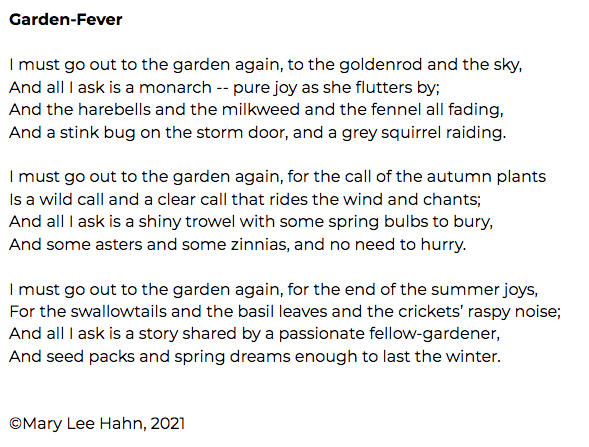
Gratitudes to John Masefield for my mentor text for this poem, Sea-Fever.
Irene has this week’s Poetry Friday Roundup at Live Your Poem. Please note a change in the roundups next month — I will be taking the November 5 roundup to help out Tabatha. Also, a team of PF Peeps are going to be organizing the Winter Poem Swap, so stay tuned for more information about that!
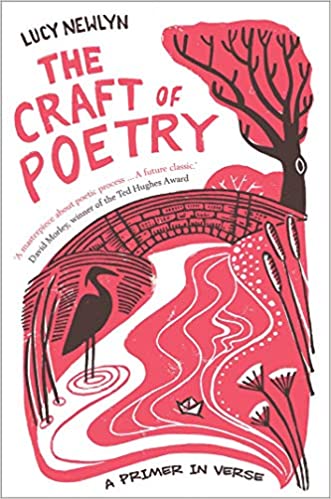
The Inklings’ challenge this month was mine. I was quite taken with the idea of this book: a book about poetry forms and techniques…written in poems. So I challenged the group to write their own poems about forms or techniques. The more we dug into the book, the more we realized that the author doesn’t always explain a form in that form. For instance, her poem about the sestina follows the form but does not explain it. And one of the flaws of the book is that nowhere is there clear definitions of the techniques and forms. Still and all, I recommend the book, and we all had fun playing around with form and techniques. Here are three of mine.
Enjambment
Writing teachers especially hate run-ons. Close the gate so the end of the line can have the pause that finishes a thought or completes a clause.
.
Haiku
small observation perhaps elaboration wry commentary
.
Personification Limerick
I once was a limerick named Sue. My rhythm was fine. Rhyme was, too. There was just this one thing caused my heart not to sing: my longing to be a haiku.
This month’s Poetry Sisters Challenge was so much fun! The first fun was diving into each sister’s blog archives to find a poem that invited me to respond. Then, the fun was in “talking back” to her poem.
The Poetry Sisters’ challenge for this month is to write a tanka in response to or conversation with a poem written by one of the other sisters. Kelly wrote a fabulous article about tankas. Who doesn’t love her analogy that “a tanka is a haiku pulling a trailer?!?” To get ready for the challenge, I’ve written a trio of tankas. I’ll share them without images, because I’m hoping the words themselves are enough to paint a picture in your imagination. The orb weaver and the buck live in Central Ohio; Rae’s house is in the dry high plains of Eastern Colorado.
Tanka for Rae’s House
Beyond the window: extravagantly green lawn, bountiful garden. In the unwatered pasture dry grass crunches underfoot.
.
Tanka for the Eight Point Buck
sun low behind trees morning air carries fall chill eight point buck sees me freezes so majestically you forget he’s in the street
.
Tanka for the Orb Weaver
Above our front door hangs a ferocious hunter alarmingly large seeming to stand in thin air. She owns the porch. I concede.
Earlier this week, Margaret got me thinking about sonnets. I knew I had written one, but had to dig hard at A Year of Reading to find it: Coffee House Sonnet. Turns out it’s from NPM 2010, and I haven’t archived that year’s project over at Poetrepository yet. (Adding that to my to-do list…)
We’ve been enjoying a few days of perfect September weather, and because it was clear this morning, I went for my walk before the sun came up and I got to say hello to my good friend, Orion, for the first time since he waved goodbye and marched over the western horizon last winter.
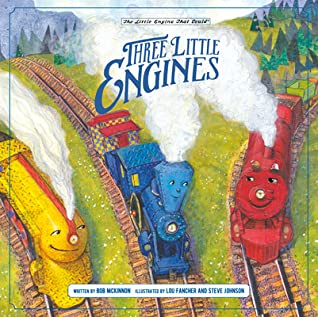
Three Little Engines by Bob McKinnon illustrated by Lou Fancher and Steve Johnson Grosset & Dunlap, 2021 review copy provided by the publisher (thanks!)
FIRST THE PICTURE BOOK
It’s graduation day, and three little engines (Little Blue Engine, Yellow Passenger Engine, and Red Freight Engine) are ready to take their final test and make a solo trip across the mountains. Little Blue Engine makes it across just fine with her traditional “I think I can”s. But the other two engines have obstacles in their paths that Little Blue did not have, and she realizes that sometimes no matter how much you think you can, you can’t make it over the mountain without some help. She changes her mantra into “I think WE can” and they all make it over the mountain supporting each other.
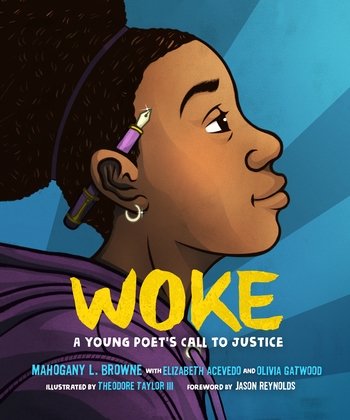
I’ve chosen a poem from WOKE: A Young Poet’s Call to Justice to pair with this picture book. The poems in WOKE help young readers to identify issues of inequity in our world, but it also gives them big and small ways to fight back or speak out. Just like Little Blue Engine learned — it’s not enough to SEE that there is inequity, we need to search our hearts and our resources and DO something about it.
What’s In My Toolbox by Olivia Gatwood
We can’t choose the way we’re born. Some of us are born with two parents, some one, some none. Some of us are born with legs that we can walk with, some of us need a little help. Some of us get to eat when we are hungry, some of us still haven’t. When a person has privilege, it is a toolbox they were born with, hammers and nails that make it easier for them to walk through the world because the world, in all of its beauty and excitement and variety, can still be a very hard place in which to live. . . .
Read the rest of the poem in WOKE and discuss all the different kinds of privilege that give some people advantages over others.










 A(nother) Year of Reading